
Reviewed · TUK-TUKS
Negombo: Private Half-Day Tuk-Tuk Tour with Hotel Transfers
See Negombo from street level. This 4.5-hour private tuk-tuk tour packs the city’s churches, markets, fishing life, lagoon edges, and beaches into one easy outing. I like the no-shopping-stop policy, which keeps the focus on places rather than sales pitches. I also like the hotel pickup and drop-off, especially if you are using Negombo as your first or last stop in Sri Lanka.
The tour is strongest when it gets away from the standard sightseeing circuit. Sea Street, dried-fish stalls, lagoon fishing, and the Duwa fishing village show how Negombo works day to day. The main drawback is the pace: with many stops in half a day, some visits are brief, and the public fish market’s smell and working conditions may be too much for sensitive visitors.
In This Review
- Key points to know before booking
- Why Negombo works well by tuk-tuk
- A gentle start beyond central Negombo
- Main Street and Wellaweediya: getting a feel for town
- Sea Street, Tamil culture, and small religious sites
- St. Mary’s Church and its painted ceiling
- Negombo Dutch Fort: a small remnant with a big story
- The dried-fish market: Negombo’s working coast
- Across the lagoon to Duwa fishing village
- Browns Beach and a relaxed finish
- The guide can make or break the experience
- Who will enjoy this half-day outing?
- Is $42 per person good value?
- Should you book it?
- FAQ
- How long is the Negombo tuk-tuk tour?
- Is hotel pickup included?
- Is the tour private?
- What places are visited?
- Are shopping stops included?
- What should I bring?
Key points to know before booking
- Robin is the guide most often praised: He drives, explains local life, adjusts to interests, and has made solo visitors feel safe and well cared for.
- The tuk-tuk is ideal for Negombo: You can slip through busy streets, follow narrow roads, and see more than you would on foot.
- This is a culture and working-life tour: Churches, shrines, markets, fishing areas, and local streets receive more attention than polished attractions.
- There are no planned shopping stops: You are not steered into shops, though guides can help if you want to buy something.
- The fish market is genuine, not gentle: Dried fish, processing work, and strong smells are part of the experience.
- At $42 per person, value depends on group size: For one or two people, the private vehicle, guide, entries, water, and hotel transfers make the price sensible.
Why Negombo works well by tuk-tuk
Negombo is close to Colombo and Bandaranaike International Airport, but it feels more like a coastal working town than a capital-city suburb. Its streets bring together Buddhist temples, Catholic churches, Hindu shrines, fish markets, colonial remains, and beach hotels.
A tuk-tuk lets you connect these parts without wasting time on long walks in the heat. You sit close to the street, so you hear the traffic, see fruit stalls at eye level, and get quick views into side roads. It is not silent or luxurious, but that is part of the point. You are moving through the real town, not looking at it through a sealed tour bus window.
Because the group is private, you can ask questions and spend more time at a place that catches your attention. The experience is offered in English, and pickup is available from any hotel in the Negombo area. You wait in the hotel lobby, then return to your accommodation at the end.
The tour costs $42 per person. That is a fair price for a private half-day if two people are sharing the experience, since the fee includes the tuk-tuk, guide, hotel transfers, water, entry fees, and parking. For a solo visitor, it is less of a bargain, but the private format and personal attention can still make sense, especially on your first day in Sri Lanka.
More Tuk Tuk Tours in Negombo
- Negombo city tour by Tuk Tuk Hotel Pickup & Guide
★ 5.0 · 221 reviews - Negombo City Tour by Tuk Tuk with hotel pickup
★ 5.0 · 42 reviews - Fun and Scenic Negombo Tour by Tuk Tuk
★ 5.0 · 33 reviews
A gentle start beyond central Negombo
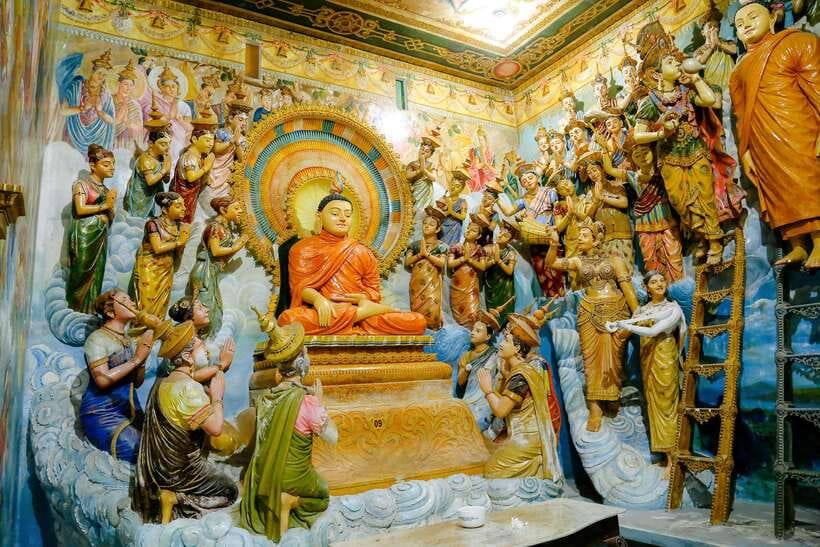
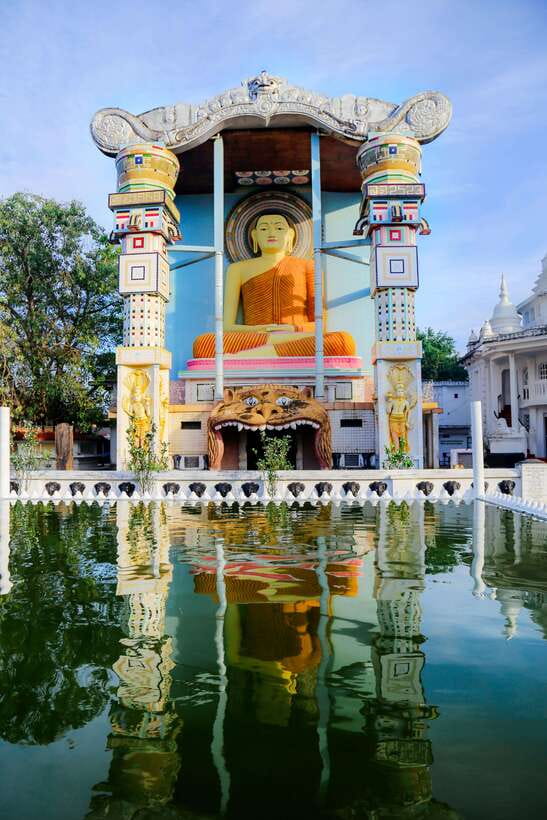
The outing begins with pickup at your hotel and roughly 30 minutes of sightseeing outside the central town. You pass the Negombo Grand Mosque before visiting Angurukaramulla Buddhist Temple, one of the city’s important Buddhist sites.
This opening gives you useful context. Negombo is not defined by one faith or one community. The route introduces a Buddhist landmark before moving toward the Catholic and Hindu sites that are especially prominent later in the day.
The exact time at the temple is listed as about 30 minutes. That is enough for a guided look, photographs, and questions, though the overall schedule means you should not expect a long meditation visit or an extended architectural study. Wear clothing that works for religious sites, with shoulders and knees covered when needed.
After crossing Colombo Road, the tuk-tuk follows the main street toward town. This ride is part of the sightseeing, not empty transit. You begin to see how quickly Negombo changes from broad roads and commercial traffic to denser local streets.
Main Street and Wellaweediya: getting a feel for town
The main-street section lasts about 30 minutes and combines a guided visit with some walking. This is where the tour starts to feel less like a list of monuments and more like an introduction to daily Negombo.
You can expect street markets, local traffic, food stalls, and the quick visual changes that make tuk-tuk travel useful. The guide can point out local herbs, spices, fruits, and vegetables, details that are easy to miss when you are simply passing through.
Wellaweediya follows with about 30 minutes of scenic driving and a visit. This gives you a closer look at the town’s coastal character and local streets. The benefit is breadth: you see several parts of Negombo in a short time. The tradeoff is that the tour does not linger long at every market or neighborhood.
If you enjoy taking photographs, keep your camera ready but ask before photographing people, stalls, or religious activity. The tour is designed to show you local life, not turn every person into a photograph.
Sea Street, Tamil culture, and small religious sites
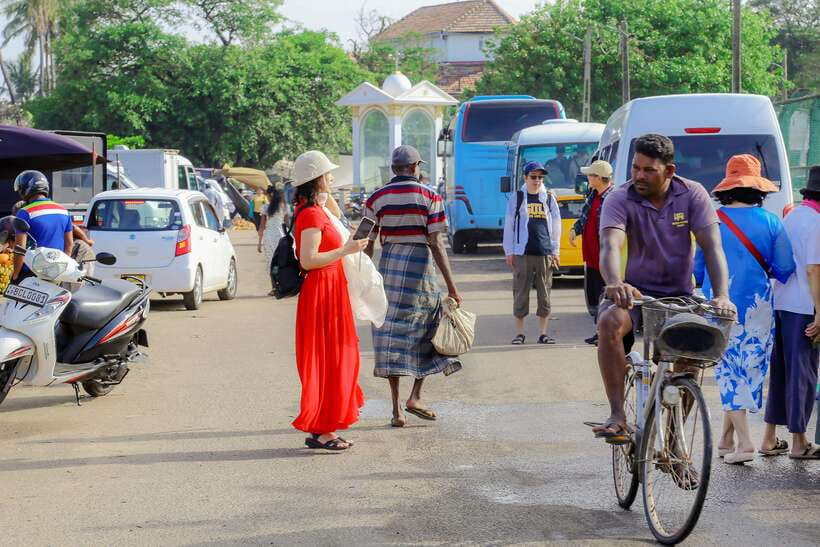
Sea Street is one of the most revealing sections of the route. The tour follows the Dutch Canal before entering this cultural stretch, where Roman Catholic churches and Hindu shrines appear close to one another.
The area is largely Tamil-speaking. Flower stalls sell offerings, fruit tables hold coconuts used in temple worship, and the street has a strong religious and commercial rhythm. I like this stop because it explains Negombo better than a single grand building can. You see how faith, family life, trade, and the sea are tied together.
You may have a chance to visit a Hindu shrine. Remember that this is an active place of worship, so quiet behavior and modest clothing matter. The guide’s presence is especially useful here because a short explanation can make an unfamiliar shrine much easier to understand.
This part of the route also helps balance the better-known Catholic sights. Negombo is often marketed through churches and beaches, but Sea Street shows a more layered picture of the city.
A completely different kind of day out from Negombo:
- AirPort CMB to Colombo (Private Taxi 24/7) Car, Van, Minibus
★ 5.0 · 604 reviews - 8 Days tour in Sri Lanka with privet driver and accommodations
★ 5.0 · 472 reviews - Private Car & Driver for 07 Days Tour In Sri Lanka
★ 5.0 · 199 reviews - Sri Lanka Private Tour 8 days-Driver/vehicle/accommodation H/B
★ 5.0 · 161 reviews
St. Mary’s Church and its painted ceiling
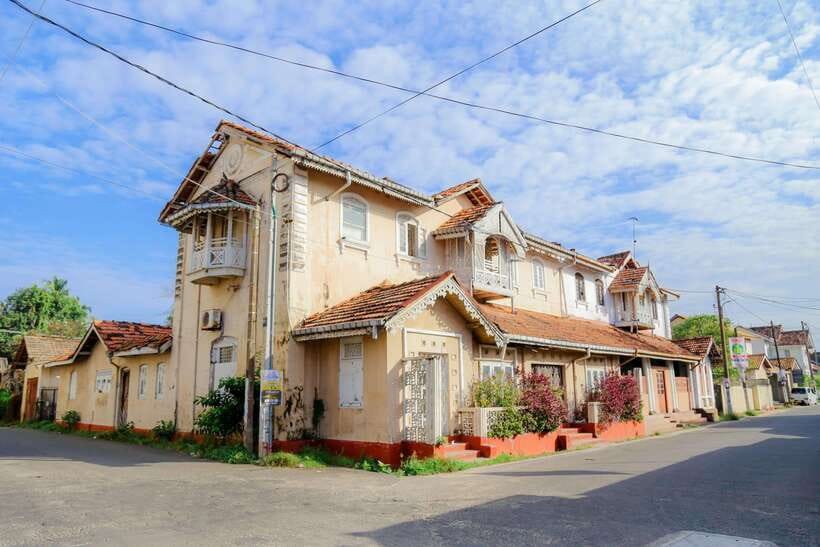
St. Mary’s Church receives about 15 minutes, listed as a photo stop and visit. The time is short, but the building deserves a pause.
The church is known for its colonial design and unusual roof paintings by local artists. The murals are the main reason to look upward rather than simply admire the façade. This is the most prominent Roman Catholic institution in Negombo, a city where Catholic life has played a major role.
Fifteen minutes will usually be enough to enter, look at the paintings, take photographs where permitted, and hear the basic story. It is not enough for a slow architectural visit. If churches are a major interest for you, tell the guide early so you can make the most of the stop.
The church also gives the tour a useful historical connection. After seeing living religious practice in Sea Street, you encounter a larger institution shaped by colonial-era architecture and local Catholic tradition.
Negombo Dutch Fort: a small remnant with a big story
The Dutch Fort stop is brief, around 10 minutes, with walking and scenic views along the way. Do not arrive expecting a complete fortress complex. The tour explains that Negombo once had the third-largest fort during the colonial period, but little remains today.
You can still see an intact wall and a watchtower dating from the 17th century. The English later built the prison with bricks from the fort, which gives the site an unusually practical afterlife. Instead of a fully preserved monument, you are seeing fragments woven into the modern town.
That limitation is worth knowing. If you want grand ramparts and large interior rooms, this will feel modest. If you enjoy reading a place through what survives, the stop is worthwhile, especially with a guide explaining what is no longer visible.
The dried-fish market: Negombo’s working coast
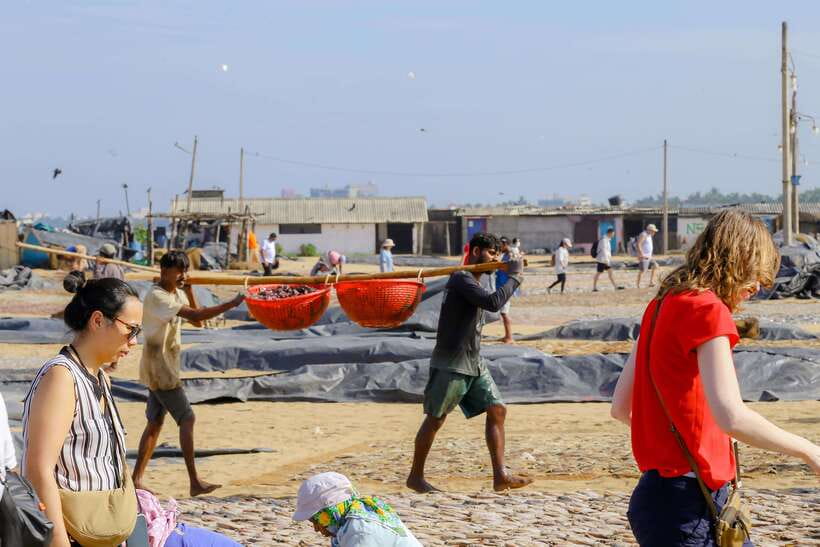
The public fish market is one of the tour’s most authentic and demanding stops. You spend about 15 minutes walking and taking photographs, with time to see the dried-fish trade and the people processing fish near the beach.
The smell is strong. There is no polite way around that. Dried fish, sea air, and active processing work create an experience that can be memorable for the right reasons, but uncomfortable for some people.
I value this stop because it shows a cottage industry that still matters to Negombo. This is not a staged cultural display. It is a working area, and you should behave respectfully, avoid blocking activity, and ask before taking close photographs.
The stop also connects the city to its fishing economy. After polished churches and colonial remains, you see how the coast supports households and local trade. That contrast gives the half-day tour its substance.
Across the lagoon to Duwa fishing village
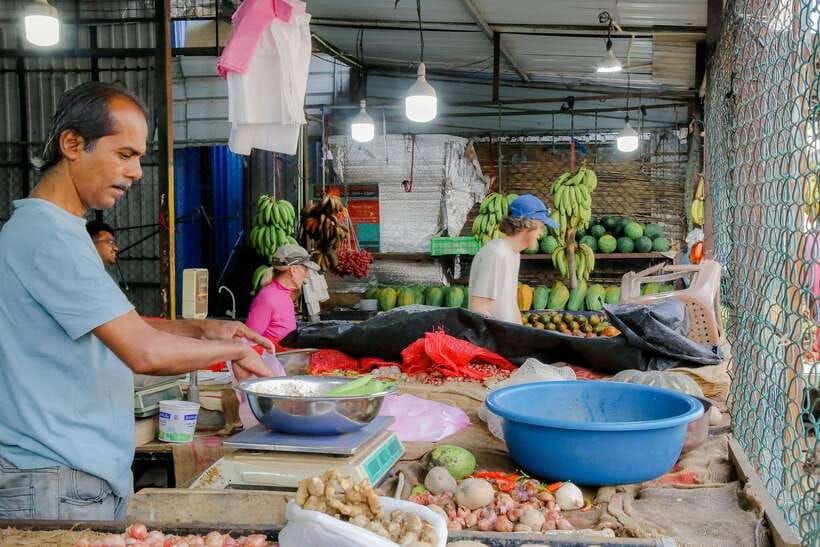
The route then crosses the lagoon bridge toward a fishing village. The listed visit to Our Lady of Good Voyage Church in Duwa lasts about 40 minutes, making it one of the longer stops.
This section focuses on lagoon fishing, including rod fishing from bridges. You also pass Lellama, the wholesale fish market, and visit the Fishermen’s Church. There is a charming local swimming spot nearby, though the information provided does not indicate that swimming is part of the organized activity.
Duwa gives you a different view of Negombo’s relationship with water. The earlier fish market shows processing and sale. Here, you see the setting and activities connected with fishing itself. The lagoon also provides a calmer change of pace after the traffic and market streets.
One practical note: one visitor described a lagoon add-on as especially enjoyable. Treat that as a possible extra rather than part of the standard tour, since the core outing already includes lagoon-side and fishing-village stops, but does not clearly list a separate boat excursion.
Browns Beach and a relaxed finish
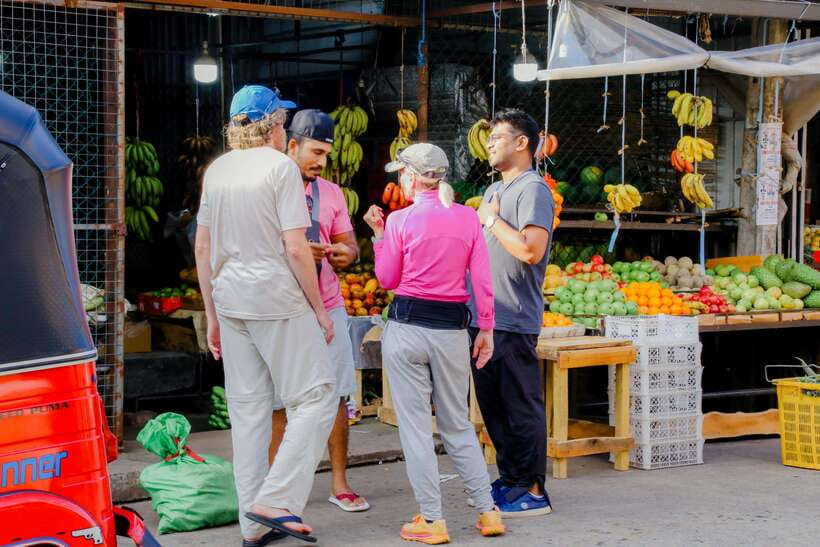
The final stop is Negombo Beach, with about 20 minutes for photographs, walking, and street food at the beach carts. Browns Beach is a public beach park close to the hotel area, so it makes an easy ending before the return transfer.
This is not presented as a secluded beach escape. It is a practical public beach with food carts, open space, and a chance to unwind. After the fish market and fishing village, the beach gives you a simpler finish.
You may prefer to spend longer here than the schedule allows, particularly if you want a sunset walk or time by the water. The tour’s value is seeing many parts of Negombo, so the beach visit is intentionally short. If you want a full beach afternoon, plan that separately.
The guide can make or break the experience
The strongest praise centers on Robin Fernando. He is repeatedly described as friendly, calm, accommodating, and good at explaining history, religion, fishing, and local life. Several people also highlight his driving, saying they felt safe in the tuk-tuk.
That matters here. The route includes crowded roads, working markets, religious sites, and narrow local streets. A guide who can manage the drive while giving clear explanations adds real value.
Robin also appears to be good with different types of visitors. Solo women have described feeling comfortable and well looked after. He has adjusted the outing to personal interests, helped with requested purchases, and shared details about his own family and life in Sri Lanka.
Tharaka is also praised for communication and coordination, including personally handling a hotel pickup. The exact guide may depend on availability, but Robin is the name most closely associated with this experience. If having him matters to you, request him when booking, but do not assume a named-guide guarantee unless confirmed.
Who will enjoy this half-day outing?
I would choose this tour if you are staying in Negombo for a short time and want a broad first look without arranging several separate tuk-tuk rides. It suits solo visitors particularly well because the private format offers company, local guidance, and a simple way to get around.
It is also a good first-day activity in Sri Lanka. You get an introduction to Buddhist, Hindu, and Catholic traditions, local food and produce, fishing, colonial remains, and beach life before moving on to other parts of the country.
The tour may be less suitable if you prefer slow sightseeing. The schedule covers many stops, and some visits last only 10 to 20 minutes. It may also be a poor fit if you dislike traffic, heat, strong fish smells, or the rougher edges of working markets.
Bring a sun hat, sunscreen, and comfortable clothing for walking. One bottle of water per person is included, but you may want more in hot weather. Since the tour visits religious sites, modest clothing is a smart choice.
Is $42 per person good value?
For a private 4.5-hour experience, $42 per person is reasonable when the tour is shared by two or more people. Hotel transfers remove the need to negotiate a separate tuk-tuk ride, and the fee covers the vehicle, guide, water, entry fees, and parking.
The real value is not in admission tickets. Most of the appeal comes from access to local streets, fishing areas, markets, and explanations that would be difficult to assemble on your own in such a short time.
For a solo visitor, the price is higher on a per-person basis, but the private format has clear benefits. You can ask more questions, avoid waiting for strangers, and tell the guide what interests you. The no-shopping-stop promise also protects your time, though you can still ask for help buying something if you want it.
Should you book it?
Book this Negombo tuk-tuk tour if you want a compact, personal introduction to the city, especially at the start or end of a Sri Lankan trip. It is strongest for people who value local neighborhoods, working fishing areas, religious variety, and an adaptable guide more than long visits inside major monuments.
Go in expecting a busy, sometimes gritty half-day rather than a polished sightseeing ride. If you can handle the fish market, accept brief stops, and keep an open mind, the tour gives you a useful feel for Negombo that a beach hotel alone cannot provide.
FAQ
How long is the Negombo tuk-tuk tour?
The tour lasts 4.5 hours, including hotel pickup and drop-off within the Negombo area.
Is hotel pickup included?
Yes. Pickup and return transport are included for hotels in the Negombo area. You should wait in your hotel lobby.
Is the tour private?
Yes. It is offered for a private group, with tuk-tuk transportation and an English-speaking guide.
What places are visited?
The route includes Angurukaramulla Buddhist Temple, Main Street, Wellaweediya, Sea Street, St. Mary’s Church, Negombo Dutch Fort, the dried-fish market, Duwa and Our Lady of Good Voyage Church, fishing areas near the lagoon, and Negombo Beach including Browns Beach.
Are shopping stops included?
No planned shopping stops are included. The tour is designed to focus on sights, culture, markets, and local life. A guide may assist with purchases if you request it.
What should I bring?
Bring a sun hat and sunscreen. One bottle of water per person is included, and modest clothing is advisable for visits to religious sites.
More Half-Day
- Half-Day Negombo City Tour with Ayurvedic Massage & Local Lunch
★ 5.0 · 87 reviews - Private Half-Day Colombo City Tour
★ 4.5 · 126 reviews - Guided Colombo Half-Day City Tour
★ 4.2 · 96 reviews - Half-Day Lagoon and Village Cycling Tour in Galle
★ 5.0 · 90 reviews
Just added around Negombo
- Ten Days Scenic Sri Lanka★ 5.0 · 3 reviews
- Colombo Airport (BIA) to Galle Private Airport Transfer★ 5.0 · 3 reviews
- 08 Days private round trip in Sri Lanka★ 4.5 · 3 reviews
- Full Day Tour to Sigiriya & Dambulla from Negombo★ 5.0 · 3 reviews
- From Negombo: White Water Rafting Adventure★ 5.0 · 3 reviews
- Transfer between colombo Airport (CMB) and Marino Beach, Colombo★ 5.0 · 3 reviews
- Airport transfer to Arugambay★ 5.0 · 3 reviews
- Airport Pick-up from Colombo Airport to Kandy★ 5.0 · 3 reviews
Tuk-Tuks, compared.
Private Tuk-Tuk City Tour with All Entry Fees
Read our review →
Colombo Tuk Tuk City Tour -Sightseeing Entry Fees & Food Included
Read our review →
Colombo Private Tuk-Tuk City Tour with All Entry Fees Included
Read our review →
Private Tuk-Tuk City Tour with Guide & All Tickets
Read our review →
Kandy to Ambuluwawa & Kandy City Guided Tuk Tuk Day Tour
Read our review →
Colombo Local Food Tour by Tuk Tuk – All Inclusive
Read our review →Browse the lists this tour appears in