
Reviewed · SCUBA DIVING
PADI Scuba Diver Course
The sea becomes your classroom. This two-day PADI Scuba Diver Course near Unawatuna gives you a careful first step into underwater exploration, with classroom work, confined-water practice, and two ocean sessions. I like the small maximum group of eight and the use of private transport, bottled water, tea, coffee, snacks, and full scuba equipment.
I also like the calm, safety-minded teaching style associated with instructors such as Ellie, Norbert, Delphine, Fabio, Alex, and Eliška. The main catch is important: this is not the full PADI Open Water Diver qualification, and the additional 70 euro PADI fee for the manual and certification is not included. The course also meets in Unawatuna, although the summary names Negombo, so check your pickup and meeting details carefully.
In This Review
- Key points to know before booking
- What the PADI Scuba Diver certificate actually allows
- Meeting in Unawatuna, not Negombo
- Half a day of theory before you enter the water
- Confined-water practice builds confidence
- The ocean morning runs from 8:30 a.m. to 1 p.m.
- Instructors who make a difference
- What is included, and what you still pay for
- Who should choose this course?
- Booking, cancellation, and practical planning
- Should you book the PADI Scuba Diver Course?
- FAQ
- How long does the PADI Scuba Diver Course take?
- Where does the course start?
- Does the course end at the meeting point?
- Is pickup available?
- How deep can I go after earning the Scuba Diver certification?
- Can I scuba with a buddy without a professional?
- Is the PADI manual and certification fee included?
- Is lunch included?
- How many people can join the course?
- What happens if bad weather cancels the course?
Key points to know before booking
- Two to three days of training: Expect about half a day of theory, half a day in confined water, and one morning with two open-water sessions.
- Limited certification: You may go to a maximum depth of 12 meters, but only with a PADI Professional.
- Small group size: The course accepts no more than eight people, which should allow more direct help than a large class.
- Equipment and refreshments included: Scuba equipment, private transportation, bottled water, tea, coffee, and snacks are provided.
- Lunch is not included: Plan to arrange or purchase your own midday meal.
- The full Open Water option may suit you better: If you want to go with a buddy independently to 18 meters, choose PADI Open Water Diver instead.
What the PADI Scuba Diver certificate actually allows
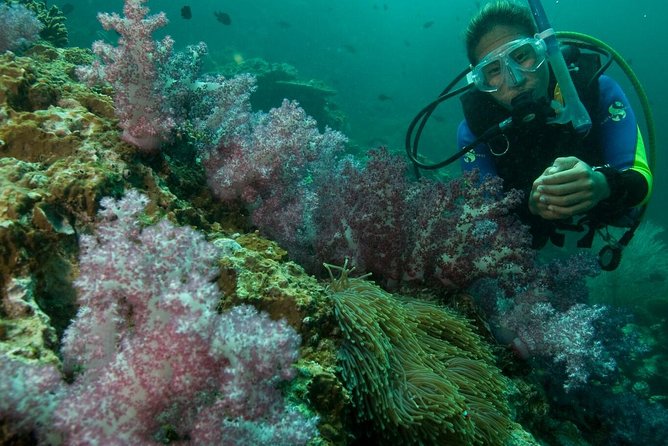
The first thing I would clarify is the difference between the PADI Scuba Diver Course and the better-known PADI Open Water Diver course. Scuba Diver is a shorter version of the Open Water program. It covers the first three theory sections and the first three confined-water sessions, followed by two ocean sessions.
Once certified, you can go to a maximum depth of 12 meters, but you must be accompanied by a PADI Professional. That makes this certificate useful if you want a supervised introduction, expect to scuba only occasionally, or have limited time for training.
It is not the right final qualification if you want full freedom underwater. The Open Water Diver certification allows you to go with a buddy, without a professional leading every session, to a maximum depth of 18 meters. I would choose Open Water from the start if you know you want to keep scuba as a regular part of your travels.
The shorter course still demands attention. You will learn basic procedures, equipment use, and underwater skills, not simply put on a mask and swim around. The limited certification is not a shortcut around safety. It is a more restricted qualification with less training.
More dive trips:
- Scuba Diving For Beginners
★ 5.0 · 10 reviews - Fun Dives For Certified Divers
★ 5.0 · 44 reviews - Discover SCUBA Diving in Beautiful Unawatuna Bay
★ 5.0 · 30 reviews
Meeting in Unawatuna, not Negombo
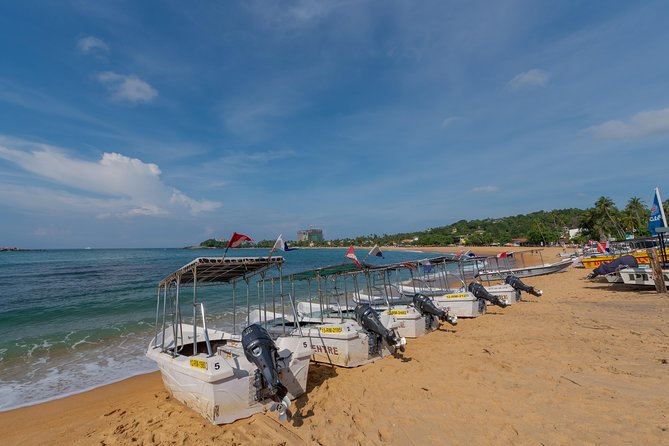
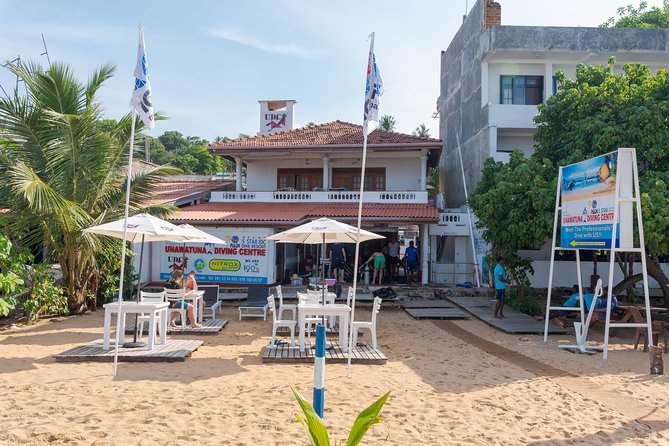
The course information gives Negombo as the location in its summary, but the stated meeting point is Divinguru Unawatuna, PADI 5 Star IDC Dive Resort, at S-36133294 Matara Road, Unawatuna 80600. Those are very different bases, so I would confirm the exact starting point before paying for transport or arranging a hotel.
The activity ends back at the meeting point. Pickup is offered, and private transportation is included, which can make the logistics easier if you are staying nearby. The information does not specify a pickup radius or list individual hotel areas, so ask the operator to confirm whether your accommodation is covered.
The center is near public transportation, another useful detail if you are not using the offered pickup. Still, a scuba course is not a good day to arrive late after a complicated connection. Confirm the meeting time, especially because the open-water morning begins at about 8:30 a.m.
Half a day of theory before you enter the water
The first training block takes around half a day. You complete the first three sections of the PADI Open Water Diver theory, but without the Open Water exam. This gives you the basic framework for safe scuba use before you handle the full kit in water.
That classroom time matters. You need to understand how to prepare equipment, communicate underwater, manage basic problems, and respond to changing conditions. The course is short, so you should expect a focused pace rather than a relaxed holiday lecture.
The center can offer theory in different languages, according to the course feedback, which is helpful if technical English is not your strongest language. I would ask at booking which languages are available on your dates. The supplied information does not name a fixed language list.
You receive bottled water, coffee or tea, and snacks during the program. Those small comforts are practical during a training day, but lunch is not provided. Bring money or your own plan for food, especially if your sessions run through the middle of the day.
The PADI manual and certification cost an extra 70 euros. This is a real part of the course budget, not a minor optional add-on. At the advertised price of $240.23 per person, your effective cost is the course fee plus that PADI charge, with currency conversion possibly affecting the final amount.
Confined-water practice builds confidence
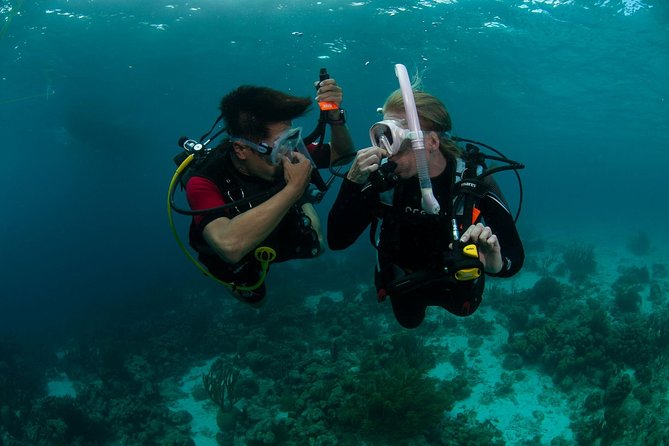
The next stage lasts around half a day and covers the first three confined-water sessions from the full Open Water course. This is where the theory becomes physical. You learn how the equipment feels, how to control yourself in water, and how to perform the required basic skills.
For a first-time scuba student, confined water is one of the most valuable parts of the schedule. You can concentrate on breathing, balance, and communication before dealing with the wider ocean setting. If you feel nervous, tell your instructor early rather than trying to look confident.
The center’s instructors receive especially strong praise for patience, kindness, and clear explanations. Ellie is described as calm and careful, while Norbert is noted for taking time with a solo student. Delphine is praised for patient teaching, and Eliška for making a first underwater session feel comfortable.
Those details matter more than flashy promises. Good instruction is about repeating a skill without making you feel foolish, watching your comfort level, and treating safety seriously while keeping the mood friendly. That combination seems to be a central strength of Divinguru Sri Lanka.
The maximum group size is eight. That is not the same as a private lesson, but it is still a manageable ceiling for a beginner course. Your actual group could be smaller, though the provided information does not guarantee a particular number of students or a fixed instructor-to-student ratio.
A few more tours worth weighing up
- AirPort CMB to Colombo (Private Taxi 24/7) Car, Van, Minibus
★ 5.0 · 604 reviews - 8 Days tour in Sri Lanka with privet driver and accommodations
★ 5.0 · 472 reviews - Negombo city tour by Tuk Tuk Hotel Pickup & Guide
★ 5.0 · 221 reviews - Private Car & Driver for 07 Days Tour In Sri Lanka
★ 5.0 · 199 reviews
The ocean morning runs from 8:30 a.m. to 1 p.m.
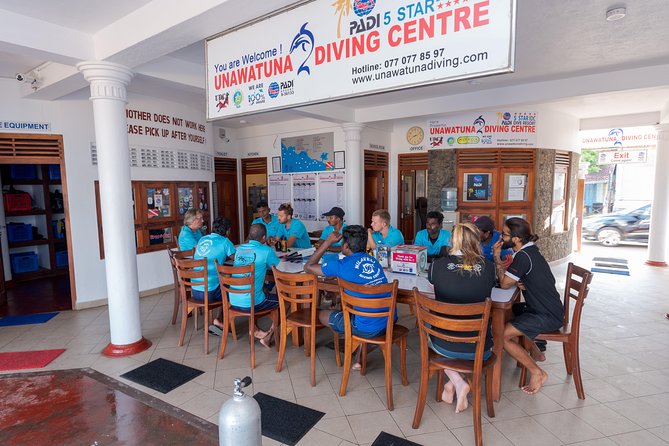
The final stage is one day with two open-water sessions, scheduled from about 8:30 a.m. until 1 p.m. This is the part most people imagine when they think about a scuba course, but the earlier training is what makes this morning useful and safe.
You will apply the skills from the confined-water work in the ocean. The exact sites, marine life, visibility, and water conditions are not specified, so I would not book this course expecting a particular animal or reef encounter. The attraction is the chance to make your first proper ocean sessions under professional supervision.
The schedule is compact. Two sessions in one morning allow you to practice more than once, but the pace may feel tiring if you are not used to spending several hours in equipment. A moderate level of physical fitness is required. You should be comfortable following instructions and managing a physically active morning.
Weather matters. If poor conditions force cancellation, you will be offered another date or a full refund. That policy is sensible for an ocean-based course, where conditions affect both safety and the quality of training. It also means you should leave some flexibility in your Sri Lanka schedule if possible.
The course requires a minimum number of participants. If that minimum is not reached, the operator may offer another date or experience, or provide a full refund. Ask about this if you are building a tight itinerary around flights or a hotel change.
Instructors who make a difference
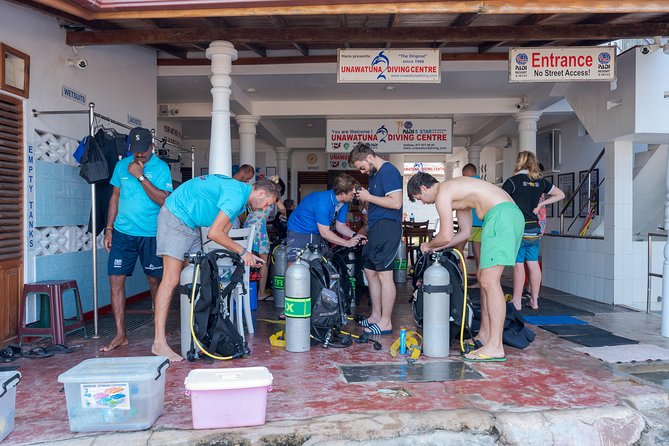
The strongest pattern in the available feedback is the teaching. The instructors are repeatedly described as professional, caring, patient, and safety-conscious, while still keeping the sessions enjoyable.
Ellie receives particular praise for calm instruction and for helping students feel secure in the water. Norbert is noted for giving a solo student enough time to learn properly. Delphine is remembered for patience and kindness, and Eliška for explaining each step clearly during a first underwater session.
Fabio and Alex are also singled out for instructing well. The range of named instructors suggests that the experience does not depend on one personality alone, although you may not be able to request a particular teacher unless the center confirms it.
I would tell the instructor about any concern before the first session. Fear, uncertainty, or difficulty with a skill is normal for beginners. The most useful sign of a good school is not that everyone feels fearless immediately. It is that you can ask questions, slow down when needed, and receive clear help.
The feedback also includes people who completed the full Open Water course or a first-time introductory program at the same center. That is useful evidence about the staff and training culture, but it should not be confused with proof that every detail will be identical in this shorter Scuba Diver course.
What is included, and what you still pay for
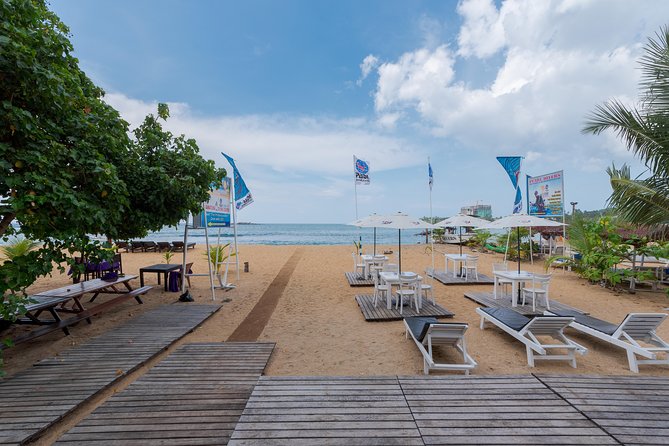
At $240.23 per person, the price covers more than just time in the ocean. You receive private transportation, scuba equipment, bottled water, coffee or tea, and snacks. For a first course, having equipment supplied saves you from renting items separately or trying to understand what you need before arrival.
The price does not include lunch. It also excludes the 70 euro PADI fee for the manual and certification. I would budget for both the advertised course price and this extra charge before deciding that the course fits your holiday budget.
Value depends on what you want from the qualification. If you need a short, supervised introduction and plan to continue training later, the course can be a practical choice. If you already know you want to scuba with a buddy around the world, paying for the shorter certificate may leave you wanting the Open Water course soon afterward.
The included transport can add value if you are staying close enough for pickup. Since the meeting point is in Unawatuna and the summary says Negombo, confirm this before you compare prices with other schools. A cheap course is less useful if getting to the correct coast becomes your problem.
Who should choose this course?
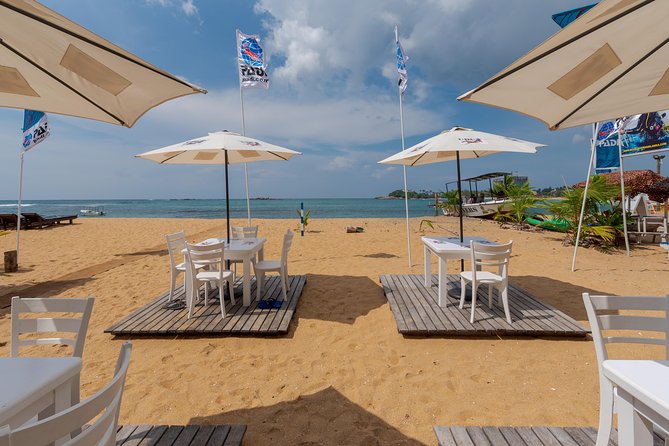
I think this course suits you if you want a formal first qualification but cannot spare the full schedule of the Open Water course. It also fits someone who expects to scuba only under professional supervision, or who wants to test whether regular scuba training is right for them.
It may be a good option for solo visitors. The small group limit and welcoming tone described by students should help you avoid feeling like an outsider arriving alone. The center also appears used to teaching people from different backgrounds and language groups.
Families should check the age rules directly, since no minimum age is provided here. The same applies to medical requirements. The information only states that participants should have moderate physical fitness, so ask the operator if you have a health concern or uncertainty about taking part.
I would steer confident future scuba enthusiasts toward PADI Open Water Diver instead. The key benefit of Open Water is independence with a buddy to 18 meters. Scuba Diver is better understood as a supervised first level, not the finished qualification for independent recreational scuba.
Booking, cancellation, and practical planning
You receive confirmation when booking, unless you reserve within one day of the start. Last-minute bookings are confirmed as soon as possible, subject to availability. I would avoid leaving this course until the final day of a Sri Lanka trip, since weather or minimum group requirements can affect the schedule.
Free cancellation is available if you cancel at least 24 hours before the local start time. Cancellations or changes made inside that window are not refunded or accepted. Weather or minimum-participant cancellations are handled with a new date, another experience, or a full refund.
Bring a plan for lunch and allow enough time to reach Unawatuna. Ask the center to confirm the meeting point, pickup arrangement, start time, available theory language, and the separate PADI fee. These questions are more useful than simply asking if the course is beginner-friendly.
Should you book the PADI Scuba Diver Course?
Book it if you want a structured two-day introduction, value patient instruction, and are comfortable being supervised by a PADI Professional after certification. The included equipment, transport, refreshments, and group limit make the package easy for a first-timer, while the instructors’ calm teaching style is a strong reason to consider the Unawatuna center.
Think twice if your real goal is independent scuba. In that case, the PADI Open Water Diver course is the better investment, even though it takes longer. Also check the location carefully because the information names both Negombo and Unawatuna.
For the right beginner, this course offers a sensible first step into the underwater world. Just price in the extra 70 euro PADI charge, keep lunch money handy, and make sure the limited 12-meter, professional-supervised certification matches your plans.
FAQ
How long does the PADI Scuba Diver Course take?
The course takes approximately two to three days. It includes about half a day of theory, half a day of confined-water training, and one day with two open-water sessions.
Where does the course start?
The stated meeting point is Divinguru Unawatuna, PADI 5 Star IDC Dive Resort, S-36133294 Matara Road, Unawatuna 80600, Sri Lanka.
Does the course end at the meeting point?
Yes. The activity ends back at the stated meeting point.
Is pickup available?
Pickup is offered, and private transportation is included. Confirm the exact pickup area with Divinguru before booking because the supplied information does not list a coverage radius.
How deep can I go after earning the Scuba Diver certification?
The certification allows you to go to a maximum depth of 12 meters when accompanied by a PADI Professional.
Can I scuba with a buddy without a professional?
No. The Scuba Diver qualification requires you to be accompanied by a PADI Professional. The PADI Open Water Diver course is recommended if you want to go with a buddy independently to 18 meters.
Is the PADI manual and certification fee included?
No. A PADI fee of 70 euros for the manual and certification is not included in the course price.
Is lunch included?
No. Lunch is not included, although bottled water, coffee or tea, and snacks are provided.
How many people can join the course?
The maximum group size is eight participants.
What happens if bad weather cancels the course?
If poor weather causes cancellation, you will be offered a different date or a full refund.
Just added around Negombo
- Ten Days Scenic Sri Lanka★ 5.0 · 3 reviews
- Colombo Airport (BIA) to Galle Private Airport Transfer★ 5.0 · 3 reviews
- 08 Days private round trip in Sri Lanka★ 4.5 · 3 reviews
- Full Day Tour to Sigiriya & Dambulla from Negombo★ 5.0 · 3 reviews
- From Negombo: White Water Rafting Adventure★ 5.0 · 3 reviews
- Transfer between colombo Airport (CMB) and Marino Beach, Colombo★ 5.0 · 3 reviews
- Airport transfer to Arugambay★ 5.0 · 3 reviews
- Airport Pick-up from Colombo Airport to Kandy★ 5.0 · 3 reviews
Scuba Diving, compared.
Discover SCUBA Diving in Beautiful Unawatuna Bay
Read our review →
Browse the lists this tour appears in