
Reviewed · CITY TOURS
Anuradhapura Private Ancient City Day Tour
Ancient stones, living faith, one nimble tuk-tuk. This five-hour private tour makes Anuradhapura easier to understand and far easier to cover than exploring its wide archaeological zone on foot. I especially like the private guide, which lets you ask questions and adjust the pace, and the small touches such as bottled water, light snacks, and a tuk-tuk driving lesson. The main catch is the cost of entrance tickets, which you pay separately from the $30 tour price.
Guide Navin is the heart of the experience. His English is clear, his energy is high, and he explains both Buddhist ideas and Sri Lanka’s past in a way that does not feel like a classroom lecture. You should still allow plenty of time for sun, walking, and respectful visits to active religious sites. Hats are not allowed, so bring sun cream and dress for the heat without relying on headwear.
In This Review
- Key points to know before booking
- Why Anuradhapura works best with local guidance
- Starting in Anuradhapura by tuk-tuk
- Sri Maha Bodhi, the living center of the visit
- Ruwanwelisaya Stupa and the scale of faith
- Jethawanaramaya, brickwork on a monumental scale
- Kuttam Pokuna and the practical side of monastic life
- Samadhi Buddha and the quiet pause
- Abhayagiri Vihara and its monastery remains
- Moonstones and guard stones, small details with big meaning
- Thuparama Seya, a fitting final monument
- What the $30 tour price really buys you
- Heat, clothing, and other practical matters
- Who will get the most from this tour
- Should you book the Anuradhapura Ancient City tour?
- FAQ
- How long does the Anuradhapura private tour last?
- What is included in the $30 price?
- Are entrance tickets included?
- Which major sites are visited?
- What should I bring?
- Is the tour wheelchair accessible?
Key points to know before booking
- Five hours in a private tuk-tuk: A practical way to connect Anuradhapura’s scattered sacred and archaeological sites.
- Navin brings history to life: Expect clear explanations of Buddhism, local customs, ancient buildings, and present-day Sri Lanka.
- The $30 price excludes admission: Budget separately for the Ancient City entrance ticket, reported by one recent participant as about $30 for foreign visitors.
- Sri Maha Bodhi and Ruwanwelisaya lead the route: These are active places of worship, not just photo stops.
- The pace is flexible: You get time for pictures, questions, refreshments, and occasional changes in emphasis.
- Bring practical basics: Wear comfortable shoes, carry your passport, use sun cream, and wait in your hotel lobby 10 minutes before pickup.
Why Anuradhapura works best with local guidance
Anuradhapura was Sri Lanka’s first capital, and its sacred center covers a large area. The important places are not packed into one compact courtyard. Stupas, monasteries, ponds, statues, guard stones, and ancient engineering works are spread across the site.
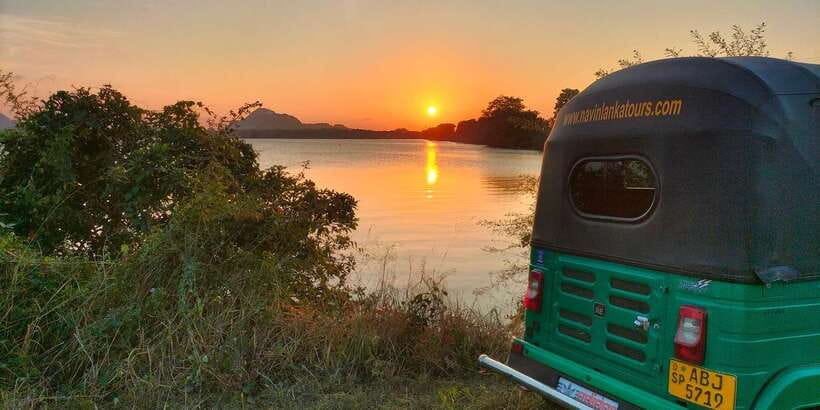
That is where the tuk-tuk earns its keep. You move between major stops without spending your limited afternoon walking beside hot roads or trying to work out which monument comes next. The vehicle also gives the day a local feel. You are not sealed behind glass, and short rides let you see more of the area between visits.
I also value the private format. You are not tied to the questions or walking speed of a large group. If you want more time at a stupa, a clearer explanation of a Buddhist symbol, or a quick picture stop, you can say so. The tour is still tightly timed, with about 25 minutes listed for most individual sights, so it is best viewed as a smart introduction rather than a full archaeological study.
Navin receives especially strong praise for his explanations and good humor. He covers religion, culture, and ancient history, but he also answers ordinary practical questions about Sri Lanka. He has pointed out birds along the way, offered ideas for the rest of a Sri Lankan trip, and shared local tips after the tour. That extra help matters if Anuradhapura is one stop in a longer journey.
A few more tours worth weighing up
- Private City Day Tour in Anuradhapura
★ 5.0 · 383 reviews - Minneriya National Park Elephant Jeep Safari Private Tour
★ 5.0 · 68 reviews - Explore & Ride the history of anuradhapura with Vogel Tours
★ 5.0 · 62 reviews
Starting in Anuradhapura by tuk-tuk
Pickup is included from your Anuradhapura hotel. Wait in the lobby 10 minutes before the agreed time, then settle into the tuk-tuk for the five-hour route.
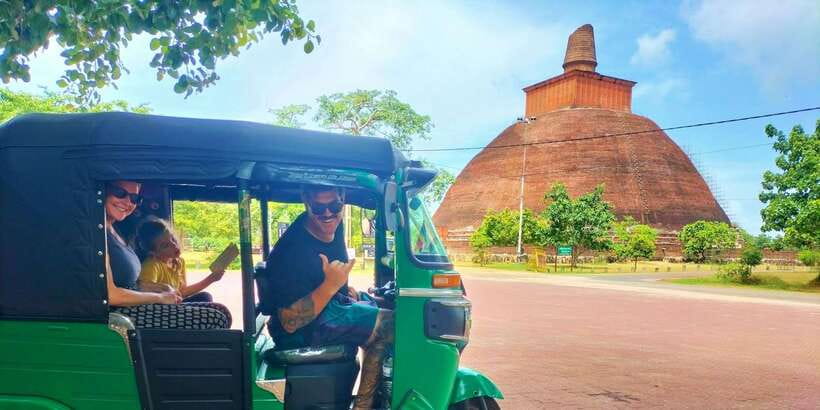
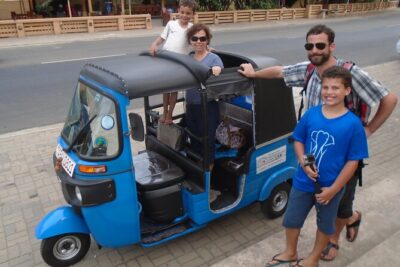
A brief tuk-tuk lesson is included. This is not the main purpose of the tour, but it adds a playful local touch. You may get the chance to try driving under guidance, depending on the arrangements for your group. One party of three was given two tuk-tuks so everyone could sit comfortably, which suggests the operator can make sensible adjustments when needed.
Still, ask about seating if you are a larger party. The tour is private, but private does not automatically mean spacious. For most couples or small groups, the tuk-tuk should be a useful and memorable way to get around.
Bottled water is included, and refreshments have also been provided during some tours. I would still bring extra water and sun cream. The route takes place in daylight, and much of the appeal lies in open courtyards and exposed stonework.
Sri Maha Bodhi, the living center of the visit
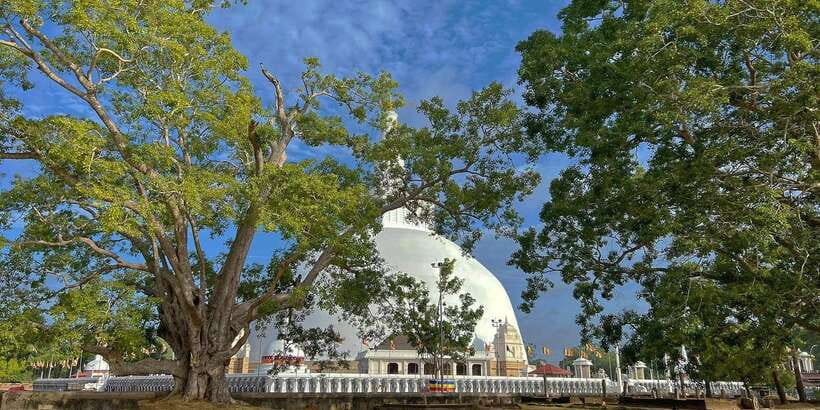
Jaya Sri Maha Bodhi is one of the most important stops on the route. The visit lasts about 25 minutes, enough for an introduction, time to observe worship, and a few photographs where permitted.
This is not simply an old tree or another item on an archaeological checklist. It is an active sacred place, and the atmosphere depends on people coming to pray and make offerings. Navin’s role is useful here because he can explain what you are seeing and help you behave appropriately without turning the visit into a rushed photo stop.
Wear comfortable shoes and choose respectful clothing for religious sites. Follow local instructions about photography and where to walk. The listing says hats are not allowed, so plan around that rule rather than assuming a cap will be acceptable.
Ruwanwelisaya Stupa and the scale of faith
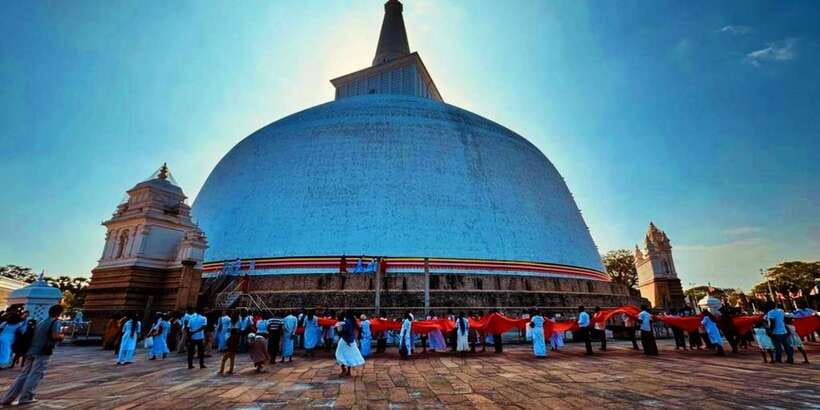
Ruwanweli Maha Seya is one of Anuradhapura’s great visual moments. Its broad white form is easy to recognize, but the important part is how Navin connects the building to Buddhist practice and Sri Lanka’s past.
The 25-minute stop gives you a useful first look at the stupa and its setting. You can take in the scale, watch worshippers, and ask about the symbolism and traditions linked with the site. If you are interested in architecture, religion, or photography, this is likely to be one of the tour’s strongest stops.
The limitation is time. A quarter of an hour does not let you linger through every detail or sit quietly for long. If Ruwanwelisaya matters most to you, tell Navin early so you can make the best use of your time.
A completely different kind of day out from Anuradhapura:
- Minneriya National Park | Private Safari
★ 5.0 · 59 reviews - Sigiriya Hike & Minneriya Safari Private Full Day Tour
★ 5.0 · 56 reviews - Sigiriya & Habarana: Sunrise Hot Air Balloon Ride Experience
★ 5.0 · 47 reviews - Minneriya National Park Safari – Private Jeep with Hotel Pickup
★ 5.0 · 44 reviews
Jethawanaramaya, brickwork on a monumental scale
Jethawanaramaya introduces a different side of Anuradhapura. Its ancient brick construction and enormous stupa form show the technical skill and ambition behind the old capital.
Navin’s explanations help connect the ruin to the wider monastic center. Without a guide, you may see a huge brick monument and move on. With context, the site becomes evidence of organized religious life, engineering, and the importance of Anuradhapura as a center of power.
The stop is scheduled for about 25 minutes. Take a moment to look beyond the main outline. Brick texture, tree growth, surrounding foundations, and the relationship between the stupa and its former monastery all reward a slower eye.
Kuttam Pokuna and the practical side of monastic life
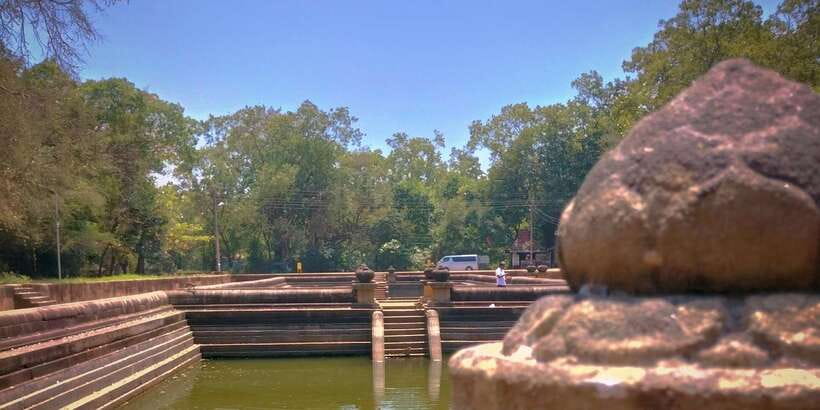
The Kuttam Pokuna, or Twin Ponds, is a welcome change from the giant stupas. These carefully built bathing ponds show that ancient monastic complexes needed good water systems and thoughtful public spaces, not only shrines.
The two ponds are visually pleasing, but their real value is practical. They help you picture daily life within a large monastery. Ask Navin about their use and construction, since the details are easy to miss when you are focused only on the surface.
This is also a good place for photographs. As with every outdoor stop, strong sunlight can be tiring. Keep water close and use the 25-minute visit well.
Samadhi Buddha and the quiet pause
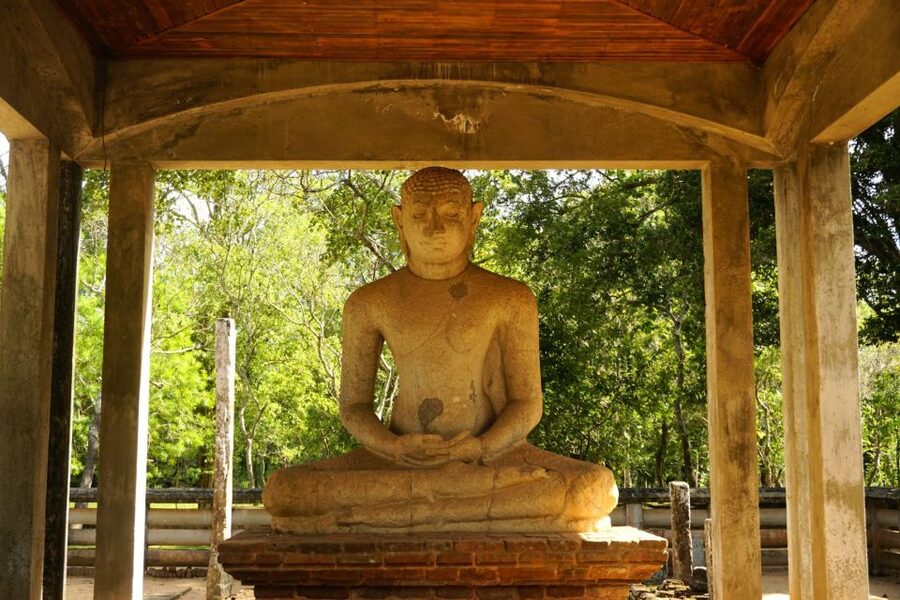
The Samadhi Buddha Statue offers a calmer moment in the middle of the route. The image is associated with meditation, giving Navin a natural opening to explain Buddhist thought rather than only dates and rulers.
I like this part of the tour because it slows the rhythm. Anuradhapura can become a procession of large monuments, and a seated Buddha asks you to look more closely and consider the purpose behind the place.
You have around 25 minutes here. Use it to ask questions about meditation, the statue’s expression, and the difference between seeing Buddhist art in a museum and seeing it in a living religious setting.
Abhayagiri Vihara and its monastery remains
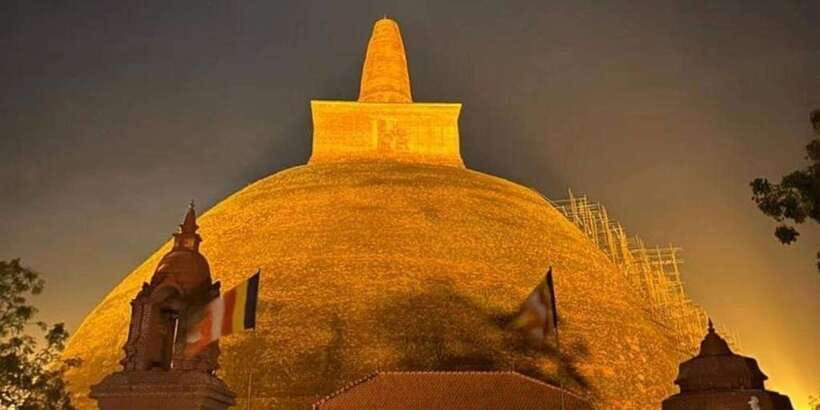
Abhayagiri Vihara broadens the story from individual monuments to a major monastic complex. The visit includes Abhayagiri itself, the main refectory, the Elephant Pond, the Anuradhapura Moonstone, and a Muragala, or guard stone.
At Abhayagiri, Navin can help you understand how the separate structures fitted together. The value is not just in seeing another stupa. You begin to picture a working religious center with monks, food preparation, water management, movement, and ceremonial entrances.
The main refectory is particularly useful for that reason. Its name points to ordinary needs within monastic life. Monumental sites often focus attention on kings and sacred relics, while a refectory reminds you that communities also had to eat, organize supplies, and maintain daily routines.
The Elephant Pond adds another practical element. It is easy to pass a large water feature without asking why it was built or how it served the complex. A guide gives the structure a human scale and links it to the monastery around it.
Moonstones and guard stones, small details with big meaning
The Anuradhapura Moonstone and Muragala guard stone are among the stops where a guide makes the largest difference. These pieces are smaller than the stupas, but their carved forms carry religious and cultural meaning.
A moonstone sits at an entrance and is meant to be read, not merely crossed. The guard stone also works as part of an approach, marking the threshold of a sacred or important building. Navin can point out the symbols and explain how these details fit into the wider design.
You may find that the short time at these stops feels just right. They are not places where you need an hour, but they are easy to overlook without someone showing you what deserves attention.
Thuparama Seya, a fitting final monument
Thuparama Seya closes the sightseeing portion of the route. It gives you one more chance to see how Anuradhapura combines active devotion with ancient stone and brick remains.
By this point, the earlier explanations should help you read the site differently. You are no longer looking only for the biggest structure. You can notice how worship, architecture, symbols, and the old monastic network fit together.
The tour then returns you to Anuradhapura. Five hours is enough to cover the main highlights at a good pace, but not enough to explore every ruin in the ancient city. That is not a flaw, as long as you book this as an orientation and cultural overview.
What the $30 tour price really buys you
The advertised price is $30 per person. It covers the private guide, private transport, the tuk-tuk lesson, and bottled water. Hotel pickup and drop-off are included, which saves you from arranging separate transport around a large and spread-out site.
The important extra cost is admission. Entrance tickets are not included. One recent booking described the foreign visitor ticket for the Ancient City as about US$30 per person, so check the current price before you commit. For two people, the entrance fee can equal or exceed the tour charge itself.
That makes the total cost higher than the headline figure. Even so, I think the tour can offer good value if you would otherwise need to arrange a vehicle, driver, and separate guide. The private format also avoids paying for a large group experience that may move too quickly or too slowly for you.
If you are on a tight budget and comfortable researching every site yourself, independent visits may cost less. You will give up the explanations, local help, and efficient route planning. Anuradhapura rewards context, so I would spend the extra money if understanding the places matters to you.
Heat, clothing, and other practical matters
Plan this as a sunny outdoor tour. Apply sun cream before pickup, carry water, and wear shoes that are comfortable for walking and standing. A passport is listed among the things to bring, so keep it accessible.
The no-hat rule deserves attention. You cannot simply assume that a sun hat or baseball cap is acceptable at the religious sites. Use sun cream, light respectful clothing, and the shade available at stops.
The tour is offered in English, with a live guide and an English audio guide. It is wheelchair accessible, although the material provided does not explain the exact surfaces or access conditions at each ancient site. If you use a wheelchair, confirm the practical details before booking.
Free cancellation is available up to 24 hours before the tour for a full refund. You can also reserve and pay later, which helps if your Sri Lankan route is still changing. The stated age restriction is that the tour is not suitable for people over 95.
Who will get the most from this tour
I would choose this outing if you have only one afternoon in Anuradhapura, want help understanding Buddhism, or dislike the thought of arranging transport between scattered ruins. It also suits first-time visitors who want a friendly local introduction before deciding which parts deserve a longer return visit.
Families and small private groups should appreciate the flexible pace. Couples can ask for more time at a favorite site, while friends can make use of the tuk-tuk lesson and informal atmosphere. Navin’s humor and easy conversation add warmth without taking attention away from the monuments.
History and religion enthusiasts may want more than five hours. You could spend days studying Anuradhapura properly, and this route cannot cover every detail. But as a first look, it gives you a strong framework and covers a useful range of sacred, architectural, and everyday monastic sites.
Should you book the Anuradhapura Ancient City tour?
Book it if you want efficient transport plus clear cultural explanations, not just a ride past ruins. Navin is repeatedly praised for his English, humor, flexibility, and ability to explain Buddhism in plain terms. The small refreshments, tuk-tuk lesson, bird spotting, and follow-up travel advice are welcome extras.
Think twice if you want to spend a long time at one or two monuments, or if you are counting every dollar. The entrance ticket is separate, and 25-minute stops can feel short for serious archaeology fans.
For most first-time visitors, I would book this as a well-paced introduction to Anuradhapura. Arrive ready for sun, respect the religious setting, and confirm the current admission fee. You will leave with more than a collection of photographs: you will understand how sacred worship, monastic life, and Sri Lanka’s ancient capital fit together.
FAQ
How long does the Anuradhapura private tour last?
The tour lasts five hours, including tuk-tuk transport, sightseeing, and the return to Anuradhapura.
What is included in the $30 price?
The price includes a private English-speaking guide, private transport, a tuk-tuk lesson, and bottled water. Hotel pickup and drop-off are also included.
Are entrance tickets included?
No. Tourist entrance tickets are not included in the tour price. A recent booking reported the foreign visitor admission fee for the Ancient City as about US$30 per person, but you should check the current charge.
Which major sites are visited?
The route includes Sri Maha Bodhi, Ruwanwelisaya, Jethawanaramaya, Kuttam Pokuna, the Samadhi Buddha Statue, Abhayagiri Vihara, the main refectory of Abhayagiri Monastery, Elephant Pond, the Anuradhapura Moonstone, a Muragala guard stone, and Thuparama Seya.
What should I bring?
Bring your passport, comfortable shoes, and sun cream. The tour takes place in daylight, and hats are not allowed.
Is the tour wheelchair accessible?
Yes, the activity is listed as wheelchair accessible. The available information does not describe access conditions at every individual ancient site, so confirm any specific mobility needs before booking.
Just added around Anuradhapura
- Minneriya: Minneriya National Park Private Jeep Safari★ 4.4 · 3 reviews
- From Kandy: Anuradhapura Day Trip with Lunch★ 3.2 · 3 reviews
- From Dambulla: Minneriya National Park wild Jeep Safari★ 5.0 · 3 reviews
- From Colombo: Galle & Mirissa Private All Inclusive Day Tour★ 5.0 · 3 reviews
- Polonnaruwa Day Tour from Kandy (Private )★ 5.0 · 3 reviews
- Wild Elephant Safari in Minneriya National Park★ 3.5 · 3 reviews
- Minneriya National Park Safari | Jeep with Tickets★ 5.0 · 3 reviews
- Half Day – Minneriya National Park Safari Tour From Habarana/Sigiriya★ 3.5 · 3 reviews
City Tours, compared.

Private Tuk-Tuk City Tour with All Entry Fees
Read our review →
Colombo Tuk Tuk City Tour -Sightseeing Entry Fees & Food Included
Read our review →
Colombo Private Tuk-Tuk City Tour with All Entry Fees Included
Read our review →
Private Tuk-Tuk City Tour with Guide & All Tickets
Read our review →
Kandy to Ambuluwawa & Kandy City Guided Tuk Tuk Day Tour
Read our review →
Tuk Trip is Very Cheap in Colombo (All-inclusive ) city tour
Read our review →Browse the lists this tour appears in