
Reviewed · SIGIRIYA ROCK TOURS
Day tour sigiriya to anuradhapura
Ancient stones tell the story here. This day trip gives you a close look at Anuradhapura’s sacred monuments, from Sri Lanka’s first Buddhist temple to the famous Bodhi tree. I also like the small group limit of three people and the ease of pickup and return at your Sigiriya address.
The main catch is time. With eight to ten hours covering a large archaeological area, the day can feel full, especially if you want quiet time at each site. Entrance fees are also not included, so the $120 price is not your final cost.
In This Review
- Key points to know before booking
- Why Anuradhapura makes a fine day trip from Sigiriya
- Thuparamaya, where Sri Lankan Buddhist monument building began
- Ruwanwelisaya and the scale of royal devotion
- Jaya Sri Maha Bodhi, the most sacred living stop
- Abayagiriya Stupa and the great monastery zone
- Isurumuniya Temple and its older traditions
- Kuttam Pokuna, ancient engineering in practical form
- The Anuradhapura Moonstone and small carved details
- Abhayagiri Dagaba and the wider monastic world
- Mihintale, the final hilltop chapter
- What the $120 price really includes
- Timing, comfort, and the practical side of the day
- How this compares with a Sigiriya-only day
- Who should book this Anuradhapura day tour
- Should you book it?
- FAQ
- Where does the tour start and end?
- How long does the day tour last?
- How many people can join the tour?
- Are entrance fees included?
- Which places are included in the visit?
- Is Sigiriya Rock Fortress included?
- Is bottled water provided?
- Can I cancel for a full refund?
Key points to know before booking
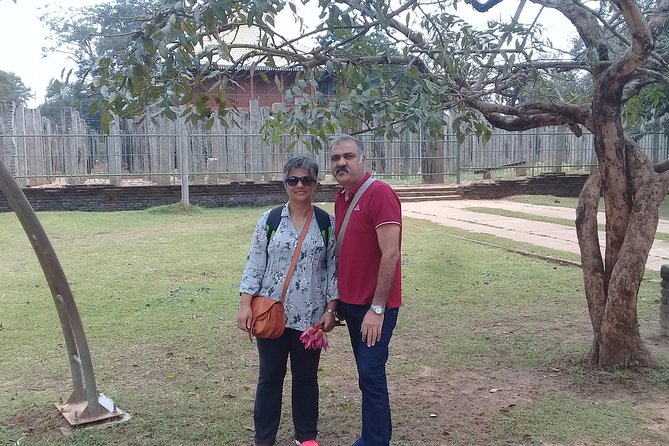
- Nine major stops: You visit stupas, monastery ruins, ancient baths, a temple, a sacred tree, and Mihintale.
- Maximum of three people: This is a much more personal setup than a large coach tour.
- Round-trip pickup in Sigiriya: Transport starts and ends at your chosen Sigiriya address.
- Entrance fees are extra: Bring additional money for all admission charges and taxes.
- Eight to ten hours on the road: Expect a long day, but one that covers much of Anuradhapura’s main sacred area.
- Two bottles of water included: Useful in Sri Lanka’s heat, though you should still carry more.
Why Anuradhapura makes a fine day trip from Sigiriya
Sigiriya gets much of the attention in central Sri Lanka. Its famous rock is hard to miss, but Anuradhapura gives you a different view of the country’s past. Instead of one dramatic fortress, you see a huge sacred center spread across ancient monasteries, stupas, gardens, pools, and religious monuments.
This was one of Sri Lanka’s historic capitals. The visit is especially valuable if you want to understand how Buddhism shaped the island’s architecture and daily life. The sites are not all the same. Some are enormous and ceremonial, while others are small, quiet, and full of carved detail.
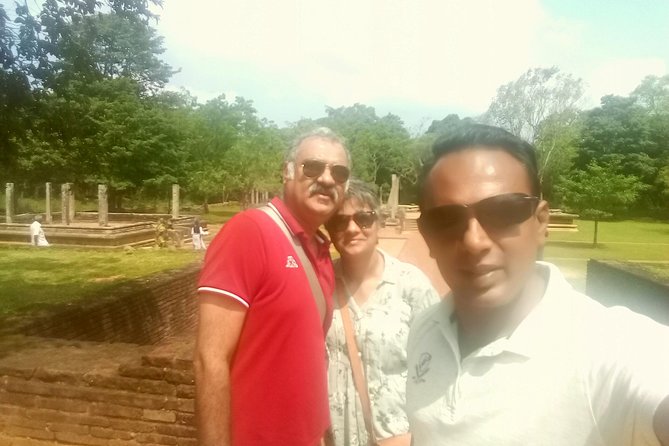
The tour is built for a small party of no more than three people. That matters in a place like Anuradhapura, where you may want to pause at a shrine, ask about a carving, or adjust the pace when the heat rises. You are not being moved through the ruins with a large crowd on a fixed schedule.
The experience provider is Ishan Tours and Holidays. Pickup and drop-off are arranged from your selected address in Sigiriya, and the activity ends back at the meeting point. That removes the headache of arranging a separate vehicle for the long day.
One point needs care: the description links this outing with Sigiriya Rock Fortress, but the listed stops are all in and around Anuradhapura, plus Mihintale. Do not assume a Sigiriya climb is part of the same day unless the operator confirms it directly.
More ways to climb Sigiriya:
- From Colombo: Sigiriya and Dambulla Day Trip with Safari
★ 4.7 · 842 reviews - From Kandy: Sigiriya Rock & Dambulla Cave Temple Adventure
★ 4.9 · 785 reviews - Organic cooking class sigiriya (kumara & family)
★ 5.0 · 650 reviews
Thuparamaya, where Sri Lankan Buddhist monument building began
Your first listed stop is Thuparamaya, with about 30 minutes planned. It is described as Sri Lanka’s first Buddhist temple and the earliest dagoba built on the island, dating to the reign of King Devanampiya Tissa, from 247 to 207 BC.
That makes it more than a quick photo stop. Thuparamaya helps set the religious context for everything that follows. You are looking at an early form of the stupa, a structure designed to honor Buddhist relics and sacred memory.
Half an hour is enough for a first look, but it is not a long study period. If you care about early Buddhist architecture, you may want to ask your driver or guide how much time is possible here. Admission is not included.
Ruwanwelisaya and the scale of royal devotion
The next stop allows about an hour at Ruwanwelisaya. This large hemispherical stupa was built by King Dutugemunu around 140 BC and is considered sacred by Buddhists around the world.
This is one of the places where Anuradhapura’s scale becomes clear. The monument is not simply an old building. It represents royal patronage, religious devotion, and the ability of an ancient kingdom to organize huge construction projects.
Give yourself time to notice how people approach the site and how the monument functions as a living place of worship. Dress respectfully, follow local customs, and remember that this is not only an archaeological attraction.
The one-hour allocation is sensible for a first visit, though the area may feel rushed if you want detailed photographs or a long period of quiet observation. Admission fees remain your responsibility.
Jaya Sri Maha Bodhi, the most sacred living stop
Jaya Sri Maha Bodhi receives about an hour, and this is one of the strongest parts of the day. It is a sacred fig tree in the Mahamewna Gardens, said to have grown from a southern branch of the original Sri Maha Bodhi at Buddha Gaya in India.
A tree can sound less dramatic than a giant stupa, but do not underestimate this visit. The importance here comes from continuity and faith. You are seeing a living object that has been treated as sacred for centuries, not just a stone monument left behind by an ancient kingdom.
Keep your behavior calm and respectful. This is a religious site, so the experience is less about rushing from one viewpoint to another and more about observing the people, offerings, and devotional atmosphere around the tree.
An hour gives you useful breathing room. It also helps balance the faster 30-minute stops at Thuparamaya and the Twin Baths.
A completely different kind of day out from Sigiriya:
- From Sigiriya: Minneriya National Park Private Jeep Safari
★ 4.9 · 415 reviews - From Sigiriya: Minneriya National Park Elephant Safari
★ 4.8 · 365 reviews - Day tour to Sigiriya & Dambulla from Kandy
★ 5.0 · 252 reviews - Kandy to Sigiriya Day Tour and Dambulla cave temple with private vehicle
★ 5.0 · 232 reviews
Abayagiriya Stupa and the great monastery zone
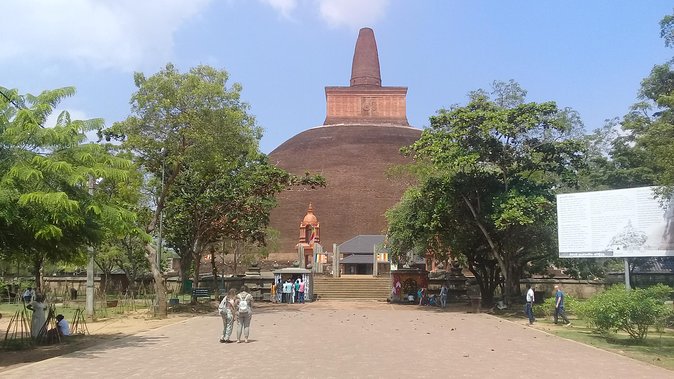
The next stop is listed as Abayagiriya Stupa, with 30 minutes planned. The description connects this part of the visit with Jetavanaramaya, a major stupa in the ruins of Jetavana monastery. At 122 meters, Jetavanaramaya was once the world’s tallest stupa and is described as the third tallest structure of its time.
The names can be confusing. Anuradhapura has several major monastery complexes and stupas, and the supplied schedule also includes a separate stop at Abhayagiri Dagaba later in the day. If the exact monument matters to you, confirm the intended stop before departure.
Thirty minutes is enough to appreciate the monument’s size and take in the setting. It is not enough for a detailed exploration of a large monastery area. This is one reason the tour suits people who want a broad introduction rather than a specialist archaeological visit.
Isurumuniya Temple and its older traditions
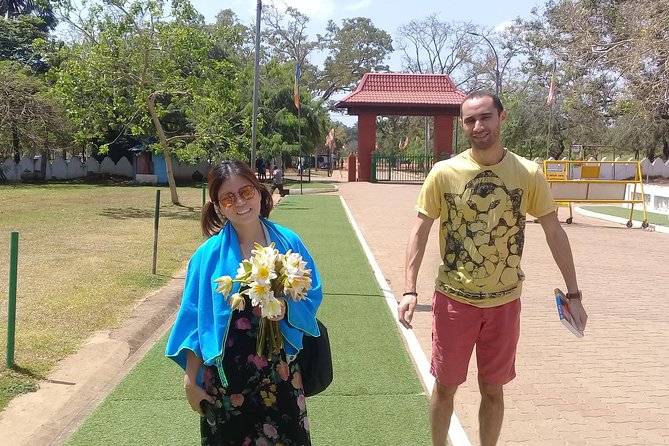
Isurumuniya Temple gets an hour. The site is associated in the description with Pulasthi Rishi and stories about King Ravana, as well as a long claimed history. The temple was built by King Devanampiya Tissa.
This is a useful change of pace after the huge stupas. A temple visit gives you a more focused place to look at religious art, rock formations, and local traditions. Some of the stories connected with the site belong to legend and cultural tradition, so listen with an open mind rather than treating every claim as settled archaeological fact.
The one-hour stop should let you look around without feeling pressed. As with the other religious locations, modest clothing and respectful conduct are wise.
Kuttam Pokuna, ancient engineering in practical form
The Twin Baths, or Kuttam Pokuna, are scheduled for about 30 minutes. These paired pools are regarded as some of the best surviving examples of ancient Sri Lankan bathing tanks.
This stop shows a side of Anuradhapura that stupas cannot. The pools point to planning, water management, craftsmanship, and the daily needs of a large monastic community. Look closely at the stairs, edges, and proportions. The appeal is in the careful construction, not just the overall shape.
Thirty minutes is a reasonable amount of time. You can see the paired design, take photographs, and appreciate the engineering before moving on. It is also a welcome shorter stop during a long day.
The Anuradhapura Moonstone and small carved details
The Moonstone, or Sandakada pahana, receives another 30 minutes. This carved semicircular stone usually appears at the bottom of stairways and entrances in ancient Sinhalese architecture.
This may be one of the smallest stops, but it rewards attention. Look at the pattern and the way the stone marks a threshold. It is a reminder that Anuradhapura’s artistic value is not limited to giant monuments. Much of the pleasure comes from noticing details at your feet.
You may find this stop especially worthwhile if you enjoy carved stone and architectural symbols. A guide’s explanation can make the design easier to understand, so use the small group setting to ask questions rather than simply taking a quick picture.
Abhayagiri Dagaba and the wider monastic world
Abhayagiri Dagaba is allotted an hour. Abhayagiri Vihara was a major monastery site connected with Mahayana, Theravada, and Vajrayana Buddhism. It is described as one of the world’s most extensive ruin areas and one of Anuradhapura’s most sacred Buddhist sites.
This is where the day’s wider religious picture comes into focus. Anuradhapura was not a single temple complex. It was a major center with different monastic traditions, large communities, and ambitious buildings.
The one-hour visit gives you time to understand the scale, though you will still see only part of the area. Wear comfortable shoes. The schedule covers a lot of ground, and this is not a day for stiff footwear or a plan to remain in the vehicle at every stop.
Mihintale, the final hilltop chapter
The final listed stop is Mihintale, about 12.875 kilometers east of Anuradhapura. The site is associated with Missaka Pabbata, a hill about 300 meters high, and with the arrival of Buddhism in Sri Lanka according to traditional accounts.
Mihintale adds a broader setting to the day. After temples, stupas, pools, and carved thresholds, you finish at a place connected with a major turning point in Sri Lankan Buddhist tradition.
The one-hour allowance may feel short if climbing is involved, or if you want to spend time taking in the views. The description does not specify the exact walking route or physical demands, so ask about the plan before setting out. This is also the point where fatigue may catch up with you after a full day.
What the $120 price really includes
At $120, the main value is private-style transport and a very small group. For up to three people, that can be a fair price if you want a direct ride from Sigiriya and do not want to piece together several transfers.
You receive round-trip transportation from your selected Sigiriya address and two bottles of water. The tour does not include all fees and taxes, and every listed stop says admission is not included. Budget for those charges separately.
The price makes the most sense for a small group splitting the cost. A couple or group of three gets better value than a solo visitor paying the full amount. You are also paying for convenience: no searching for transport in Anuradhapura, no negotiating several rides, and no need to return to Sigiriya independently.
Still, this is not an all-inclusive day. Ask for the expected entrance costs before booking so the final budget does not surprise you.
Timing, comfort, and the practical side of the day
The stated duration is eight to ten hours. That is a long outing, but the number of major stops explains why. Several visits last only 30 minutes, while Ruwanwelisaya, Jaya Sri Maha Bodhi, Isurumuniya Temple, Abhayagiri Dagaba, and Mihintale receive about an hour each.
Start with realistic expectations. You will see many important places, but you will not study every ruin in depth. The format works best if you prefer a broad view of Anuradhapura and want someone else to manage the driving.
Carry comfortable shoes, sun protection, and extra drinking water. Two bottles are provided, but that is not much for a full day in a warm climate. Feedback connected with Sigiriya repeatedly stresses comfortable shoes, plenty of water, and an early start, with 6:30 AM described as a good time for avoiding harsher heat. Since this tour’s schedule is not shown with a fixed departure time, ask the operator what start time they recommend.
The tour is described as suitable for most people, but the Mihintale stop may involve more walking than the shorter monument visits. If you have concerns about stairs or long walks, ask how the day can be adjusted.
Mobile tickets are supported, and confirmation is received at booking. Public transportation is nearby, though the included plan is direct pickup and return from your Sigiriya address.
How this compares with a Sigiriya-only day
Sigiriya and Anuradhapura offer very different experiences. Sigiriya is concentrated and dramatic, with a famous climb, frescoes, ancient gardens, the Lion’s Paws, and broad views from the top. Several comments about Sigiriya praise the climb and recommend starting around 6:30 AM, while also warning that the ascent can be tiring.
Anuradhapura is more spread out and more religious in character. You move between many places, and the reward comes from seeing how the ancient capital worked as a whole.
The two destinations can pair well during a Sri Lankan trip, but do not confuse this Anuradhapura day tour with a guaranteed Sigiriya Fortress climb. The supplied stop list does not include a Sigiriya ascent. Confirm the exact plan if you want both sites on one day.
Who should book this Anuradhapura day tour
I would recommend it to couples, families, or small groups based in Sigiriya who want a convenient introduction to Anuradhapura. It is particularly useful if you value a private-style vehicle, direct transfers, and a schedule that covers the major sacred sites in one day.
It also suits people who enjoy Buddhist architecture, ancient engineering, royal monuments, and cultural history. You do not need to be an archaeology expert. The variety keeps the day interesting.
I would hesitate if you want a slow, scholarly examination of every monastery complex. The schedule is ambitious, and the entrance fees add to the headline price. I would also think twice if your main goal is Sigiriya Rock itself, because that climb is not clearly included among the listed stops.
The experience has a 4.7 rating from 45 reviews and a 93 percent recommendation rate, which supports the overall value of its small-group format. The strongest practical advice is simple: begin early if possible, wear proper shoes, bring extra water, and confirm the exact monuments and fees before you go.
Should you book it?
Book this tour if you want to turn a Sigiriya stay into a full day of ancient Sri Lankan history without arranging your own transport. The small group, hotel pickup, and broad selection of Anuradhapura sites are its best features.
Skip it if you want a relaxed day at only two or three monuments, or if you are trying to keep the total cost low after entrance fees. For most people with limited time in the Cultural Triangle, though, this is a useful and well-planned way to see Anuradhapura’s major sacred places.
FAQ
Where does the tour start and end?
The tour starts in Sigiriya, Sri Lanka, with pickup from your chosen Sigiriya address. It ends back at the meeting point.
How long does the day tour last?
The experience lasts approximately eight to ten hours.
How many people can join the tour?
The tour has a maximum of three people in total.
Are entrance fees included?
No. Entrance tickets for the listed sites are not included, and all fees and taxes are excluded.
Which places are included in the visit?
The listed stops are Thuparamaya, Ruwanwelisaya, Jaya Sri Maha Bodhi, Abayagiriya Stupa, Isurumuniya Temple, the Twin Baths, the Anuradhapura Moonstone, Abhayagiri Dagaba, and Mihintale.
Is Sigiriya Rock Fortress included?
The description connects the experience with Sigiriya Rock Fortress, but the listed stops do not include a Sigiriya climb. Confirm this detail with Ishan Tours and Holidays before booking.
Is bottled water provided?
Yes. Two bottles of water are provided for the people on the tour.
Can I cancel for a full refund?
Yes, if you cancel at least 24 hours before the experience start time. Cancellations made less than 24 hours in advance are not refunded, and poor weather may result in a different date or a full refund.
Just added around Sigiriya
- Tour to Dambulla Cave, Sigiriya and Pidurangala Rock from Kandy★ 5.0 · 3 reviews
- Day Tour Kandy to Sigiriya with Dambulla Cave Temple Excursion★ 5.0 · 3 reviews
- Private Day tour from Kandy to Sigiriya, Dambulla & Pidurangala★ 5.0 · 3 reviews
- Colombo: Sigiriya Rock Fortress & Dambulla Cave Temple Tour★ 4.3 · 3 reviews
- Private day tour to Sigiriya and Dambulla from Colombo★ 5.0 · 3 reviews
- Full Day Tour to Sigiriya & Dambulla from Negombo★ 5.0 · 3 reviews
- From Colombo: Sigiriya and Dambulla Full-Day Private Tour★ 3.4 · 3 reviews
- Half Day – Minneriya National Park Safari Tour From Habarana/Sigiriya★ 3.5 · 3 reviews
Sigiriya Rock Tours, compared.

Organic cooking class sigiriya (kumara & family)
Read our review →
Kandy to Sigiriya Day Tour and Dambulla cave temple with private vehicle
Read our review →
Private Day Trip to Sigiriya & Dambulla from Kandy – Aaliya Tours
Read our review →Browse the lists this tour appears in