
Reviewed · SIGIRIYA ROCK TOURS
Organic cooking class sigiriya (kumara & family)
Good food starts in the garden. This small family cooking experience in Sigiriya takes you into Kumara and Thanuja’s home, where you help gather organic produce, prepare spices, cook several Sri Lankan dishes, and eat the meal together. I especially like the garden-to-table approach and the chance to learn how spices are prepared in a traditional way. The main consideration is that this is a home-based class, not a polished studio kitchen, so comfort, timing, and group size can vary.
You should allow about two and a half hours, though some sessions take closer to three. I also like that the class includes a proper meal, herbal tea, bottled water according to the tour details, and recipes may be sent afterward. Bring extra drinking water anyway, since one account noted that only tap water was available during a particular visit.
In This Review
- Key points to know before you book
- Why this Sigiriya cooking class feels different
- Starting in the organic garden
- Learning Sri Lankan spices the traditional way
- Preparing several curries together
- Sitting down to a traditional Sri Lankan meal
- What the timing and group size mean
- Is $28 good value?
- Small drawbacks worth knowing
- Who will enjoy this experience most?
- Booking and cancellation tips
- Should you book the Kumara family cooking class?
- FAQ
- Where does the cooking class begin?
- Where does the experience end?
- How long does the cooking class last?
- What food will I learn to prepare?
- Are the ingredients organic?
- Is bottled water included?
- Can I cancel for a full refund?
- What happens if bad weather cancels the class?
Key points to know before you book
- The garden comes first: You begin by seeing the family’s organic vegetables, herbs, fruits, and spices before cooking with them.
- Kumara leads the class: Kumara, his wife Thanuja, and other family members help explain the food and guide the preparation.
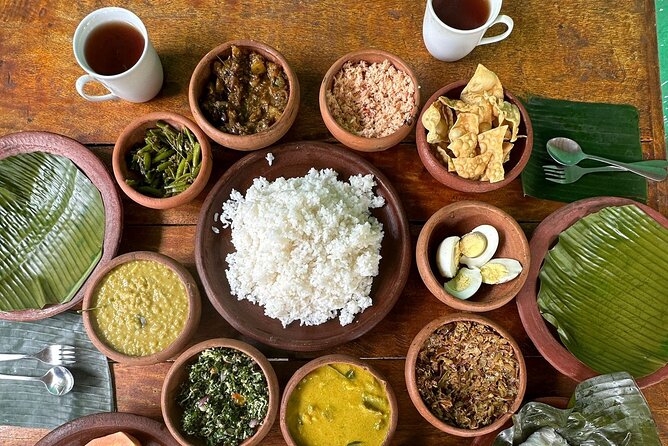
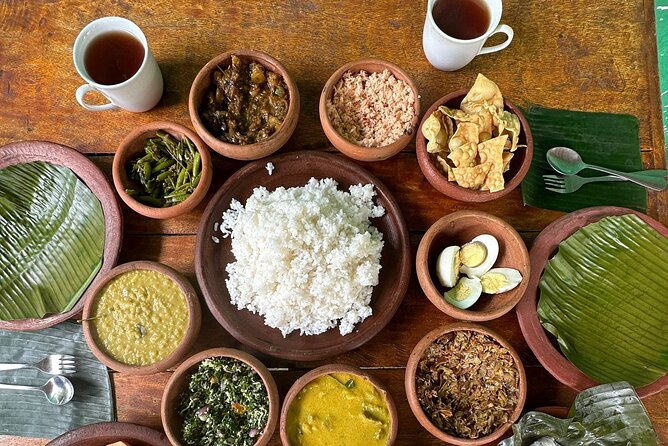
- Expect a full Sri Lankan spread: Dishes can include several vegetable curries, dhal, sambal, rice, string hoppers, coconut roti, and dessert.
- You take part in the work: You may chop, measure, grind spices, stir curries, and help prepare the meal rather than simply watch.
- The setting is wonderfully simple: Cooking takes place in a traditional home setting and outdoor kitchen, sometimes over several wood fires.
- The $28 price covers more than a meal: You are paying for instruction, a garden visit, a family welcome, and a substantial shared dinner.
Why this Sigiriya cooking class feels different
Many cooking classes teach you how to copy a recipe. This one tries to show you where the recipe begins. Kumara’s family grows much of the produce used in the meal, so you can see vegetables and herbs in the garden before they reach the cooking area.
That small change matters. You learn that Sri Lankan food is not just about adding curry powder to a pot. It is about choosing fresh ingredients, preparing spices, balancing heat with coconut and vegetables, and building several dishes at once.
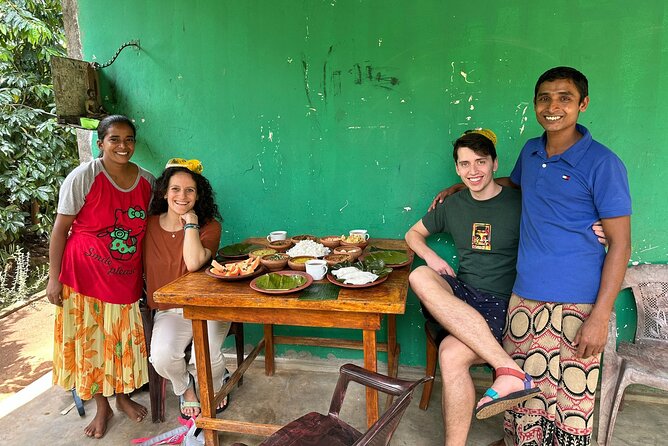
I like the family setting because it gives the class a human scale. Kumara, Thanuja, and other relatives are involved, and the tone is friendly rather than formal. You are not sent from station to station with a large group and a stopwatch. Instead, you work together and share the meal at the end.
Still, you should set the right expectations. This is not a restaurant kitchen with professional equipment or a carefully staged show. It is a working family home, and the pace can depend on the number of people attending, the weather, and how much food is being prepared.
More ways to climb Sigiriya:
- From Colombo: Sigiriya and Dambulla Day Trip with Safari
★ 4.7 · 842 reviews - From Kandy: Sigiriya Rock & Dambulla Cave Temple Adventure
★ 4.9 · 785 reviews - From Sigiriya: Minneriya National Park Private Jeep Safari
★ 4.9 · 415 reviews
Starting in the organic garden
The class begins at 284 Kahatagahayaya, Kalapuraya, Sigiriya 21120, the family’s meeting point. From there, you are shown around the garden and introduced to the ingredients used in the meal.
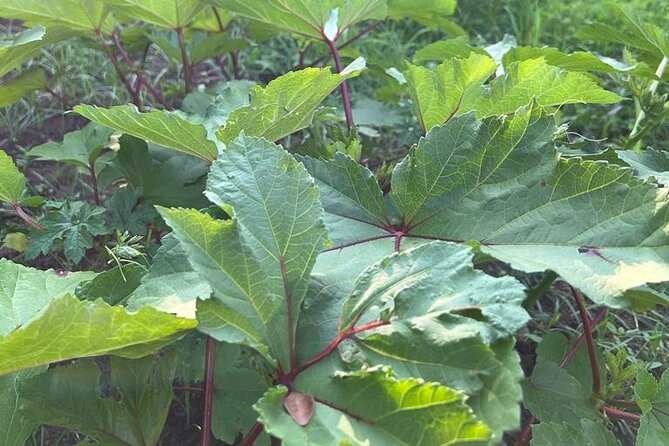
This opening is one of the best parts of the experience. You may see garden vegetables, herbs, fruits, and plants used in Sri Lankan cooking and home remedies. Kumara also explains the health uses associated with some plants and how they fit into Ayurvedic eating traditions.
I would pay close attention here. The garden tour gives useful context for the dishes that follow, especially if you are not familiar with local ingredients. You may recognize familiar vegetables, but their use in curries, sambals, and spice mixtures can be new.
The organic claim is central to the class. The family grows much of its own produce and spices, and several dishes are made with ingredients picked on site. Not every ingredient must come from the garden, but the farm-to-table idea is a genuine part of the experience rather than a decorative extra.
The garden also gives you a better sense of the family’s daily work. Growing food takes time, and the class connects the finished meal with that effort. You see the source before you sit down to eat.
Learning Sri Lankan spices the traditional way
After the garden walk, the class turns to the ingredients. You learn what goes into the different curries, how much is needed, and how the spices are prepared.
This is where you begin to see why Sri Lankan cooking has such depth. Several curries may share some basic ingredients, but the balance changes from dish to dish. The family explains the role of the spices and shows how they are handled before they go into the pot.
You can also learn how to make spice mixtures and may have the option to buy some of the family’s prepared spices. That can be useful if you want to recreate the meal at home, though you should ask about availability and price directly.
The lesson is practical. You are not only listening to a talk about spices. You help prepare them, measure ingredients, and get the vegetables ready in the quantities needed. For me, that is far more useful than receiving a recipe without understanding the steps behind it.
Some explanations may also touch on traditional and Ayurvedic uses of plants. Treat this as cultural food knowledge, not medical advice. The value is in seeing how food, gardening, and household traditions connect in this family’s cooking.
Preparing several curries together
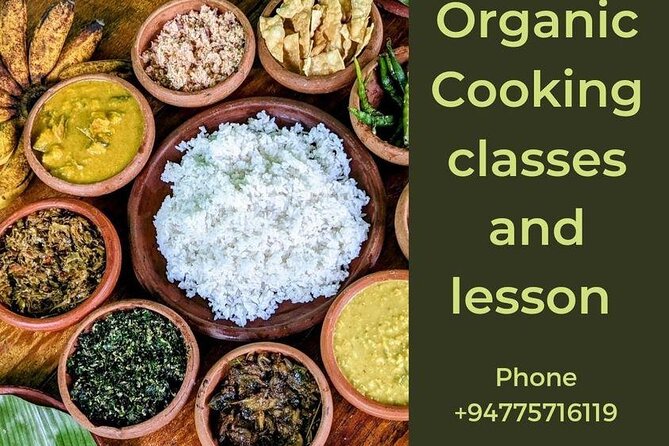
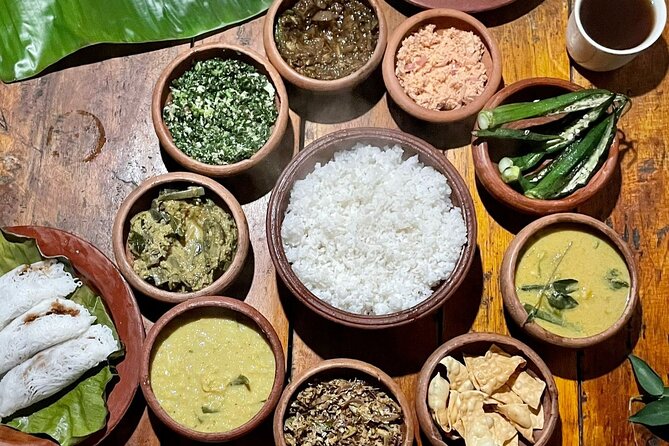
The exact menu can change, but the class usually produces a generous plant-based Sri Lankan meal. Dishes described from different sessions include dhal, aubergine curry, pumpkin curry, several other vegetable curries, sambal, rice, and dessert.
You may also prepare string hoppers, sometimes called idiyappam, or coconut roti. These are especially useful dishes to learn because they show that a Sri Lankan meal is not just one curry served with rice. Texture, spice, sweetness, and coconut all have a place on the plate.
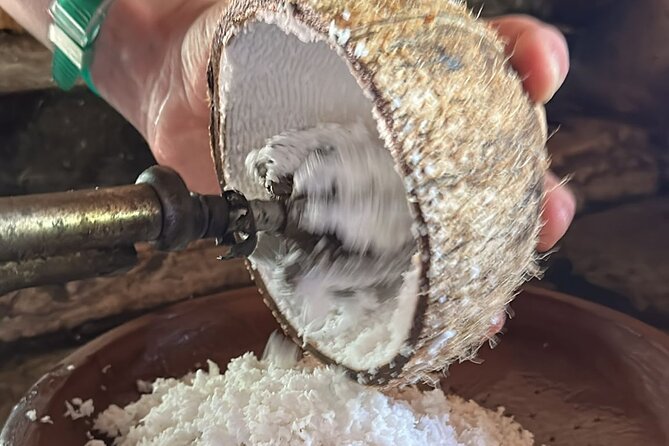
The work is shared among the people in the group. One person might cut vegetables while another prepares coconut or spices. Someone else may watch a pot, shape dough, or help with the string hoppers. If you prefer a class where you handle every dish from start to finish, this format may feel less controlled. If you enjoy cooking as a social activity, it works well.
Reviews of the experience repeatedly praise the food itself, and that makes sense. The vegetables are fresh, the spices are prepared close to cooking time, and the meal is eaten soon after it is finished. The result is a stronger connection between the lesson and what appears on your plate.
The outdoor kitchen is part of the charm. Some sessions use a row of simple wood fires, which adds a traditional touch but may also mean smoke, heat, and basic working conditions. Wear clothes that can handle a little cooking mess, and avoid bringing anything you do not want near smoke or spice.
More Sri Lankan cooking classes:
- Cooking Class: Sajee’s Place Cooking Class sigiriya
★ 5.0 · 117 reviews - Organic Cooking Class sigiriya home Kitchen(Kumara & family)
★ 5.0 · 116 reviews - Organic Cooking Class Sigiriya TASTY TASKS
★ 5.0 · 17 reviews - Sigiriya Rock Climb, Village Tour+Cooking Class & Elephant Safari
★ 5.0 · 9 reviews
Sitting down to a traditional Sri Lankan meal
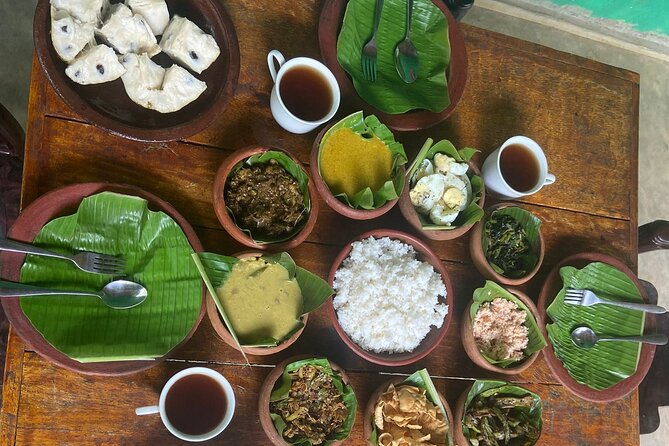
Once the cooking is finished, the family shows you how the table is arranged in a traditional Sri Lankan way. You then sit down to eat the dishes prepared by the group.
This final meal is not an afterthought. It is the payoff for all the chopping, stirring, grinding, and waiting. A spread of curries lets you compare different flavors in one sitting, and you can see how the separate dishes work together.
The food is primarily plant-based in the examples provided, with dhal, aubergine, pumpkin, sambal, and other garden vegetables appearing often. That makes the class a good fit for vegetarians and anyone interested in Sri Lankan vegan cooking, although you should confirm the menu and dietary needs when booking.
Herbal tea is included, and the tour information also lists bottled water. Because one account reported receiving tap water instead, I would bring your own sealed bottle and stay hydrated, especially in Sigiriya’s warm climate.
The shared table is also where the family welcome becomes most clear. You are eating in their home, not simply collecting a dish from a cooking school counter. The setting is modest, but that is part of what makes the experience feel personal.
What the timing and group size mean
The advertised duration is about two hours and thirty minutes, described elsewhere as a half-day workshop. In practice, you should keep closer to three hours in your schedule, especially if the garden walk, cooking, meal, and conversation all run at a relaxed pace.
That extra time matters if you have a strict Sigiriya Rock Fortress visit, safari, train, or airport transfer afterward. I would not place this class immediately before an important departure. The cooking is social, and the final meal may take longer than a quick restaurant stop.
Group size is not clearly defined in the supplied details. One account describes a couple joining 10 other people, while other experiences sound smaller. You may therefore find yourself in a small group or a larger shared session.
A group can improve the class. Cooking together creates more laughter and gives you a chance to divide the work. The trade-off is that you may not get equal time with every dish or every member of the family.
The activity begins and ends at the same address. A tuk-tuk pickup and return was arranged for at least one booking, but do not assume transport is included unless the provider confirms it. Ask for clear directions and pickup details before setting out.
Is $28 good value?
At $28, this is a strong value if you want more than a single Sri Lankan meal. The price includes an extended garden visit, ingredient and spice instruction, hands-on cooking, a multi-dish dinner, herbal tea, and time with a local family.
You are also paying for the setting. A restaurant can serve curry more quickly, but it cannot show you the garden, explain how the spices are prepared, or let you help create the food in a family kitchen.
The value is highest for people who enjoy participation. If you only want to taste local food, a market meal or restaurant will be simpler and probably cheaper. If you want practical cooking ideas and a cultural connection, the class offers much more for the money.
Recipes may be provided afterward, which adds lasting value. You can take home a way to recreate dishes such as dhal, pumpkin curry, sambal, or string hoppers. Ask how the recipes will be delivered, since the exact method is not specified.
Small drawbacks worth knowing
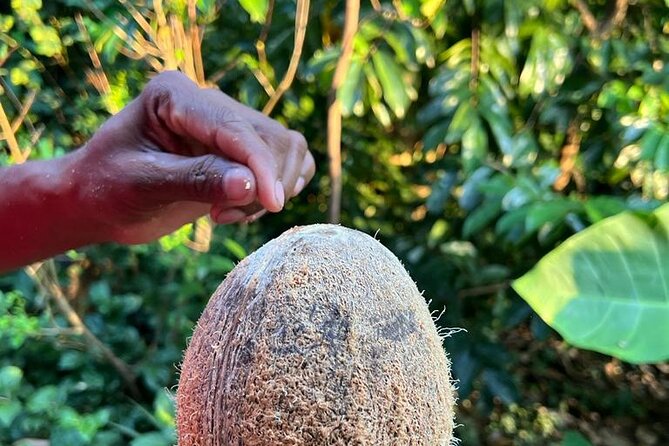
The strong praise should not hide the practical limits. The kitchen is traditional and simple, not designed for luxury. You may work outside, stand near wood fires, and share tasks with a group of uncertain size.
The class also requires good weather. If poor weather forces a cancellation, you are offered another date or a full refund. That is fair, but it means you should keep some flexibility in your Sigiriya plans.
Water is another small point to check. Bottled water is included in the official details, but one account specifically advised bringing a personal bottle. I would do that without hesitation.
Finally, communication and timing may feel informal. The experience is arranged through the family, and direct WhatsApp contact is available for more information. That personal style is part of the appeal, but you should confirm the start time, menu, transportation, group size, and water arrangements in advance.
Who will enjoy this experience most?
I would choose this class if you want to:
- Learn how several Sri Lankan dishes fit together in one meal
- Cook with fresh garden vegetables and locally prepared spices
- Meet a family in their own home
- Eat mostly plant-based food
- Take part in a social, hands-on activity
- Pick up recipes you can try after returning home
It is especially well suited to couples, families, and curious cooks who enjoy sharing tasks. The class also suits anyone who wants a break from sightseeing around Sigiriya and prefers a slower evening with food at the center.
I would think twice if you need a highly structured class, professional kitchen equipment, guaranteed individual instruction, or a fixed menu. You may also prefer another option if you dislike outdoor cooking, smoke, heat, or informal home settings.
Booking and cancellation tips
Confirmation is provided at booking, and direct WhatsApp contact is available for questions. Before paying, ask for the exact meeting instructions at 284 Kahatagahayaya, whether pickup is possible, what dishes are planned, and whether bottled water will be available.
Free cancellation applies when you cancel at least 24 hours before the start time. Changes or cancellations made within 24 hours are not refunded, and late changes are not accepted. Since poor weather can affect the activity, leave room in your itinerary for a new date if needed.
Should you book the Kumara family cooking class?
Yes, if you want a friendly, food-centered experience that feels connected to everyday life in Sigiriya. The garden visit, traditional spice preparation, wood-fire cooking, and shared curry meal give you a fuller picture of Sri Lankan food than a restaurant visit alone.
I would book it for the combination of homegrown ingredients and family hospitality, while keeping expectations practical. Bring your own water, allow three hours, confirm transport, and accept that the session may be informal. If that sounds like your kind of evening, $28 buys a memorable meal and useful cooking lessons, not just another sightseeing stop.
FAQ
Where does the cooking class begin?
The class begins at Organic Cooking Class Sigiriya, Kumara and Family, at 284 Kahatagahayaya, Kalapuraya, Sigiriya 21120, Sri Lanka.
Where does the experience end?
The activity ends back at the same meeting point.
How long does the cooking class last?
The stated duration is approximately two hours and thirty minutes. Some sessions have taken about three hours in total.
What food will I learn to prepare?
The menu can include several curries and accompaniments. Examples include dhal, aubergine, pumpkin, other vegetable curries, sambal, rice, string hoppers, coconut roti, and dessert.
Are the ingredients organic?
The family grows garden vegetables, herbs, fruits, and spices organically, and many of the ingredients used in the meal come from their own garden.
Is bottled water included?
The tour details include bottled water and herbal tea. Since one account reported that only tap water was available during a visit, bringing your own bottled water is a sensible precaution.
Can I cancel for a full refund?
Yes. You can cancel at least 24 hours before the experience start time for a full refund. Cancellations made less than 24 hours before the start time are not refunded.
What happens if bad weather cancels the class?
The experience requires good weather. If it is canceled because of poor weather, you are offered a different date or a full refund.
More Workshops
- Ella: Traditional Sri Lankan Cooking Class
★ 4.9 · 788 reviews - Sri Lanka Cooking Class with Granny
★ 5.0 · 587 reviews - Galle: Traditional Gems & Jewellery Workshop with Transfers
★ 4.9 · 539 reviews - Kandy Village Cooking Class
★ 5.0 · 536 reviews
Just added around Sigiriya
- Tour to Dambulla Cave, Sigiriya and Pidurangala Rock from Kandy★ 5.0 · 3 reviews
- Private Day tour from Kandy to Sigiriya, Dambulla & Pidurangala★ 5.0 · 3 reviews
- Day Tour Kandy to Sigiriya with Dambulla Cave Temple Excursion★ 5.0 · 3 reviews
- Colombo: Sigiriya Rock Fortress & Dambulla Cave Temple Tour★ 4.3 · 3 reviews
- Private day tour to Sigiriya and Dambulla from Colombo★ 5.0 · 3 reviews
- Full Day Tour to Sigiriya & Dambulla from Negombo★ 5.0 · 3 reviews
- From Colombo: Sigiriya and Dambulla Full-Day Private Tour★ 3.4 · 3 reviews
- Half Day – Minneriya National Park Safari Tour From Habarana/Sigiriya★ 3.5 · 3 reviews
Sigiriya Rock Tours, compared.



Kandy to Sigiriya Day Tour and Dambulla cave temple with private vehicle
Read our review →
Private Day Trip to Sigiriya & Dambulla from Kandy – Aaliya Tours
Read our review →
Browse the lists this tour appears in