
Reviewed · SIGIRIYA ROCK TOURS
Night Hike to see Elusive & Rare Loris in Sigiriya
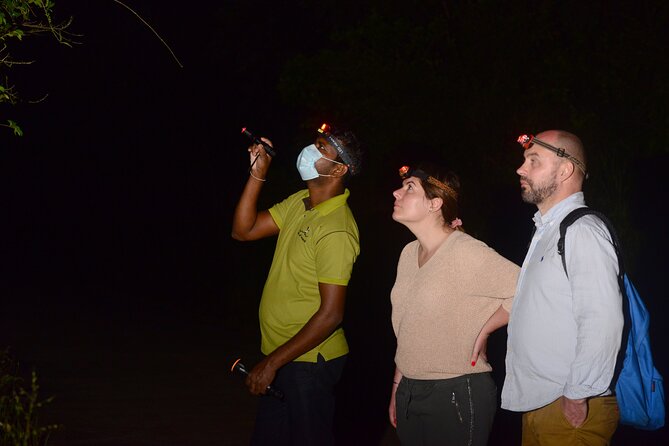
Look closely, the jungle is awake. This short night walk in Pidurangala gives you a real chance to see the endangered grey slender loris, a tiny nocturnal primate that is hard to find without a trained eye. The walk takes place around the Back of Beyond Pidurangala gardens, where a naturalist guide leads you along a prepared jungle trail after a short introduction to the animal.
I like the small group size, capped at five people, and the way the guides help everyone get a look rather than simply pointing a torch into the trees. I also like the wider wildlife focus: you may spot moths, crickets, lizards, owls, civets, or even a mouse deer. The main catch is simple: wild animals do not follow a timetable. You might see several lorises, but you should not book this expecting a guaranteed close-up photograph.
In This Review
- Key points before you book
- Why the grey slender loris is worth seeking
- The opening talk in the Pidurangala treehouse
- Following a prepared trail after dark
- What a loris sighting really looks like
- The guides make the short walk work
- Adding dinner at the same forest property
- Is $29 a fair price?
- Who should book this evening activity?
- Useful details for planning your night
- Should you book the loris night walk?
- FAQ
- Where does the loris night walk start?
- Where does the activity finish?
- How long does the experience last?
- How many people can join the tour?
- Is pickup available?
- What happens if bad weather cancels the walk?
Key points before you book
- The walk lasts about 90 minutes, making it an easy evening activity after Sigiriya’s daytime sights.
- Grey slender lorises are the main prize, but the guides also look for other night creatures.
- Red or infrared lights are used to help locate the animals while limiting disturbance.
- The group is limited to five people, which matters when a small animal appears high in a tree.
- The introduction takes place before the walk, reportedly in a pleasant treehouse setting at the Back of Beyond property.
- Dinner can be included, and the on-site restaurant is often praised for its food and friendly service.
Why the grey slender loris is worth seeking
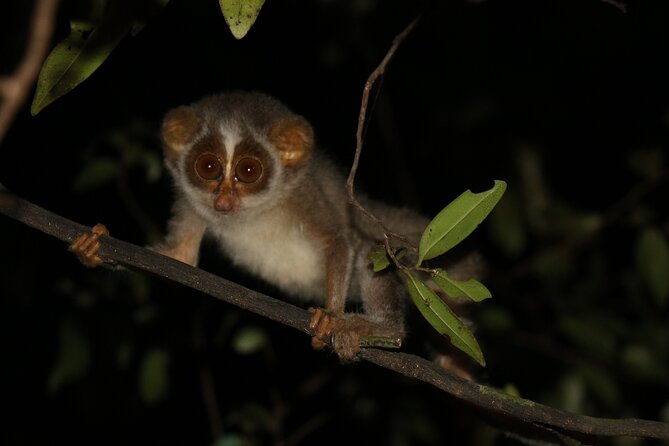
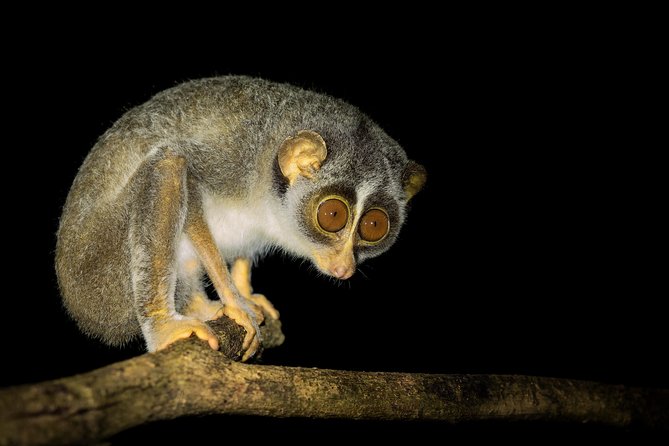
The grey slender loris is a nocturnal primate, so daytime sightseeing around Sigiriya will not help much. During the day it rests out of sight. After dark, it moves through the vegetation, often high in the branches, where its large eyes catch the light.
That combination of nocturnal habits, camouflage, and endangered status makes a sighting special. You are not visiting an enclosure or watching a trained animal perform. You are walking through a natural area and trying to notice a wild creature living on its own terms.
The animal is small and quick. A sighting may last only a few seconds, especially if it moves between leaves or turns away from the light. That is why the guide matters so much. Finding a pair of reflective eyes in dense growth is one skill. Positioning a small group so everyone gets a chance to see the loris is another.
Several outings have produced impressive numbers, including three, four, seven, or more lorises. One especially fortunate walk included a baby. Those results show what is possible, but they should not become your expectation. A good outing can mean one brief glimpse, while a lucky one may bring repeated sightings.
More ways to climb Sigiriya:
- From Colombo: Sigiriya and Dambulla Day Trip with Safari
★ 4.7 · 842 reviews - From Kandy: Sigiriya Rock & Dambulla Cave Temple Adventure
★ 4.9 · 785 reviews - Organic cooking class sigiriya (kumara & family)
★ 5.0 · 650 reviews
The opening talk in the Pidurangala treehouse
The experience begins at Rocko’s Vegetarian Cafe on Pidurangala Road, near the Back of Beyond Pidurangala gardens. The exact meeting point matters because this is not a general Sigiriya town walk. You need to reach Pidurangala and return to the same point at the end.
Before setting off, you receive a short presentation about the grey slender loris. This gives the walk some purpose. Instead of treating the animal as a cute night-time target, you learn about its habits and why it is so difficult to see in the wild.
The introduction is held in a treehouse setting, according to the detailed descriptions of the experience. That is a fitting start, with the forest around you and darkness arriving outside. The presentation is also useful for photography. If you know what shape to look for and how the animal behaves, you have a better chance of understanding what the guide is showing you.
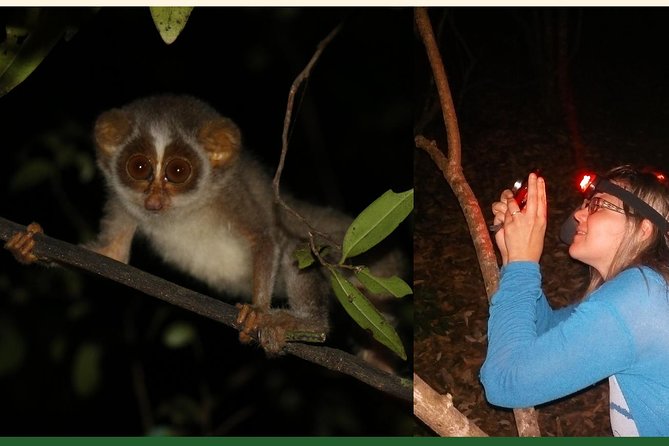
The talk is short, so it does not take over the evening. You then receive a head torch or a red-lit or infrared light and go out with the guide. The special lighting is an important detail. Ordinary bright white light can be harsh in a dark forest, while red or infrared light helps the guide locate reflective eyes with less disruption.
Following a prepared trail after dark
The route runs through the Back of Beyond Pidurangala gardens and nearby jungle growth. It is described as a specially prepared night trail, not a long mountain hike or a climb to Pidurangala Rock. That distinction is useful. You are coming for wildlife watching, not a summit view.
The guide leads slowly, checking branches and dense undergrowth as you move. Expect the pace to stop and start. You may walk a short distance, pause while the guide scans the trees, then move again. This is the right rhythm for a night wildlife walk, though anyone expecting constant action may find the waiting quiet.
The forest is active after sunset. Along with lorises, the guides have pointed out moths, crickets, lizards, owl chicks, nesting owls, civets, and other creatures. One outing even produced a mouse deer. These sightings help fill the gaps between lorises and make the walk worthwhile even when the main animal stays hidden.
You should also be ready for bugs. This is a genuine jungle walk at night, not a polished indoor attraction. Insects are part of the setting, so long sleeves and long trousers are sensible choices. The supplied information does not specify a dress code, but basic protection from insects is a practical idea for any walk through tropical vegetation after dark.
What a loris sighting really looks like
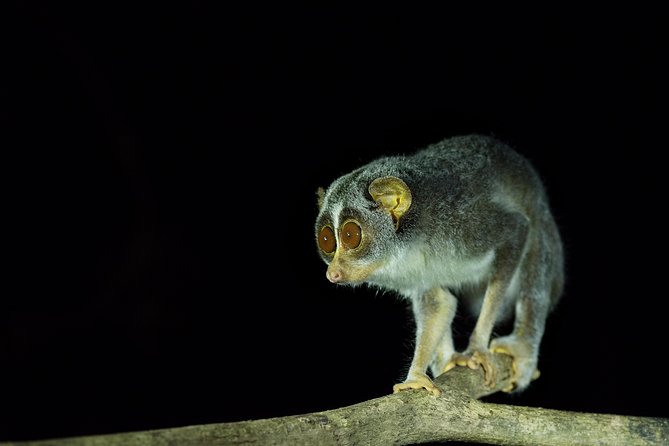
The guides are skilled at spotting eyes and movement in the foliage. Once a loris is found, they help direct the light and show you where to look. You may see the animal sitting still, moving along a branch, or disappearing behind leaves.
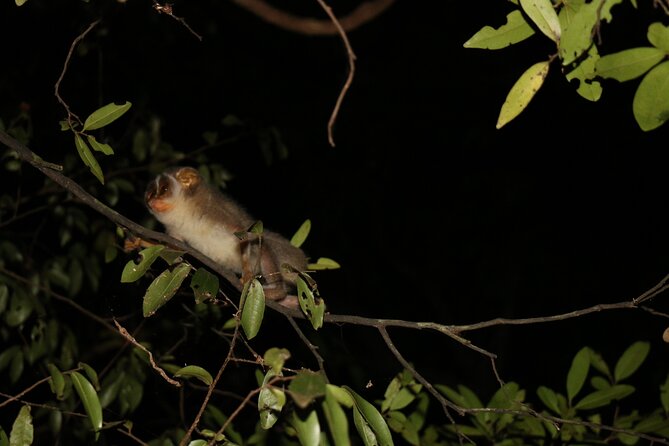
Do not expect the scene shown in a promotional photograph every time. One account describes using the animal’s eyes to locate it, with the loris briefly visible before vanishing. That is normal for a wild nocturnal animal. The light may reveal the face clearly to your eyes, but getting a sharp photograph can be much harder.
The small group limit helps here. With no more than five participants, the guide has a better chance of giving each person time at the viewing spot. The experience is described as private and unrushed, though the maximum group size is five rather than one booking party necessarily having the entire forest to itself.
If you want photographs, bring a camera that performs well in low light, but keep your expectations modest. The guide’s first job is to protect the animal and help you see it, not to create a perfect wildlife portrait. Watch first, photograph second.
A few more tours worth weighing up
- Night Hike to see Elusive & Rare Loris in Sigiriya
★ 4.5 · 101 reviews - Sigiriya Hike & Minneriya Safari Private Full Day Tour
★ 5.0 · 56 reviews - Sigiriya Lion Rock Hike & Minneriya National Park Safari
★ 4.8 · 55 reviews - Sigiriya Rock Hike & Minneriya Elephant Safari – Day Tour
★ 4.3 · 15 reviews
The guides make the short walk work
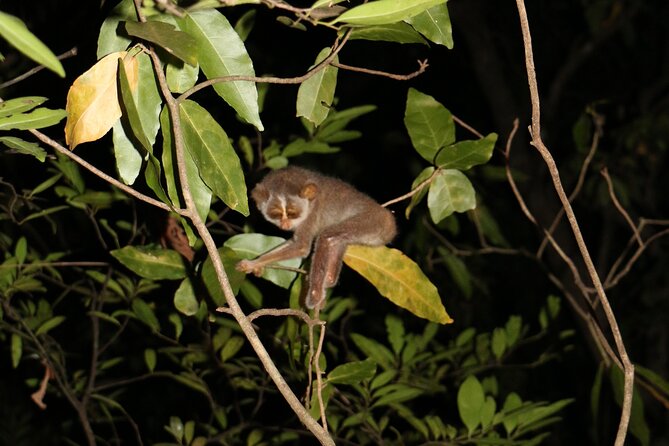
The most praised part of this activity is the guiding. The staff are described as friendly, professional, and very good at locating lorises in thick growth. That skill is the difference between a meaningful wildlife outing and a dark stroll where you see only leaves.
The guides also add value by pointing out smaller animals. Moths and crickets are easy to ignore when you are focused on a rare primate, but a good naturalist helps you notice the whole night community. Owls, lizards, civets, and mouse deer give you more to watch and show how much life is moving around you.
The practical help is important as well. You are walking through lush forest at night, so the guide helps you navigate uneven ground and undergrowth. The route lasts about an hour and a half, which keeps the outing manageable, but you still need to be comfortable walking outdoors in darkness.
The experience is suitable for most people, and public transportation is nearby. Still, the tour is not described as fully accessible, and the path is a jungle trail. If you have serious mobility concerns, ask the operator about the surface and walking conditions before booking.
Adding dinner at the same forest property
Dinner is an optional extra, but it makes good sense if you want to turn this into a complete evening. The restaurant is at the same place where the walk begins, so you can eat before or after the activity without arranging another stop.
The food receives unusually strong praise, including from a local diner who described it as excellent. Other detailed accounts call it delicious, varied, and well served. The staff are also repeatedly praised for their warmth.
Dinner changes the value calculation. At $29 per person, the night walk alone is reasonably priced for a small-group naturalist experience. If dinner costs extra, compare the combined price with your evening plans. The convenience of eating at the meeting point saves time, and the setting adds something you will not get from a quick meal in town.
The available information does not give the dinner supplement or menu, so check the exact package when booking. Do not assume dinner is included in the base price.
Is $29 a fair price?
At $29 per person, this is an affordable wildlife activity in the Sigiriya area. You receive a short naturalist presentation, guided night walking, help with wildlife spotting, and the chance to see an endangered primate in its natural setting.
The value depends on how you define success. If success means seeing a loris, the chance is strong enough to make the price attractive, but it is not a guarantee. If success means getting a clear, close photograph, the value is less certain because sightings can be brief and the forest is dark.
The maximum of five people improves the experience. A larger group would make it harder to gather around a tree and give everyone a clear view. It also keeps the outing more personal, especially for solo visitors or couples who want room to ask questions.
The 90-minute duration is another advantage. You can fit the walk into an evening after visiting Sigiriya Rock or other nearby sights, without committing to a full-night safari. It is also short enough for people who want a taste of nocturnal wildlife rather than a long expedition.
Who should book this evening activity?
I would recommend it most strongly to people who enjoy patient wildlife watching. You need to accept pauses, darkness, insects, and the possibility that the main animal will remain difficult to see.
It is a good fit for solo visitors, couples, and small families who want something different from temples and rock sites. The group limit also suits anyone who dislikes crowded tours. One solo visitor found the short format comfortable, which makes sense if you want a guided activity without giving up an entire evening.
Animal lovers should book with realistic expectations. You may see several lorises and a range of other creatures, but the forest controls the schedule. Children may enjoy the excitement of spotting glowing eyes, though adults should judge whether they are comfortable walking outdoors at night.
Photographers should treat this as a sighting experience first. You may take photos, but darkness, foliage, and quick movement can defeat even good equipment. The reward is seeing the animal behave naturally, not collecting a flawless image.
Useful details for planning your night
The meeting point is Rocko’s Vegetarian Cafe on Pidurangala Road, Sigiriya 21120. The activity ends back at the same meeting point. Pickup is offered, but confirm the pickup arrangement and any extra cost when you book.
Your booking confirmation is issued at the time of booking. The experience has free cancellation if you cancel at least 24 hours before the local start time. Cancellations or changes made within 24 hours are not refunded or accepted.
Weather matters. If poor weather causes the operator to cancel, you are offered another date or a full refund. That policy is sensible for a night forest walk, since rain can affect both safety and the chance of finding wildlife.
Wear clothing suitable for a jungle path and prepare for insects. Bring patience, keep noise down, and listen carefully when the guide asks you to stop. If you add dinner, allow enough time to enjoy the meal rather than treating it as a rushed extra.
Should you book the loris night walk?
Yes, if you want a compact, low-cost wildlife experience and understand that sightings are never guaranteed. The best reasons to book are the small group, strong guide support, conservation setting, and chance to see a rare nocturnal primate in the wild.
I would skip it only if you need a guaranteed animal encounter, a fully lit path, or a polished photography session. For everyone else, this is a thoughtful way to spend 90 minutes in Sigiriya after sunset. Add dinner if the price works for you, bring patience, and judge the evening by the quality of the encounter rather than the number of lorises on your list.
FAQ
Where does the loris night walk start?
It starts at Rocko’s Vegetarian Cafe on Pidurangala Road, Pidurangala, Sigiriya 21120, Sri Lanka.
Where does the activity finish?
The walk ends back at the meeting point.
How long does the experience last?
The activity lasts approximately one hour and 30 minutes.
How many people can join the tour?
The maximum group size is five people.
Is pickup available?
Pickup is offered. Confirm the exact pickup details when booking.
What happens if bad weather cancels the walk?
If the experience is canceled because of poor weather, you can choose a different date or receive a full refund. Free cancellation is also available when you cancel at least 24 hours before the local start time.
More Evening Experiences
- Sigiriya: Sunrise or Sunset Kayaking Tour
★ 4.8 · 11 reviews - Sigiriya Sunrise/Sunset Guided Boat Ride
★ 5.0 · 8 reviews - Kandy and Sigiriya One Night Two Days Tour
★ 5.0 · 7 reviews - Sigiriya: Sigiriya or Pidurangala Sunrise/Sunset Hike
★ 5.0 · 5 reviews
Just added around Sigiriya
- Tour to Dambulla Cave, Sigiriya and Pidurangala Rock from Kandy★ 5.0 · 3 reviews
- Day Tour Kandy to Sigiriya with Dambulla Cave Temple Excursion★ 5.0 · 3 reviews
- Private Day tour from Kandy to Sigiriya, Dambulla & Pidurangala★ 5.0 · 3 reviews
- Colombo: Sigiriya Rock Fortress & Dambulla Cave Temple Tour★ 4.3 · 3 reviews
- Private day tour to Sigiriya and Dambulla from Colombo★ 5.0 · 3 reviews
- Full Day Tour to Sigiriya & Dambulla from Negombo★ 5.0 · 3 reviews
- From Colombo: Sigiriya and Dambulla Full-Day Private Tour★ 3.4 · 3 reviews
- Half Day – Minneriya National Park Safari Tour From Habarana/Sigiriya★ 3.5 · 3 reviews
Sigiriya Rock Tours, compared.

Organic cooking class sigiriya (kumara & family)
Read our review →
Kandy to Sigiriya Day Tour and Dambulla cave temple with private vehicle
Read our review →
Private Day Trip to Sigiriya & Dambulla from Kandy – Aaliya Tours
Read our review →Browse the lists this tour appears in