
Reviewed · WALKING TOURS
Colombo Social and Political Walk
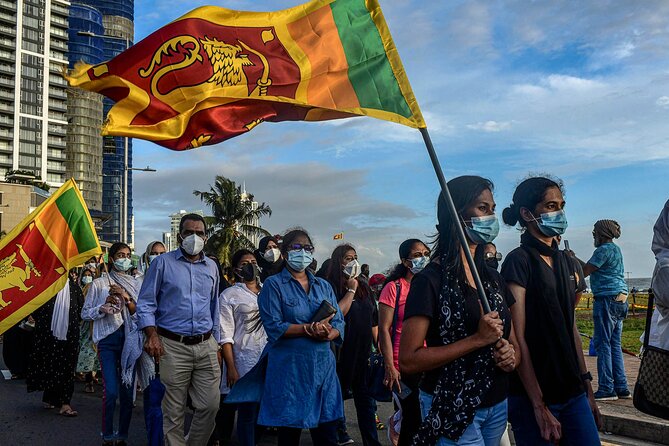
Power changes a city. This Colombo walk links politics, economics, and daily life as you move from Port City and Pettah to Independence Square and BMICH. I like its documentary-style storytelling and the way it uses real Colombo sites to explain Sri Lanka’s modern state and current crisis.
I also like that the tour aims for a balanced presentation rather than telling you what political opinion to hold. Chami, the guide praised for being well informed, appears to be a strong reason to book. The main caution is simple: this is an information-heavy experience, not a light sightseeing stroll, and the subject matter includes shortages, economic hardship, and political conflict.
In This Review
- Key points to know before booking
- Why this Colombo walk is different
- Starting at The Kingsbury at 5:00 pm
- Colombo Port City and the idea of a modern capital
- Pettah market and the human side of economics
- Good Market and a second look at society
- Tea Avenue and the Dilmah Building
- World Trade Center and Colombo’s financial ambitions
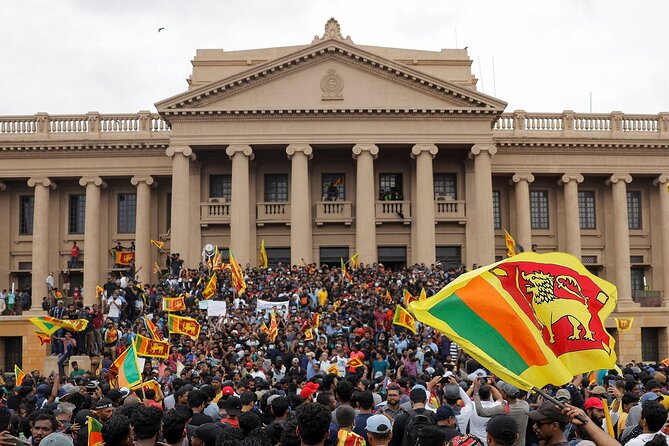
- Old Parliament and the mechanics of power
- Independence Square and the meaning of nationhood
- Finishing at BMICH
- What $35.99 represents in real value
- Who should book this experience
- Timing, group size, and practical planning
- Final decision: book it for context, not sightseeing alone
- FAQ
- How much does the Colombo Social and Political Walk cost?
- How long does the experience last?
- Where does the walk start?
- What time does the experience begin?
- Where does the walk finish?
- Can I cancel for a full refund?
Key points to know before booking
- A 2.5-hour walk from The Kingsbury to BMICH gives the experience a clear route across several important parts of Colombo.
- Chami is praised for explaining Sri Lanka’s politics and economics clearly, making this a useful introduction to recent events.
- The stops range from Pettah market to the World Trade Center, putting everyday commerce beside symbols of finance and government.
- The tour costs $35.99 per person, a fair price if you want context and discussion rather than entrance tickets or entertainment.
- The group can include up to 25 people, so expect a shared walking experience rather than a private conversation.
- The walk begins at 5:00 pm, with the final stop at BMICH, the Bandaranaike Memorial International Conference Hall.
Why this Colombo walk is different
Most city walks help you identify buildings, markets, and monuments. This one asks you to consider who built them, who benefits from them, and how political choices affect ordinary life.
That gives the experience a clear purpose. You are not simply moving from one attraction to the next. You are using Colombo as a set of examples in a larger discussion about Sri Lanka, from the creation of the modern state to the present day.
The experience is designed for people with a real interest in politics. You do not need to arrive with a degree in economics or a shelf full of books about Sri Lanka, but you should enjoy listening, asking yourself difficult questions, and weighing different points of view.
The walk also addresses the country’s severe crisis, including shortages of food, fuel, and electricity and the pressure placed on businesses and healthcare services. That subject gives the tour urgency, but it also means the mood may be serious. If you want a purely cheerful introduction to Colombo, this is probably not the right choice.
More walking tours:
- Colombo Walking Tour with Ajeet De Soyza
★ 5.0 · 43 reviews - Glimpse Of Colombo City Walk
★ 4.5 · 11 reviews - Galle Fort Walking tour
★ 4.9 · 285 reviews
Starting at The Kingsbury at 5:00 pm
The meeting point is The Kingsbury Colombo at 48 Janadhipathi Mawatha. Starting at 5:00 pm gives the walk a late-day setting and leaves the earlier part of your day open for other plans.
From here, the group begins a route that gradually connects Colombo’s business district, trading quarter, political landmarks, and national institutions. The start point is practical because it places you near several central Colombo subjects right away: commerce, government, development, and the city’s changing identity.
You should arrive ready to walk and listen. The description gives an approximate duration of two hours and 30 minutes, but it does not provide a detailed distance or number of breaks. If you prefer a slow photo stop at every site, the information-heavy format may feel brisk.
The group size can reach 25 people. That is small enough to retain the feel of a guided walk, but large enough that you may not have a long personal conversation with the guide at every stop.
Colombo Port City and the idea of a modern capital
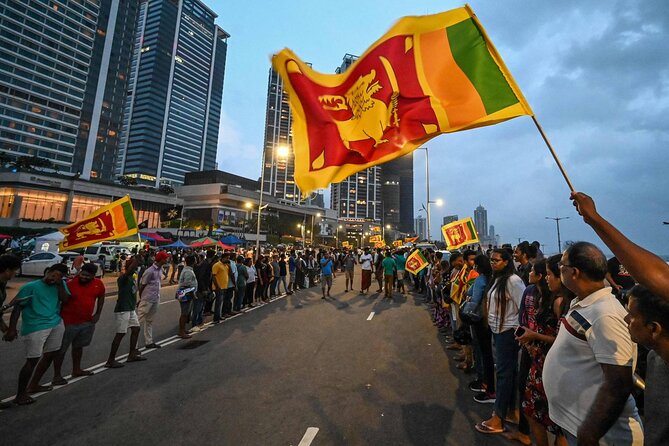
Colombo Port City is an early stop and a useful place to consider development, investment, and the future direction of the capital.
The value here is not just the view or the construction itself. The site gives the guide a way to discuss how a modern state presents its ambitions. It also helps you compare new economic projects with older parts of Colombo later in the walk.
I like this kind of contrast. A city can place grand plans beside crowded markets and historic government buildings, and the gap between those places often tells you as much as the buildings do.
The supplied information does not promise entry into Port City or a formal inside visit. Think of it as a stop used for explanation and observation. You will get more from it if you pay attention to the questions being raised about development, money, and public life.
Pettah market and the human side of economics
Pettah market brings the conversation down to street level. After hearing about major projects and national finances, you see a part of Colombo connected to trade and everyday buying and selling.
This is one of the most useful stops for the tour’s social purpose. Political decisions can sound abstract when they are discussed only through institutions and figures. A market gives those ideas a more direct setting, linking economic pressure to the places where people work and shop.
The stop should help you understand why shortages of food, fuel, and electricity matter beyond headlines. The walk’s focus is not limited to politicians or official buildings. It asks you to think about how national choices affect ordinary routines and commercial activity.
Pettah may also be one of the less controlled parts of the route. Markets are active public spaces, and you may need to listen carefully while walking. The guide’s explanation is the main point, so do not treat this as a long independent shopping break.
A few more tours worth weighing up
- Colombo: Private Tuk-Tuk City Tour with All Entry Fees
★ 4.9 · 2,154 reviews - Sri Lanka Personal Tour Driver in private vehicle
★ 5.0 · 747 reviews - Colombo Tuk Tuk City Tour -Sightseeing Entry Fees & Food Included
★ 5.0 · 678 reviews - Udawalawe National Park: Elephant Safari with Expert Guide
★ 4.9 · 641 reviews
Good Market and a second look at society
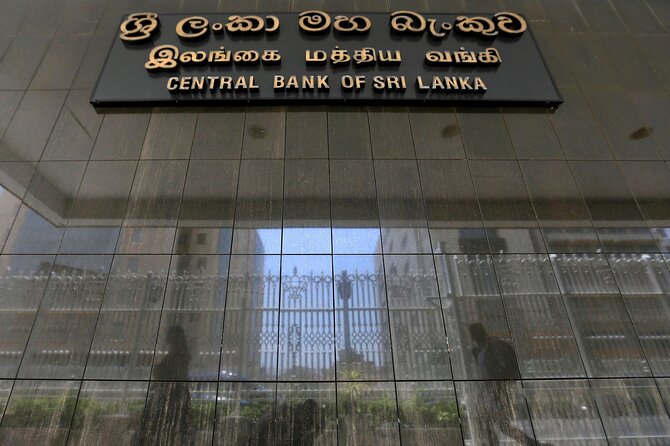
Good Market offers another way to consider Colombo’s social and economic life. Placed after Pettah, it creates a useful comparison between different forms of commerce and different ideas about how a city serves its people.
The experience does not provide a detailed description of the market’s products or a promise of time for shopping. I would approach this stop as part of the discussion, not as a food tour or retail excursion.
That distinction matters. At $35.99, you are paying for the guide’s interpretation and the route through the city, not for tastings, purchases, or admission to a collection of attractions. If you want to browse on your own, you may need to return another time.
Still, the pairing of Pettah market and Good Market is a smart structural choice. It keeps the social discussion grounded in real places rather than allowing the walk to become a lecture delivered beside anonymous streets.
Tea Avenue and the Dilmah Building
Tea Avenue, identified with the Dilmah Building, shifts the story toward one of Sri Lanka’s best-known products and business identities.
The stop gives the guide another opening to discuss the relationship between national image, commercial success, and the wider economy. Tea is not presented merely as a souvenir or drink. Here, it becomes part of a conversation about how Sri Lanka is represented and how businesses fit into the country’s modern story.
The available details do not indicate a tea tasting, a building tour, or time to shop. You should not book this walk expecting those extras. The stop is valuable because it adds a recognizable economic example to the political and social material.
For me, this is the sort of detail that makes a city walk more useful. You start to see that a country’s identity is shaped not only by elections and monuments, but also by the products and companies associated with it.
World Trade Center and Colombo’s financial ambitions
The World Trade Center brings the discussion back to finance, investment, and the image of Colombo as an international business center.
Placed alongside Port City, it helps create a thread through the route. You see different expressions of economic ambition, then compare them with the market stops and the government landmarks still to come.
This is where the documentary format may work best. Instead of giving you one simple story about growth or failure, the walk can set competing ideas next to each other. You are encouraged to decide how the city’s business identity fits with the crisis described at the start.
The stop is also a reminder that Colombo cannot be understood through one neighborhood alone. The city contains major financial symbols, informal trade, public institutions, and sites tied to national independence. The route connects those parts without pretending they all tell the same story.
Old Parliament and the mechanics of power
Old Parliament is the stop most directly tied to formal political authority. It allows the walk to move from economic examples to the institutions that make national decisions.
This part should appeal to you if you want more than dates and architectural facts. The tour aims to explain how Sri Lanka’s modern state was formed and how political decisions connect to current conditions.
The building itself serves as a strong visual anchor, but the main value is the explanation around it. You may leave with a clearer sense of how political history shapes the city you are walking through.
The balanced approach is important here. The experience says it presents historical and current events from a non-biased point of view, leaving you to form your own views. No political tour can remove every interpretation, but this stated goal is useful for anyone who wants a framework rather than a campaign speech.
Independence Square and the meaning of nationhood
Independence Square adds a national and symbolic layer to the route. After the commercial and government stops, this site gives the guide room to discuss independence, identity, and the making of modern Sri Lanka.
A monument or civic space can seem straightforward when you visit alone. With context, it can raise harder questions about who is included in a national story, how a state defines itself, and how earlier political choices continue to shape public life.
The stop also fits the walk’s movement through different versions of Colombo. Port City looks toward future development. Pettah and Good Market show social and commercial life. Old Parliament points to government. Independence Square asks you to think about the meaning behind the country itself.
You should expect interpretation rather than a long free period. The walk is built around connected explanation, so the best way to enjoy it is to stay with the thread from one location to the next.
Finishing at BMICH
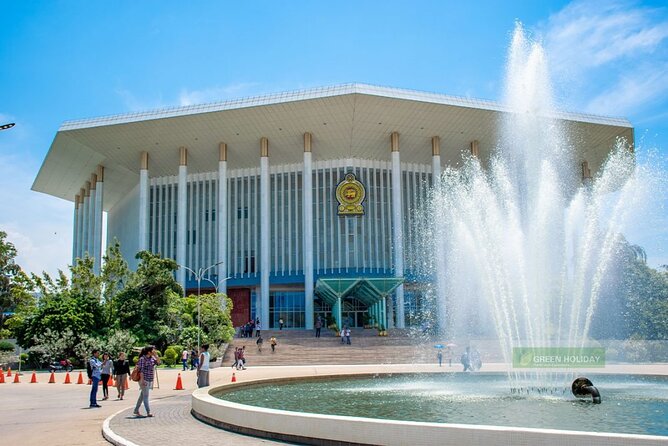
The experience ends at BMICH on Bauddhaloka Mawatha, officially the Bandaranaike Memorial International Conference Hall.
Ending here gives the route a formal close. The building is connected with national and international public life, making it a fitting final setting for a walk about institutions, political choices, and Sri Lanka’s place in the world.
The end point is also practical. You finish at a clearly identified Colombo landmark rather than returning to the original hotel. Plan your evening with that in mind, especially if you have dinner reservations or transport arranged from The Kingsbury.
The walk is not described as including transport between stops. Treat it as a walking experience and wear sensible shoes. Exact walking conditions, rest stops, and indoor access are not specified, so you should ask the provider if those details matter to you.
What $35.99 represents in real value
At $35.99 per person, this is not the cheapest way to see Colombo’s landmarks. You can view many city sights independently for little or no cost.
The price makes more sense if you want the guide to connect those sights into one argument. You are paying for two and a half hours of focused explanation, a planned route, and a political and economic framework that would take time to assemble on your own.
I would call it good value for a curious first-time visitor who wants Sri Lanka 101 with a strong focus on recent history and current affairs. The available rating is five out of five from four reviews, and the specific praise centers on the useful mix of sightseeing and explanation, plus Chami’s command of the subject.
The small number of ratings means you should not treat that score as a full measure of every possible experience. Still, the praise is specific rather than vague. The walk is valued for helping you see Colombo while learning about its political and economic background.
You are less likely to feel you received good value if you wanted entrance tickets, food, shopping time, or a relaxed photo walk. None of those are promised. This is a guide-led learning experience first.
Who should book this experience
I would recommend the walk to you if you:
- Like political and economic subjects
- Want recent context for Sri Lanka before exploring on your own
- Prefer a guide who explains connections between places
- Enjoy documentary-style storytelling
- Want to see several major Colombo areas in one route
- Are comfortable with serious subject matter
It may not suit you if you want a short list of monuments, a food-focused outing, or a casual stroll with little commentary. Families can participate because most people can take part, but the subject matter may be better suited to older children and adults who can follow a sustained discussion.
The walk also works well early in a Colombo stay. Once you understand some of the political and economic background, later visits to markets, monuments, and business districts may make more sense. You will have a set of questions to carry with you instead of seeing each place as an isolated stop.
Timing, group size, and practical planning
The start time is 5:00 pm, and the experience lasts about two hours and 30 minutes. That is long enough for a serious discussion, but short enough to fit into an evening plan.
The maximum group size is 25. I would expect a shared experience with room for questions, though not the constant personal attention of a private tour. Mobile tickets make entry and meeting simple, and booking confirmation is received at the time of booking.
The tour requires good weather. If poor weather causes cancellation, you are offered another date or a full refund. It also requires a minimum number of participants, so a cancellation is possible if that number is not reached.
You can cancel for a full refund up to 24 hours before the start time. Inside that 24-hour window, refunds are not available and changes are not accepted. That rule is worth noting if your Colombo schedule is still unsettled.
Final decision: book it for context, not sightseeing alone
Book this Colombo Social and Political Walk if you want a clear, serious introduction to how Sri Lanka’s politics and economics connect with daily life. The route is strong because it moves through markets, business centers, government sites, and national monuments instead of keeping the discussion inside one type of neighborhood.
The best reason to go is the combination of place and explanation. Chami’s strong reputation for knowing the subject adds confidence, while the five-star rating from four reviews supports the idea that the tour delivers on its educational aim.
Skip it if your priority is food, shopping, architecture, or a carefree evening. At $35.99, the value depends almost entirely on your interest in the story being told. If you want to understand Colombo rather than simply photograph it, this is a worthwhile choice.
FAQ
How much does the Colombo Social and Political Walk cost?
The price is $35.99 per person.
How long does the experience last?
The walk lasts approximately two hours and 30 minutes.
Where does the walk start?
It starts at The Kingsbury Colombo, 48 Janadhipathi Mawatha, Colombo.
What time does the experience begin?
The start time is 5:00 pm.
Where does the walk finish?
It finishes at BMICH, the Bandaranaike Memorial International Conference Hall, on Bauddhaloka Mawatha, Colombo 00700.
Can I cancel for a full refund?
Yes. You can cancel at least 24 hours before the start time for a full refund. Cancellations or changes made less than 24 hours before the start time are not refunded or accepted.
Just added around Colombo
- 7 Days Sri Lanka Safari Tour★ 5.0 · 3 reviews
- Kandy & Nuwara Eliya | 2 Days Tour★ 4.5 · 3 reviews
- Private Tour of Colombo with Ajeet De Soyza★ 5.0 · 3 reviews
- Tuk Tuk city tour is very cheap in colombo( All inclusive tour)★ 5.0 · 3 reviews
- All Inclusive 5-Days Highlights of Sri Lanka★ 5.0 · 3 reviews
- Personal Guided Colombo City Tour by Tuk Tuk – All Inclusive★ 4.0 · 3 reviews
- Shore Excursion Colombo Port to Mount Lavinia Beach & Colombo city For 4 – 6 Pax★ 4.5 · 3 reviews
- Colombo Port Shore Excursions Colombo City & Kalaniya Temple★ 4.3 · 3 reviews
Walking Tours, compared.
Sigiriya: Rock Fortress Private Guided Walking Tour
Read our review →
Galle Fort Heritage Walk by a Certified Heritage Interpreter
Read our review →
Browse the lists this tour appears in