
Reviewed · WALKING TOURS
Galle Fort Walk with Glamorous Stories
Old walls, big stories. This Galle Fort walk turns a compact UNESCO World Heritage Site into a clear, lively lesson in Portuguese, Dutch, and British rule. I especially like the small maximum group of six and guide Dilip’s local knowledge, built over 20 years in the area. The main consideration is the heat, rain, and uneven walking surface, with no water, hats, or umbrellas supplied.
The 90-minute to two-hour route covers the fort’s major sights, from Flag Rock and the Clock Tower to the Dutch Reformed Church and Dutch Hospital. I also like the unusual details: ballast bricks from Dutch ships, coral cooling walls, secret tunnels, and the story of soldiers surviving a siege on cats and dogs. Since the meeting and ending point are both at Flag Rock, you must arrange your own ride afterward.
In This Review
- Key points at a glance
- Why Galle Fort is best understood on foot
- Starting at Flag Rock and the old harbour
- Portuguese walls, sieges, and clever treaty tricks
- Moon Bastion, Star Bastion, and the fort’s defenses
- The Clock Tower and the everyday streets
- The Dutch Reformed Church and the human side of colonial rule
- Dutch Hospital, ballast bricks, and a changing fort
- How the fort survived the 2004 tsunami
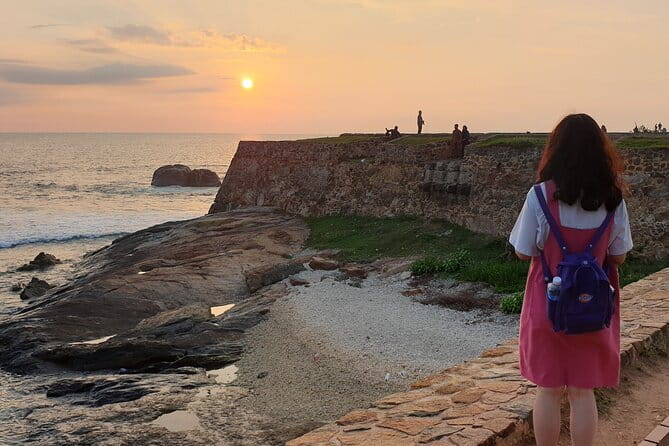
- Flag Rock, lighthouse ruins, and the best end to the walk
- What the $35 price really buys you
- Who will enjoy this Galle Fort walk most
- Booking, timing, and cancellation details
- Should you book it?
- FAQ
- Where does the Galle Fort walk begin?
- Where does the tour end?
- How long does the experience last?
- What time does the tour operate?
- What language does the guide speak?
- Is transportation included?
- How many people can join the tour?
- Is bottled water provided?
- Are umbrellas and hats provided?
- Can I cancel for a full refund?
Key points at a glance

- Small groups capped at six: The limited size gives you a better chance to ask questions and hear Dilip clearly.
- History with memorable local stories: Expect tales of treaty tricks, sieges, trade, tunnels, and the 2004 tsunami.
- Major fort sights in one walk: The route includes the Clock Tower, bastions, old streets, lighthouse ruins, the Dutch Reformed Church, and the Dutch Hospital.
- A strong local guide: Dilip has lived in the Galle area all his life and has 20 years of experience explaining the fort.
- A practical two-hour format: The tour fits well into a half-day plan, but you need moderate fitness and protection from sun or rain.
- Good value at $35: The price is reasonable if you want context rather than a quick look at the walls and streets.
Why Galle Fort is best understood on foot
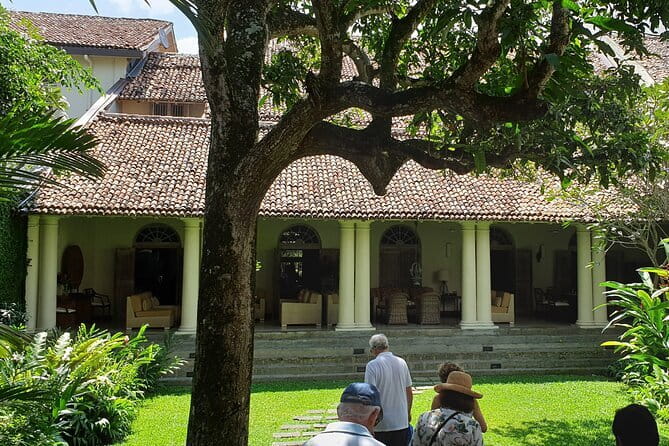
Galle Fort is easy to admire from the outside. Its thick walls, ocean views, old gates, and colonial streets make it one of Sri Lanka’s most photogenic historic areas. But the place makes much more sense when someone explains how it changed hands and why its buildings look the way they do.
This walk follows roughly 400 years of history. The story begins at the Old Harbour, where Chinese, Arab, and European traders anchored. Trade in cinnamon shaped the area long before European powers took control, and the route connects that earlier commercial world with the Portuguese and Dutch periods.
You are not simply moving from one building to another. You are learning how a working port became a fortified colonial town, how foreign powers dealt with local rulers, and how the fort remains part of daily life today.
That approach is the tour’s strongest feature. Dilip does not appear to treat the fort as a collection of old walls. He links architecture to trade, warfare, religion, weather, and local memory. His English is described as strong, and past visitors appreciated his willingness to answer questions and explain the buildings in detail.
More Walking Tours in Galle
- Galle Fort Walking tour
★ 4.9 · 285 reviews - Galle Fort Walking Tour with a Resident
★ 5.0 · 88 reviews - Galle Fortt Guided Walking Tour with a Local
★ 4.9 · 33 reviews
Starting at Flag Rock and the old harbour
The meeting point is Flag Rock Bastion, listed at 26F8+FXH, Galle 80000. Flag Rock gives the walk a useful starting point because it introduces both the defensive role of the fort and its position beside the sea.
From here, the route covers the iconic positions within Galle Fort before returning to the same point. That makes the walk simple to follow, especially if you are arranging your own transport. It also means you do not need to work out where to meet a vehicle at the end.
The Old Harbour adds an important layer to the opening. Chinese and Arab merchants used the port before European colonial powers reshaped it. The guide explains how the cinnamon trade, once strongly linked with Chinese traders, was taken over by the Portuguese.
The local name Galla is also part of the storytelling. The tour presents several old stories about the name, including the link to a crowing rooster. Details like this give you a way to remember the place beyond dates and rulers.
Portuguese walls, sieges, and clever treaty tricks
The Portuguese first built clay fortifications at Galle. Later, the Dutch replaced those defenses with the heavier stone walls and bastions that define the fort today.
The history is not presented as a neat handover from one European power to another. It includes deception, pressure, and long periods of hardship. One story concerns the construction of Colombo Fort, where a local king was reportedly tricked through the use of a piece of leather to claim more land.
Another tale describes Portuguese soldiers enduring a siege for three months while eating cats and dogs. It is a grim story, but it makes the pressure of colonial warfare easier to picture than a list of battles would.
Dilip’s style appears to favor these memorable stories. That is useful if you want history to stick in your mind. The only caution is that travelers who prefer a strictly academic account may want to ask follow-up questions about which tales are documented fact and which belong to local tradition.
Moon Bastion, Star Bastion, and the fort’s defenses

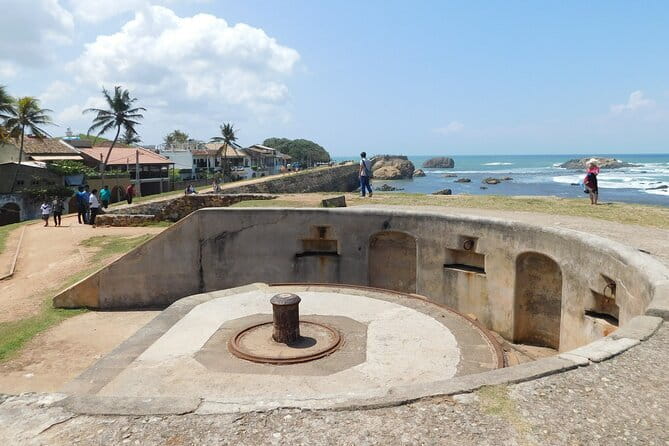
The fort’s bastions are not just scenic viewpoints. They show how the Dutch designed a defensive system around the peninsula, with thick walls, raised positions, and places for ammunition and artillery.
Moon and Star bastions are among the named points on the route. The front wall includes three bastions, and the walk also reaches the ammunition store and a tunnel. These features help you see how troops, weapons, and supplies moved around the fort.
The tunnel is one of the more appealing stops for anyone who enjoys the practical side of old fortifications. It gives the walk a sense of hidden movement beneath the grander walls. The tour also discusses how coral was used in the fort’s construction and how coral cooling walls helped deal with the tropical climate.
The fort is compact enough to cover on foot, but you should still expect sun, humidity, and some uneven surfaces. A moderate level of fitness is advised. Comfortable shoes matter more here than smart clothes.
More walking tours:
- Galle Fort Heritage Walk by a Certified Heritage Interpreter
★ 5.0 · 31 reviews - Galle Fort Walk with a Local
★ 4.5 · 7 reviews - Galle Fort Walking Tour with a local guide
★ 5.0 · 5 reviews - Colombo Walking Tour with Ajeet De Soyza
★ 5.0 · 43 reviews
The Clock Tower and the everyday streets

The Clock Tower is one of the fort’s clearest visual markers. It also helps show how the fort developed beyond a military post into a town with civic functions and daily routines.
The streets between the major sights are part of the experience. You pass buildings shaped by Portuguese, Dutch, and British influence, then see how those structures now serve modern purposes. That mixture is one reason the walk works better than a quick circuit along the ramparts.
You should allow yourself time to look up. Colonial details can be easy to miss when you focus only on the road ahead. Dilip’s role is useful here because he can point out architectural features and explain how the buildings fit into the fort’s larger story.
The fort is still a living place, not a sealed museum. Modern investment is changing some buildings and businesses, and the walk addresses that tension. You get a chance to consider how much restoration, tourism, and foreign money can reshape a historic quarter while still keeping its identity.
The Dutch Reformed Church and the human side of colonial rule
The Dutch Reformed Church, built in 1755, is one of the route’s key landmarks. Its story includes a vow made for the birth of a child, which gives the building a personal entry point rather than presenting it only as an example of Dutch religious architecture.
That small detail matters. Colonial buildings were created by governments, merchants, soldiers, and religious communities, but they were also tied to private hopes and family events. A church can tell you about power and belief at the same time.
The walk uses the church to explain the Dutch period and the wider reach of the Dutch East India Company, known by its Dutch initials, VOC. Trade, treaties, and control of ports were closely linked. Galle was not an isolated outpost. It was part of a large commercial system connecting Europe and Asia.
The tour also tells how the Dutch allegedly used two copies of treaties to outmaneuver a local king. Again, it is a memorable story, and you can ask Dilip for more detail if you want to separate historical record from local retelling.
Dutch Hospital, ballast bricks, and a changing fort

The Dutch Hospital is now a food and dining area. This makes it a good example of how Galle Fort continues to function while preserving old structures.
You may not spend a long time eating there during a walking tour, but the stop helps explain the fort’s present-day character. Former military and medical buildings now support restaurants and businesses, bringing new life to spaces built for very different purposes.
The tour also points out ballast bricks from Dutch ships. Ballast was used to keep ships stable on long sea journeys, and these bricks could be left behind when ships took on local cargo. They are a small but telling reminder that the fort was tied to shipping routes, not just land-based politics.
I like this kind of detail because it connects a plain piece of masonry to global trade. You do not need a specialist interest in maritime history to understand the point. The fort was built and supplied through movement across the Indian Ocean.
How the fort survived the 2004 tsunami

One of the most striking parts of the walk is the story of the 2004 tsunami. The waves devastated parts of Galle City, yet the fort’s walls helped shield the historic area.
That does not mean the fort escaped every effect of the disaster. It means the old defensive structure altered the impact of the waves and protected much of what lay within it. The story gives the walls a modern meaning, showing that they are not only reminders of colonial conflict.
For you, this is one of the tour’s best links between past and present. The same walls built for European military power later helped protect the city’s historic core from a natural disaster. It is a powerful example of how old structures can acquire new importance.
Flag Rock, lighthouse ruins, and the best end to the walk
The route returns to Flag Rock Bastion, where you see the lighthouse ruins and hear more about the fort’s role in guiding and protecting ships.
Several past bookings have taken place in the early morning or near sunset. One walk ended with the lowering of the fort flag and sunset, which can add a memorable finish if your timing matches the daily schedule. The listed operating hours run from 8:30 AM to 6:00 PM, Monday through Sunday.
Do not assume every departure will include sunset. Your start time determines what you see, and the core tour lasts about 90 minutes to two hours. If you want the cooler feel of early morning, book accordingly. If you want the flag-lowering and evening light, check the timing before you reserve.
What the $35 price really buys you
At $35 per person, this is not the cheapest way to walk around Galle Fort. You can see the walls and streets without a guide. The value comes from the explanations, the route planning, and the connections between ordinary-looking details and larger events.
The price includes an in-person English-speaking guide, but not transportation, bottled water, bicycle use, umbrellas, or hats. Since the tour begins and ends at Flag Rock, you must handle your own ride back to your accommodation.
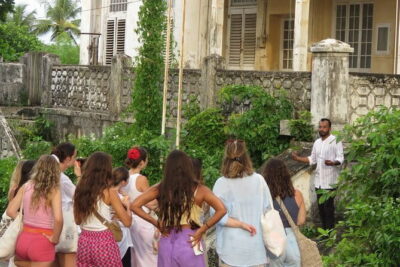
The small group limit improves the value. With a maximum of six people, Dilip can speak to the group without shouting, and you have a better chance to ask about a building or story that catches your attention. If enough people book the same time block, the walk may not be private, so do not assume you will have the guide alone.
You can also receive a group discount. For couples, families, or small groups, that may make the cost easier to justify.
Who will enjoy this Galle Fort walk most
I would choose this experience if you want a clear introduction to Galle Fort without spending half a day on a formal historical tour. The 90-minute to two-hour length suits a first morning in Galle or a stop between other plans.
It is also a good fit for families with older children. A family with children aged 11 and 13 enjoyed the stories and the walk, and the tales of tunnels, sieges, ships, and treaty tricks give younger listeners something concrete to follow.
Solo visitors may also find the small-group setup helpful. Dilip has paired solo guests with another solo guest, creating a more personal walk without the cost of a private tour.
Weather is the main practical risk. One especially determined group continued through heavy rain, thunder, and lightning, but the tour could not always continue all the way under such conditions. Another group sheltered from a sudden thunderstorm during the walk. Since umbrellas are not provided, check the forecast and bring your own rain protection.
Booking, timing, and cancellation details
The activity runs daily from 8:30 AM to 6:00 PM, with confirmation provided when you book. It is near public transportation, but private transportation is not included.
The tour is booked, on average, about 14 days ahead. That suggests you should reserve early if your Galle schedule is fixed, especially if you want a particular time or a smaller group.
Free cancellation is available if you cancel at least 24 hours before the local start time. Cancellations or changes made within 24 hours are not refunded or accepted.
Should you book it?
Book this walk if you want more than photographs of old walls. Dilip’s strongest qualities are his local connection, clear English, friendly manner, and ability to make Portuguese and Dutch history easy to follow. The most praised parts are the personal guiding, the thoughtful pace, and the way he brings buildings to life.
Skip it if you dislike walking in hot or wet weather, need guaranteed private transport, or want a strictly formal lecture with no local stories. For most people spending time in Galle, though, $35 is fair for a small-group introduction that covers the fort’s main sights and gives you plenty to think about after the walk.
FAQ
Where does the Galle Fort walk begin?
The tour begins at Flag Rock Bastion, located at 26F8+FXH, Galle 80000, Sri Lanka.
Where does the tour end?
The walk ends at Flag Rock Bastion, the same place where it begins.
How long does the experience last?
The walk lasts approximately 90 minutes to two hours.
What time does the tour operate?
It operates Monday through Sunday between 8:30 AM and 6:00 PM.
What language does the guide speak?
The tour includes an in-person English-speaking guide.
Is transportation included?
No. Private transportation is not included, and you must arrange your own transportation after returning to Flag Rock Bastion.
How many people can join the tour?
The maximum group size is six people. If several people book the same time block, the tour may not be private.
Is bottled water provided?
No. Bottled water is not included, so you should arrange your own.
Are umbrellas and hats provided?
No. Umbrellas for rainy days and hats for sunny days are not included.
Can I cancel for a full refund?
Yes. You can cancel for a full refund up to 24 hours before the experience start time. Changes or cancellations made less than 24 hours before the start are not accepted or refunded.
Just added around Galle
- From Colombo: Day Trip to Galle City, Koggala and Unawatuna★ 4.2 · 3 reviews
- Stilt-Fishing Experience in Ahangama★ 4.0 · 3 reviews
- Galle Sightseein Rickshaw Tour★ 4.5 · 3 reviews
- Sinharaja Rainforest & Udawalawe Safari – 2 Days, All Inclusive★ 5.0 · 3 reviews
- Fully Private Udawalawe National Park Safari Tour★ 5.0 · 3 reviews
- Galle: All Inclusive City & Fort Guided Cycling tour★ 3.6 · 3 reviews
- Private Half Day Safari Tour to Yala NP From Tangalle and Drop Back★ 4.5 · 3 reviews
- Galle Instagram Tour: Most Famous Spots (Private & All-Inclusive)★ 5.0 · 3 reviews
Walking Tours, compared.


Sigiriya: Rock Fortress Private Guided Walking Tour
Read our review →
Galle Fort Heritage Walk by a Certified Heritage Interpreter
Read our review →
Browse the lists this tour appears in