
Reviewed · KANDY TOURS
Day Tour to Polannaruwa from Kandy by Lux Tours Lanka
Ancient stone does the talking. This private trip from Kandy gives you two things I especially like: a focused look at Polonnaruwa’s finest monuments and a guide who can make the long day feel personal. Dan, named in the tour feedback, was praised for being attentive, friendly, and quick to point out wildlife along the way. The main drawback is simple: admission tickets are not included, and the advertised duration can stretch from five to 12 hours.
The tour covers Gal Vihara, the Archaeological Museum, the Polonnaruwa Vatadage, Lankathilaka Image House, Thivanka Image House, and Rankoth Vehera. I like that the plan mixes famous stone carving with museums and large religious monuments, rather than treating the ancient city as one long parade of ruins. Still, you should allow plenty of time, since the distance from Kandy and the number of stops make this a full outing rather than a quick side trip.
In This Review
- Key points to know before booking
- Why Polonnaruwa makes sense from Kandy
- Gal Vihara and the finest stone carving
- The Archaeological Museum fills in the missing pieces
- The Vatadage and Polonnaruwa’s compact Quadrangle
- Lankathilaka Image House and massive walls
- Thivanka Image House and the meaning of its name
- Rankoth Vehera gives the day its grand finish
- What the guide adds to a private day
- Is $65 good value?
- Who should book this Polonnaruwa trip?
- My call: book it for focused ruins and a personal guide
- FAQ
- Where does the tour begin?
- How long does the tour last?
- Is this a private tour?
- Are admission tickets included?
- Which places are visited?
- How long is the stop at Gal Vihara?
- How long is the museum visit?
- Can most people participate?
- Can I cancel for a full refund?
Key points to know before booking
- Gal Vihara brings you face to face with four major Buddha images carved from one long slab of rock.
- The Quadrangle packs Polonnaruwa’s ruins into one compact area, making the Vatadage an efficient and rewarding stop.
- The Archaeological Museum adds useful context, including models of a monks’ hospital, medical instruments, and Hindu monuments.
- A private vehicle and pickup service give the day flexibility, with only your own group taking part.
- The guide is a major part of the experience, with Dan praised for careful attention, friendly explanations, and spotting wildlife on the road.
- The $65 price does not cover admission tickets, so check the total cost before you commit.
Why Polonnaruwa makes sense from Kandy
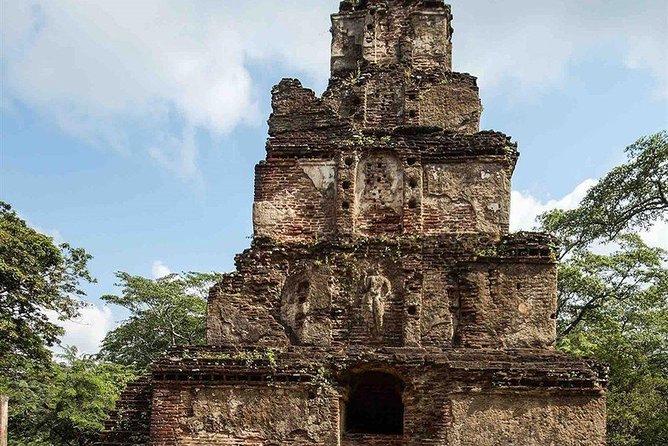
Polonnaruwa was once the capital of Sri Lanka’s central plains, a major commercial and religious centre ruled by Sinhalese kings about 800 years ago. Today, its archaeological park gathers tombs, temples, statues, stupas, and palace remains into a relatively compact historic area.
That compact layout matters. You can see a lot without spending the entire day walking between widely scattered monuments. The ancient city also rewards a guided visit because the remains are impressive but not always self-explanatory. A broken wall may be a royal building, a religious hall, or part of a former monastery. Good commentary helps you see the city as an organised place, not just a collection of old stones.
I especially like the balance here. Gal Vihara gives you great sculpture. The Quadrangle brings several buildings together. The museum explains how the city worked. The image houses show the scale of religious architecture, while Rankoth Vehera gives you the broad visual impact of a major dagoba.
The trip is private, so you are not working around the pace of strangers. That can be useful at an archaeological site, where one person may want to stop for photographs while another wants more explanation. Pickup is offered, and the tour operates daily between 7:00 AM and 8:30 PM during the stated operating period.
A few more tours worth weighing up
- Kandy Private Guided City Tour by Tuk Tuk
★ 4.9 · 1,307 reviews - From Kandy: Sigiriya Rock & Dambulla Cave Temple Adventure
★ 4.9 · 785 reviews - Sri Lanka Cooking Class with Granny
★ 5.0 · 587 reviews
Gal Vihara and the finest stone carving
The first listed stop is Gal Vihara, with about 45 minutes devoted to the site. It contains four Buddha images cut from one long slab of rock and is linked to the northern monastery built under King Parakramabahu I.
This is the artistic high point of the visit. The scale is important, but the careful carving is what holds your attention. You are not simply looking at separate statues placed around a courtyard. The images belong to one dramatic rock-cut composition, giving the site a strong sense of unity.
A guide can help you notice the relationship between the four figures and explain why the northern monastery mattered. Without that context, you may see the statues, take photographs, and move on too quickly. Forty-five minutes is a sensible amount of time for a focused visit, though anyone interested in Buddhist art may want to linger.
Admission is not included here, so factor that into your budget. This is also one of the places where the private format helps. You can ask for a slower explanation or spend more time with the carving without needing to keep up with a large group.
The Archaeological Museum fills in the missing pieces
The museum receives about an hour, making it the longest scheduled stop. That is a good choice. Ancient ruins tell you what survived, but a museum can show how the city was arranged and what daily life may have involved.
The rooms are organised around the citadel, the outer city, the monastery area, and Hindu monuments. One especially useful display is the model of a monks’ hospital, accompanied by medical instruments. That detail broadens your view of Polonnaruwa. The city was not only a place of worship and royal display. It also had institutions connected with care, administration, and organised religious life.
The Hindu monuments section adds another layer. Polonnaruwa’s religious world was not limited to one building style or one tradition, and the museum helps you see that variety before you return to the ruins.
I would pay close attention here, even if museums are not usually your main reason for visiting. The exhibits give you a mental map for the rest of the day. The drawback is that an hour indoors can feel long if you are eager to reach the monuments, especially after travelling from Kandy. Still, it is time well used if you want the ruins to make sense.
Admission is not included at the museum either.
The Vatadage and Polonnaruwa’s compact Quadrangle
The Polonnaruwa Vatadage receives roughly 30 minutes. It sits in the area known as the Quadrangle, a raised, walled section containing the most concentrated group of buildings in the ancient city.
This is likely the most efficient stop on the tour. Several important remains are close together, so you get a strong sense of the old religious centre without a long transfer between sights. The setting also makes it easier to compare different forms of architecture in one short walk.
The Vatadage itself is a circular relic house, and its position within the Quadrangle gives the area a ceremonial feel. You will see why this compact group is often treated as the heart of Polonnaruwa’s archaeological core. Thirty minutes is enough for an introduction, but the stop may feel brief if you want to study every carved detail.
This is a good place to ask your guide to point out the relationship between the buildings. A short explanation about how the Quadrangle functioned can turn a pleasant walk among ruins into a much clearer picture of the city’s religious centre.
A completely different kind of day out from Kandy:
- Kandy Village Cooking Class
★ 5.0 · 536 reviews - Kandy to Ella Train Tickets – Reserved Seats
★ 4.5 · 523 reviews - Kandy to Ambuluwawa & Kandy City Guided Tuk Tuk Day Tour
★ 4.8 · 270 reviews - Day tour to Sigiriya & Dambulla from Kandy
★ 5.0 · 252 reviews
Lankathilaka Image House and massive walls
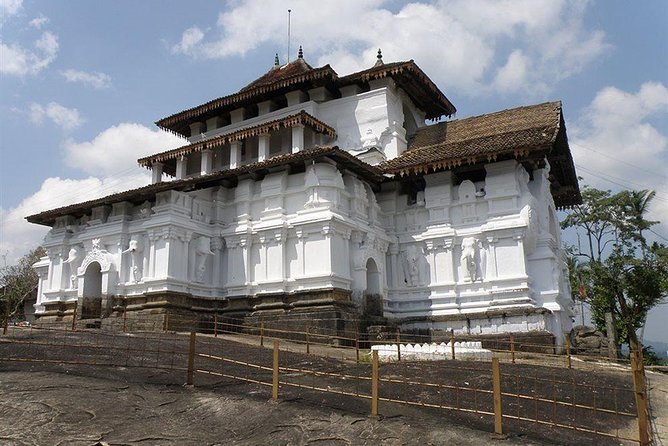
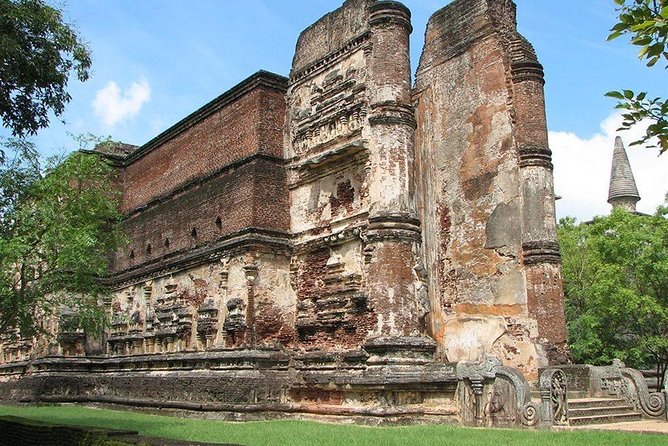
Lankathilaka Image House gets another 30 minutes. It was built by Parakramabahu I and later restored by Vijayabahu IV, giving it a connection to more than one period of Polonnaruwa’s royal story.
The building is a gedige, a stone Buddhist temple with thick walls and a corbelled roof. Its walls rise about 17 metres, so the first impression is one of height and enclosure. This is less about delicate sculpture alone and more about the force of the structure itself.
I find buildings like this useful after the smaller details of the Quadrangle. They reset your sense of scale. You begin to understand the resources and planning required to build a temple with such heavy masonry.
The half-hour schedule should allow you to see the main structure and hear its basic story. If you are especially interested in construction methods, ask your guide to explain the roof and wall design. The stop is not as open-ended as a long independent visit, but the private format lets you use your time well.
Admission is again separate.
Thivanka Image House and the meaning of its name
The northern road ends at Thivanka Image House, with about 30 minutes set aside. Thivanka means thrice bent, referring to the three-curve pose of the Buddha image inside. That pose is normally associated with female statues, which makes the image an unusual detail to look for.
The building is also known for its fine frescoes. This stop rewards close attention rather than a quick photograph from outside. Ask your guide to explain the name and the pose before you enter or examine the structure. It is a small piece of information, but it gives the building a distinct identity among Polonnaruwa’s many religious sites.
The main concern is time. Half an hour is enough to appreciate the image house, but it may not allow a slow examination of every surviving painting or architectural feature. If the site is especially interesting to you, tell the guide early in the visit that you would like a little extra time here.
Rankoth Vehera gives the day its grand finish
Rankoth Vehera is a 54-metre dagoba and the largest in Polonnaruwa. It is also described as the fourth-largest on the island, and it has been linked with the reign of King Nissanka Malla.
After the smaller temples and carved images, the scale of Rankoth Vehera changes the mood. A dagoba is built around a large dome, and the sheer size here helps you understand the importance of royal Buddhist building projects. The monument is not just a single object to admire. It represents the scale of religious institutions and the labour needed to create them.
The 30-minute stop should give you time to take in the dome and surrounding setting. If you have been concentrating on sculpture and wall carvings, Rankoth Vehera offers a simpler visual experience: shape, proportion, and presence.
It is worth saving a little energy for this stop. A day of ruins can become tiring, and the final large monument gives you a memorable closing image. As with the other archaeological stops, admission is not included.
What the guide adds to a private day
The strongest part of this experience may be the human element. A private tour only works well when the guide is attentive, and the information connected with Dan is encouraging. He was described as helpful, engaging, and alert to the group’s needs. He also pointed out wildlife during the journey, a welcome bonus on a day focused mainly on ancient buildings.
That kind of observation matters. The drive is part of the experience, not just empty time between Kandy and Polonnaruwa. A guide who watches the roadside and shares what he notices can make the journey feel connected to the country around the ruins.
You should also expect explanations delivered with enthusiasm. The guide connected with the group, explained the sites clearly, and was friendly throughout the tour. That is especially useful at Polonnaruwa because the monuments cover several types of architecture and religious practice.
The feedback also describes the guide as a good source of food advice. That may be useful after a long day, although the supplied details do not promise a meal or a specific restaurant. Treat this as a helpful extra rather than a guaranteed part of the formal itinerary.
Is $65 good value?
At $65, the tour offers a private experience with pickup and a full set of major Polonnaruwa stops. The value depends on what the price includes for your booking, but the stated information makes clear that entrance fees are separate. You should therefore compare the $65 tour price with the cost of arranging transport and a guide independently, then add the archaeological admissions.
The private format is the main value point. You are not joining a large group, and only your party takes part. That gives you more control over questions, photo stops, and the amount of explanation you want. It can also make a long day less tiring because you are not waiting for a bus full of people.
The price is less attractive if you want a very short visit or plan to see only one or two monuments. Six stops plus the museum make this best for someone who wants a broad introduction to Polonnaruwa in one organised outing.
The duration is listed as approximately five to 12 hours. That is a wide range, so ask for the expected schedule before booking. The difference matters when you are arranging other plans in Kandy.
Who should book this Polonnaruwa trip?
I would choose this tour if you are staying in Kandy and want to see Polonnaruwa without organising transport, site order, and commentary on your own. It suits first-time visitors who want the main archaeological highlights rather than a specialist study of one monument.
It is also a good match for couples, families, and small groups who value privacy. Most travelers can participate, and the tour is near public transportation, though pickup is offered for added ease.
You should think twice if you dislike long sightseeing days, want to set every stop yourself, or do not want to pay separate entrance fees. The number of sites is a strength, but it also creates a full schedule. The trip will reward curiosity more than speed.
Free cancellation is available if you cancel at least 24 hours before the start time. Within 24 hours, the payment is not refunded, and late changes are not accepted.
My call: book it for focused ruins and a personal guide
I recommend this tour for anyone who wants a private, well-organised introduction to Polonnaruwa from Kandy. The best reasons to book are the six carefully chosen stops, the useful museum visit, the compact Quadrangle, and the guide service praised for warmth and attention.
Before paying, confirm the pickup details, expected duration, and total admission costs. If those numbers fit your day and budget, $65 is a reasonable starting price for private transport and guiding. Book it for a full look at the ancient city, not a quick photo stop.
FAQ
Where does the tour begin?
The tour is based in Kandy, and pickup is offered.
How long does the tour last?
The approximate duration is listed as five to 12 hours.
Is this a private tour?
Yes. Only your group participates in the activity.
Are admission tickets included?
No. Admission tickets are not included for the listed stops.
Which places are visited?
The tour includes Gal Vihara, the Archaeological Museum, Polonnaruwa Vatadage, Lankathilaka Image House, Thivanka Image House, and Rankoth Vehera.
How long is the stop at Gal Vihara?
The planned time at Gal Vihara is about 45 minutes.
How long is the museum visit?
The Archaeological Museum stop is planned for about one hour.
Can most people participate?
Yes. The information states that most travelers can participate.
Can I cancel for a full refund?
Yes, if you cancel at least 24 hours before the experience start time. Cancellations made within 24 hours are not refunded.
Just added around Kandy
- Evening Tour at the Last Kingdom of Sri Lanka, Kandy★ 5.0 · 3 reviews
- Tour to Dambulla Cave, Sigiriya and Pidurangala Rock from Kandy★ 5.0 · 3 reviews
- Day Tour Kandy to Sigiriya with Dambulla Cave Temple Excursion★ 5.0 · 3 reviews
- Private Day tour from Kandy to Sigiriya, Dambulla & Pidurangala★ 5.0 · 3 reviews
- Kandy To Dambulla and Sigiria City Full Day by Laka Tours★ 5.0 · 3 reviews
- Full Day Tuk Tuk Tour – Explore Kandy with Local Expert★ 4.1 · 3 reviews
- Kandy to Ella★ 5.0 · 3 reviews
- From Kandy: Wilpattu National Park Safari with Hotel Pickup★ 5.0 · 3 reviews
Kandy Tours, compared.

Kandy to Ambuluwawa & Kandy City Guided Tuk Tuk Day Tour
Read our review →
Kandy to Sigiriya Day Tour and Dambulla cave temple with private vehicle
Read our review →Browse the lists this tour appears in