
Reviewed · COOKING CLASSES
Kandy Village Cooking Class
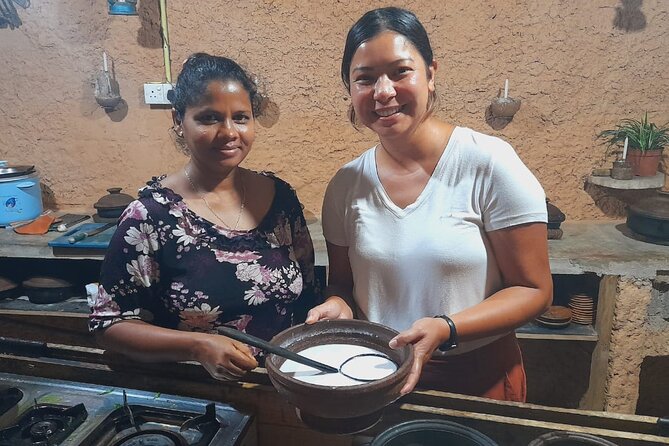
Come hungry, leave with curry skills. This Kandy cooking class pairs a lively market visit with hands-on cooking in a village kitchen, giving you a closer look at daily food traditions than a restaurant meal can. I especially like choosing five vegetables yourself and learning how local spices work, then sitting down to eat the meal you helped make. The warm welcome from Shyama and her family is another strong point. The main thing to check is the return transport, since some bookings include pickup but require you to arrange and pay for your way back.
At $25 per person, this is a strong-value experience if you want food, local contact, and a meal in one outing. You may cook eight, nine, or even more dishes, depending on the group and menu. It suits solo visitors, couples, families, and groups of up to 15, though a large group may feel less personal than a small one.
In This Review
- Key things to know before booking
- Why this Kandy cooking class is worth your time
- Starting at Kandy Municipal Central Market
- From the city to a Kandy village kitchen
- Cooking eight to eleven Sri Lankan dishes
- The family welcome and teaching style
- Eating the meal you helped prepare
- The wider Kandy setting
- Who will enjoy this experience most
- Price, timing, and the small print that matters
- Should you book the Kandy Village Cooking Class?
- FAQ
- Where does the Kandy Village Cooking Class begin?
- How long does the cooking class last?
- Is pickup available?
- Where does the experience end?
- How many people can join?
- What do you choose at the market?
- Is a village visit included?
- Are service animals allowed?
- What is the cancellation policy?
Key things to know before booking
- Choose ingredients at Kandy Municipal Central Market: You select five vegetables, and you can choose chicken or fish for the meal.
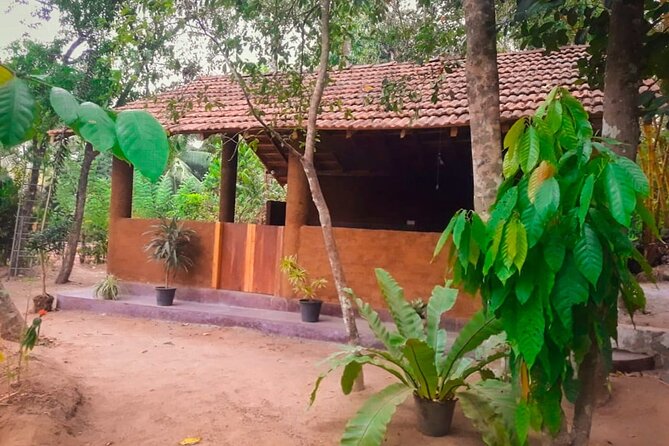
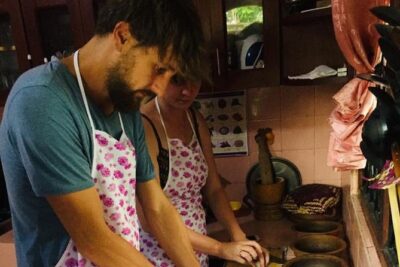
- Cook in a village setting outside central Kandy: The class takes place in a traditional home setting, often described as a beautiful outdoor or traditional kitchen surrounded by nature.
- Expect a serious hands-on lesson: You will prepare several curries, rice dishes, sambal, coconut milk, and sometimes a sweet finish such as caramel pancakes.
- Meet Shyama and her family: The hosts receive especially strong praise for their kindness, patience, and clear instruction.
- Allow about three hours: The market, transfer, cooking, meal, and short village visit all form part of the experience.
- Check your return plan: Pickup is offered from a designated point, but return transport may not be included.
Why this Kandy cooking class is worth your time
Kandy has no shortage of temples, viewpoints, and cultural shows. Those are worthwhile, but food gives you a different way into the city. A cooking class takes you beyond the plate and shows you how Sri Lankan meals are built, one vegetable, spice, and technique at a time.
I like this experience because you do not simply watch someone cook. You help choose the produce, prepare the ingredients, work through the recipes, and eat the result. That chain matters. When you see a vegetable at the market, handle it in the kitchen, and taste it in a curry later, Sri Lankan food becomes easier to understand.
The village setting adds another layer. Instead of staying in a hotel kitchen or a polished cooking studio, you visit a local home and nearby village. The setting may be simple, but that is part of its appeal. You get a glimpse of ordinary life around Kandy, along with time to talk with the family hosting the class.
The class is listed at approximately three hours. That is enough time for a market stop and a substantial meal, but not so long that the activity takes over your whole day. At $25, the price is reasonable for an outing that combines instruction, food, market guidance, and a local visit.
More Cooking Classes in Kandy
- Sri Lanka Cooking Class with Granny
★ 5.0 · 587 reviews - Private Traditional Sri Lankan Cooking Class in Kandy with Hotel Transfers
★ 5.0 · 115 reviews - Cooking With Village Family
★ 5.0 · 104 reviews
Starting at Kandy Municipal Central Market
The official meeting point is Kandy Municipal Central Market at 144 Central Market, Kandy 20000. This is a practical starting place because the market is not just a meeting location. It is where you begin learning what goes into a Sri Lankan meal.
Your guide helps you select five vegetables from the available produce. You also choose either chicken or fish. This gives you some control over the meal, which is useful if you have strong food preferences or want to focus on ingredients you recognize.
The market portion is one of the most valuable parts of the outing. You learn about spices, vegetables, and other ingredients while seeing them in the place where local people buy food. The lesson is not only about naming ingredients. It helps you understand how cooks decide what to combine and how fresh produce shapes a meal.
Plan for the market to feel active and sensory. You may be handling vegetables, comparing options, and asking questions while the shopping takes place. If you prefer a quiet, formal lesson, this part may feel less structured. If you enjoy seeing food in its everyday setting, it should be a highlight.
The shopping also makes the final meal feel personal. You are not being handed a fixed menu without explanation. You take part in building the ingredients before returning to the village.
From the city to a Kandy village kitchen
After the market visit, you travel out from central Kandy to the village cooking location. One account describes the drive as approximately 10 kilometers from the city, though the exact transfer can vary depending on where pickup is arranged.
Pickup is offered from a designated point, and some bookings include hotel pickup. Confirm the details before setting off. The important practical point is that getting to the class may be arranged more easily than getting back. Some bookings require you to pay for return transport yourself, so ask about the return before the activity begins.
The setting is a major part of the experience. The class takes place in or beside a traditional home, with descriptions of a clay house, a traditional kitchen, and an outdoor cooking area. The family home is presented as being in a rural setting surrounded by trees and tropical vegetation.
You should think of this as a home-based cultural experience, not a restaurant demonstration. Conditions may be more informal, and the kitchen may not have the polished layout of a professional cooking school. That trade-off is worthwhile for many people because the setting feels connected to local life.
A short visit to a nearby village is also included. The information provided does not give a precise length or a detailed route for this portion, so treat it as a brief look at the area rather than a full village tour.
Cooking eight to eleven Sri Lankan dishes
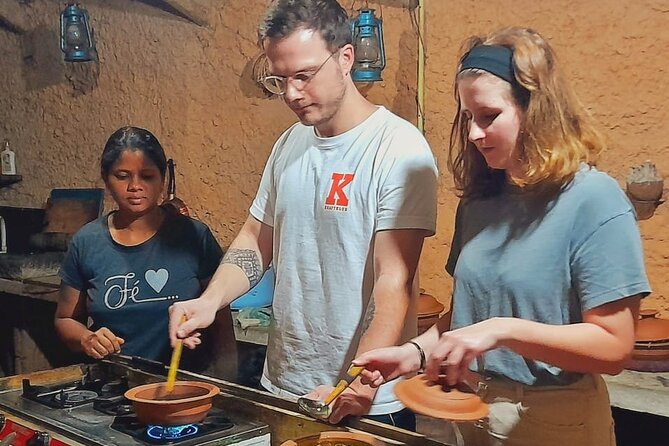
The cooking lesson is the heart of the experience. You work with the host and follow traditional preparation methods to create a complete Sri Lankan meal.
The number of dishes is not fixed in the available details. Some accounts describe eight or nine dishes, while another describes about 11 varied dishes. That likely depends on the group, the choices made at the market, and the pace of the class. Either way, expect a generous amount of cooking rather than one simple curry.
The recipes can include several vegetable curries, chicken or fish curry, rice, sambal, and other accompaniments. One particularly useful lesson is making coconut milk from scratch. That shows you a basic part of Sri Lankan cooking that is easy to miss when eating in restaurants.
I would pay close attention to the spice explanations. The class covers spices and herbs in the market and then shows how they are used in the kitchen. You can ask questions as you go, and the teaching style appears to be practical rather than overly formal.
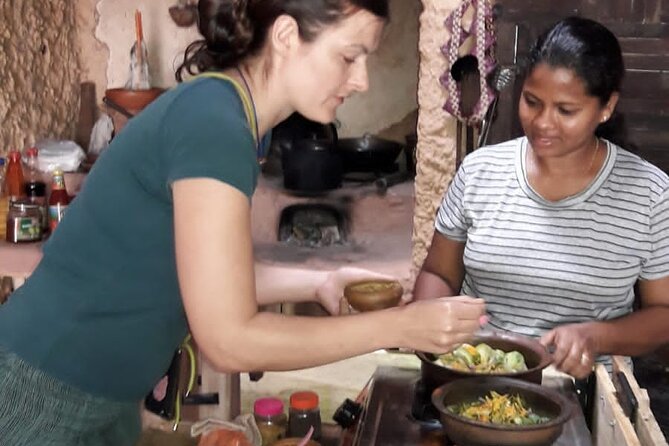
The best part is the amount of participation. You are not simply standing at the edge of the kitchen while someone else does the work. You help prepare the food and take part in the cooking process. That makes the meal more memorable, and it gives you a better chance of repeating the dishes at home.
The class is also suitable for a range of experience levels. If you already cook often, you can focus on Sri Lankan methods and flavor combinations. If you rarely cook, the step-by-step guidance and direct supervision should make the lesson approachable.
More village experiences:
- Day Trips from Kandy to Sigiriya with Village Experiences
★ 5.0 · 42 reviews - Kandy Sigiriya Rock and Village Safari Day Trip
★ 5.0 · 12 reviews - Kandy: Village Cooking Class 12 Dishes with Market Tour
★ 5.0 · 6 reviews - Half-Day Lagoon and Village Cycling Tour in Galle
★ 5.0 · 90 reviews
The family welcome and teaching style
Shyama is repeatedly singled out as a friendly and effective teacher. Her husband and other family members also help create the relaxed feeling that makes a home cooking class work well.
The social side matters here. Solo visitors can join a group and still have a clear role in the cooking. Couples can share the work, while families can divide up tasks among children and adults. A group of 14 has also been accommodated, including children and grandparents.
Large groups bring one possible drawback. With a maximum of 15 people, the class can be lively, but you may receive less individual attention than you would in a private lesson. If personal instruction is your priority, ask about group size when booking.
The teaching seems especially good for people who want more than a recipe card. You learn by seeing, touching, stirring, and tasting. The hosts explain the ingredients and answer questions, while the family setting adds conversation and a sense of welcome.
Recipes are provided in at least some versions of the class. That is useful because the meal may include many dishes, and remembering every ingredient and method after one session would be difficult.
Eating the meal you helped prepare
The final meal is not a small sample. The portions appear to be generous, with enough food for a full lunch or dinner. If you cook eight to 11 dishes, you will have plenty to taste and compare.
The variety is the point. Sri Lankan food is often described simply as rice and curry, but a traditional meal can include several small dishes with different textures and levels of heat. A vegetable curry may taste very different from a chicken curry, while sambal brings a sharper contrast.
Aubergine curry, chicken curry, and sambal are among the dishes that receive special praise. Caramel pancakes with coconut are also sometimes prepared as a sweet ending. The precise menu can change, especially because you choose ingredients at the market.
This is a good activity for people who like to eat slowly and talk about food. You can compare the dishes, ask why particular spices were used, and think about which recipes you want to make at home.
The wider Kandy setting
The experience is based around Kandy, and the listed route points include Kandy City Center, Kandy Lake, Kandy View Point, Kandy Lake Club, the Kandy District, Kandy itself, and the Temple of the Sacred Tooth Relic.
These names help place the activity within the wider city. Kandy Lake and the viewpoint offer familiar city sights, while the cultural dance show at Kandy Lake Club and the Temple of the Sacred Tooth Relic represent two well-known parts of a Kandy visit.
Do not assume the cooking class replaces a dedicated sightseeing tour of these places. The core experience is the market, village transfer, cooking lesson, meal, and short local visit. If you want time inside the Temple of the Sacred Tooth Relic or a full cultural dance performance, plan those separately unless your booking confirmation clearly says otherwise.
That distinction matters when arranging your day. The class works well between major sightseeing plans, but allow enough time for transport and the meal. The market and village setting are the real focus.
Who will enjoy this experience most
I would recommend the class to anyone who thinks food is one of the best ways to understand a place. It is particularly well suited to:
- Solo visitors who want a friendly group activity
- Couples looking for a shared meal and practical lesson
- Families with children and older relatives
- Home cooks who want recipes they can use later
- People who prefer local homes and markets to formal attractions
- Visitors who want a substantial meal included in their activity
It may be less suitable if you want a short demonstration with minimal participation. It may also be challenging if you need strict dietary control and do not discuss your requirements ahead of time.
One person with celiac disease was able to take part after certain ingredients were removed, including soy sauce, mustard, papadam, and pancakes. However, the class did not offer a separate gluten-free menu. If you have an allergy, intolerance, or religious dietary need, contact the provider before booking and confirm what can be changed.
Service animals are allowed, and the activity is near public transportation. The maximum group size is 15 people.
Price, timing, and the small print that matters
At $25 per person, the value is strong. You receive a market experience, ingredient guidance, a village visit, hands-on instruction, and a large meal. Many cooking classes charge similar prices for a shorter lesson in a city studio, so the family setting and market visit add real value.
The price does not automatically remove every extra cost. Return transport may need to be arranged and paid for separately. That is the clearest practical issue to settle before you go.
The activity lasts about three hours and ends back at the meeting point according to the stated arrangements. Confirmation is provided at booking, and free cancellation is available if you cancel at least 24 hours before the start time. Changes or cancellations made inside that period are not accepted for a refund.
Should you book the Kandy Village Cooking Class?
Yes, if you want an active food experience with a local family and a real connection to the ingredients. The market visit, the traditional kitchen, the village setting, and the large shared meal give this outing more substance than a standard cooking demonstration.
I would book it for a first visit to Kandy, especially if you enjoy curry and want recipes to take home. Before paying, confirm pickup, return transport, the expected group size, and any dietary needs. If those details suit you, this is one of the better-value ways to spend three hours around Kandy.
FAQ
Where does the Kandy Village Cooking Class begin?
The stated meeting point is Kandy Municipal Central Market, 144 Central Market, Kandy 20000, Sri Lanka.
How long does the cooking class last?
The full experience lasts approximately three hours.
Is pickup available?
Yes. Pickup is offered from a designated point for the market visit, and some bookings include pickup from a hotel.
Where does the experience end?
The activity ends back at the meeting point according to the provided arrangements.
How many people can join?
The maximum group size is 15 people.
What do you choose at the market?
You select five vegetables from the market and choose either chicken or fish. The host also explains spices and other ingredients.
Is a village visit included?
Yes. The experience includes a brief visit to a nearby village.
Are service animals allowed?
Yes. Service animals are allowed.
What is the cancellation policy?
You can cancel at least 24 hours before the start time for a full refund. Cancellations or changes made less than 24 hours before the start time are not accepted for a refund.
More Workshops
- Kandy Cooking Class with Granny
★ 4.9 · 95 reviews - Private Kandy Authentic Cooking Class
★ 5.0 · 65 reviews - Kandy: Interactive Batik Workshop
★ 5.0 · 51 reviews - Srilankan Cooking class by FFL kandy
★ 5.0 · 50 reviews
Just added around Kandy
- Evening Tour at the Last Kingdom of Sri Lanka, Kandy★ 5.0 · 3 reviews
- Tour to Dambulla Cave, Sigiriya and Pidurangala Rock from Kandy★ 5.0 · 3 reviews
- Day Tour Kandy to Sigiriya with Dambulla Cave Temple Excursion★ 5.0 · 3 reviews
- Private Day tour from Kandy to Sigiriya, Dambulla & Pidurangala★ 5.0 · 3 reviews
- Kandy To Dambulla and Sigiria City Full Day by Laka Tours★ 5.0 · 3 reviews
- Full Day Tuk Tuk Tour – Explore Kandy with Local Expert★ 4.1 · 3 reviews
- Kandy to Ella★ 5.0 · 3 reviews
- From Kandy: Wilpattu National Park Safari with Hotel Pickup★ 5.0 · 3 reviews
Cooking Classes, compared.


Organic cooking class sigiriya (kumara & family)
Read our review →

Sri Lankan Cooking Class with Neranji at Homestay
Read our review →

Browse the lists this tour appears in