
Reviewed · COOKING CLASSES
Sri Lanka Cooking Class with Granny
Come hungry, leave with recipes. This three-and-a-half-hour cooking class takes you from Sri Lankan spices and market produce to a generous homemade rice-and-curry meal, usually in a family home outside Kandy. I like the hands-on format, where you choose vegetables, chop ingredients, and cook under the guidance of Nandini, also called Nandi, and I like the warm family setting far more than a polished hotel kitchen. The main thing to consider is timing: the market option and tuk-tuk journey can stretch the outing well beyond the advertised duration.
I also like the flexible menu. You might make five curries, eight dishes, or even nine, depending on the group, the fresh ingredients, and what you enjoy eating. The meal is tailored to your tastes and dietary needs, but you should expect a rustic class rather than a tightly timed professional demonstration.
In This Review
- The essential details at a glance
- From Kandy City Centre to a village kitchen
- Tea, coffee, and a proper introduction to the spices
- The optional market visit with Sudesh
- Choosing the curries and preparing the feast
- Cooking in a traditional clay kitchen
- Eating the meal you made
- Is $25 a good value?
- Morning or afternoon class?
- Who will enjoy it most?
- Booking and cancellation notes
- Should you book the Granny cooking class?
- FAQ
- How long does the Sri Lanka Cooking Class with Granny last?
- Where does the cooking class start?
- Does the class include a market visit?
- What food will I cook?
- Is a meal included?
- Is this a private cooking class?
- Can I cancel for a full refund?
The essential details at a glance
- A family-home setting: The cooking takes place in a traditional outdoor or covered clay kitchen in a village near Kandy, not in a commercial cooking school.
- Choose your ingredients: You can select vegetables and, where offered, other ingredients for the curries you will prepare.
- Market visit option: An upgrade adds a visit to a local market with Sudesh, who explains the produce, spices, and daily shopping routine.
- A very generous meal: Depending on the ingredients and class format, you might prepare chicken curry, dhal, egg curry, pumpkin, okra, eggplant, potatoes, sambol, papadums, chutney, and dessert.
- Recipes for home: Recipes are sent after the class, giving you a practical way to repeat the dishes.
- Strong value at $25: Lunch or dinner, tea or coffee, and bottled water are included, though transport arrangements need careful checking.
From Kandy City Centre to a village kitchen
The stated starting point is Kandy City Centre, and the activity ends back at the meeting point. Hotel pickup is offered, which is useful if you are staying in Kandy and do not want to work out local transport before breakfast or dinner.
The cooking home is described as being in a village in the hills outside Kandy. Several accounts place the tuk-tuk journey at roughly 20 minutes from the city, though the exact ride depends on your hotel and traffic. That trip is part of the appeal. You leave the busy center and reach a quieter family setting where cooking happens in an outdoor covered kitchen, sometimes with traditional clay pots and a wood-fired feel.
Transport details are not perfectly uniform. The activity information says pickup is offered, while the included items do not list private transportation. Some arrangements include the ride from Kandy, with the return tuk-tuk paid separately at a reasonable or agreed fee. Ask clearly before setting off: Is pickup included from your hotel? Is the return included? If not, how much should you expect to pay?
That small check can prevent the only real logistical irritation reported about the experience. The class itself is excellent value, but transport should not be left vague.
More Cooking Classes in Kandy
- Kandy Village Cooking Class
★ 5.0 · 536 reviews - Private Traditional Sri Lankan Cooking Class in Kandy with Hotel Transfers
★ 5.0 · 115 reviews - Cooking With Village Family
★ 5.0 · 104 reviews
Tea, coffee, and a proper introduction to the spices
On arrival, you receive tea or coffee, along with bottled water. This welcome matters because the class is social as well as practical. You are not simply handed a recipe sheet and told to get started. The family introduces the ingredients, explains the spices, and gives you time to settle in.
Sri Lankan cooking depends on more than simply adding curry powder. You learn how spices, vegetables, coconut, and cooking methods work together. One especially useful lesson concerns coconut milk. The first extraction is thicker and stronger, while the second is lighter. Using the right one can change the texture and flavor of a curry.
You also get a look at the vegetables in their raw form before they are transformed in the pot. This is helpful if you have eaten Sri Lankan food in restaurants but do not know what the market produce looks like. Pumpkin, long beans, okra, eggplant, potatoes, mango, and other local ingredients may be available, depending on the day.
The instructor explains as she works, then lets you take over much of the preparation. Expect to cut, chop, stir, season, and help with the cooking. The lesson is aimed at people who want to make the food themselves, not only watch an expert do it.
The optional market visit with Sudesh
The market upgrade adds another layer to the experience. Sudesh may meet you in Kandy and guide you through a local market before taking you to the cooking home. This is not just a quick stop to buy one onion. It is a chance to see where families shop for vegetables, fruit, spices, and other daily ingredients.
The market is described as a maze of stalls filled with produce and local color. Sudesh helps identify unfamiliar vegetables and explains what is suitable for different curries. This gives the cooking class a clear connection to daily life in Sri Lanka. You see the ingredients before they reach the kitchen, then learn how to use them a short time later.
I would choose the market option if you enjoy food shopping and want a fuller cultural outing. It is particularly useful if you are unfamiliar with Sri Lankan produce. You can ask questions while selecting what to cook, rather than trying to identify vegetables from a plate.
The extra visit is less essential if your main goal is simply to learn recipes. It also adds time. The advertised class lasts about three hours and 30 minutes, but the market, tuk-tuk rides, and long meal can turn the outing into a five or six-hour afternoon or evening. Plan around it rather than placing another fixed appointment immediately afterward.
Choosing the curries and preparing the feast
One of the best features is the freedom to choose ingredients. The available menu changes with the market and the season, and the hosts take preferences and dietary restrictions into account. You might choose several vegetable curries, then add chicken or egg if you eat them.
The exact menu is not fixed, but examples from the class include:
- Chicken curry
- Pumpkin curry
- Egg curry
- Dhal
- Okra or long-bean dishes
- Eggplant curry
- Tempered potatoes
- Mango chutney
- Coconut sambol
- Papadums
- Coconut pancakes or another dessert
One class prepared nine dishes, including a special eggplant recipe usually reserved for celebrations. Another made about eight curry dishes in clay pots. These details show why you should not expect a single bowl of curry as the final reward. The meal can become a serious feast.
The choice of vegetables is more than a nice extra. It lets you learn dishes you are likely to cook again. If you already love eggplant, ask for it. If you are curious about okra or pumpkin, use the class to learn how Sri Lankan cooks handle them. You can also explain dietary restrictions before or at the start of the session so the menu can be adjusted.
The pace is relaxed and informal. Nandini is described as patient, funny, and happy to let you do the work. That makes the class a good fit for beginners. You do not need advanced knife skills or professional cooking experience. You do need to be willing to participate.
More Sri Lankan cooking classes:
- Kandy Cooking Class with Granny
★ 4.9 · 95 reviews - Private Kandy Authentic Cooking Class
★ 5.0 · 65 reviews - Srilankan Cooking class by FFL kandy
★ 5.0 · 50 reviews - Sri Lankan cooking class with Nilu Kandy( FREE PICKUP & Drop)
★ 5.0 · 45 reviews
Cooking in a traditional clay kitchen
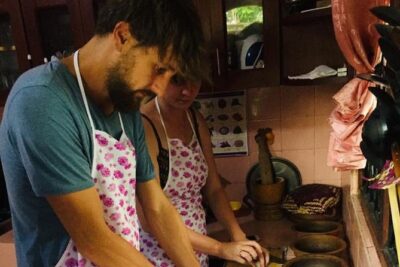
The setting is one of the strongest reasons to book this class. A family home in the hills gives you a view of how food is prepared outside a restaurant. The outdoor covered kitchen, traditional clay pots, and old-fashioned methods add a real sense of place.
This is not a modern demonstration kitchen with spotless counters and a printed timetable. You may find smoke, heat, uneven surfaces, and a more rustic setup. That is part of the charm, but it may not suit someone looking for a highly polished culinary workshop.
You also spend time with the family who lives there. Hosts including Nandini and Auntie Shanti create an easygoing atmosphere, with tea, conversation, jokes, and stories about food and family life. The class can feel more like cooking with a Sri Lankan auntie than attending a formal lesson.
That intimacy is especially appealing for couples, families, and small groups. The activity is described as private, with only your group participating, though the class format can vary and some sessions have included small groups of up to six people. If privacy matters to you, confirm the group arrangement when booking.
Eating the meal you made
At the end, you sit down to eat the food prepared during the class. Lunch or dinner is included, along with tea or coffee and bottled water. The portions appear generous, with several curries served alongside rice and the other dishes made during the lesson.
This final meal gives you a useful comparison. You have handled the vegetables, watched the spices cook, and seen how coconut milk changes the sauce. The food is no longer an abstract restaurant dish. You understand the steps behind it, which makes the flavors easier to remember and reproduce at home.
Dessert may include coconut pancakes, a welcome finish after a table full of savory curries. The meal can be substantial enough that you should avoid planning another major dinner afterward. If you select the afternoon or evening class, remember that the meal and cleanup may extend the return time.
Is $25 a good value?
At $25 per person, this is a strong value if you want both food and a personal cultural experience. You receive instruction, ingredients, a full meal, drinks, and the chance to spend time in a local family home. The number of dishes can be surprisingly high for the price.
The value is even clearer when you consider the recipes sent afterward. A cooking class is more useful when you can repeat the food at home, and this one gives you that chance. You also learn techniques rather than only watching a short cooking show.
Transport is the point that needs clarification. Private transportation and an air-conditioned vehicle are not included in the listed inclusions, while hotel pickup is offered and some pickup arrangements include transport from Kandy. Return tuk-tuk costs may be separate. The class remains inexpensive, but your total cost depends on the agreed transport plan.
Morning or afternoon class?
You can choose a morning or afternoon start. A morning class works well if you want a fresh lunch and a free evening afterward. An afternoon class may suit you if you prefer a slower start, but it can run into dinner and return later than expected.
The market upgrade is best treated as a half-day activity, not a quick add-on. A class without the market may be closer to the stated three-and-a-half-hour duration, though cooking, eating, and transport can still take longer.
Give yourself extra time if you choose the market. One session lasted about six hours from market visit through the meal and return. That is not a problem if you expect it, but it can be inconvenient if you have a train, show, or temple visit booked for later.
Who will enjoy it most?
I would recommend this for food-focused visitors who want to learn by doing. It suits beginners, home cooks, couples, families, and small groups. The adjustable menu also makes it appealing if you have particular vegetable preferences or dietary restrictions.
You will get the most from it if you enjoy conversation and are comfortable in a simple home setting. The class is not about speed, restaurant technique, or perfect presentation. It is about local ingredients, traditional methods, and sharing a meal with the people who prepared it.
It may be less suitable if you need strict timing, dislike outdoor kitchens, or want an air-conditioned cooking studio. The setting is rustic, and the schedule can stretch. The market portion can also feel unnecessary if you are only interested in cooking.
For independent cooks, the lesson on coconut milk, spice blends, clay-pot cooking, and vegetable preparation offers plenty to take home. For complete beginners, the patient instruction makes the class approachable. For children, the private format may work well, but the provided information does not specify age limits or child-focused activities, so ask before booking.
Booking and cancellation notes
Confirmation is sent at the time of booking. The activity is near public transportation, and pickup is offered. Since the meeting point is Kandy City Centre, confirm the exact pickup arrangement and return point before the day of the class.
Free cancellation is available if you cancel at least 24 hours before the local start time. Changes or cancellations inside that window are not accepted for a refund. The class also depends on suitable weather and a minimum number of participants. If the provider cancels for either reason, you are offered another date or a full refund.
Should you book the Granny cooking class?
Yes, if you want a warm, hands-on introduction to Sri Lankan home cooking for a modest price. The strongest reasons are the family-home setting, the freedom to choose ingredients, the patient teaching from Nandini and her family, and the huge meal at the end.
Choose the market upgrade if you want to connect the dishes with local shopping and village life. Skip it if you have limited time or only want the cooking lesson. Before booking, ask about pickup, return transport, group size, and the likely total duration.
This is not the right choice for a slick culinary studio experience. It is better than that for the right person: simple, personal, filling, and useful long after you leave Kandy.
FAQ
How long does the Sri Lanka Cooking Class with Granny last?
The advertised duration is approximately three hours and 30 minutes. If you add the market visit and transport, the full outing may take about five to six hours.
Where does the cooking class start?
The stated starting point is Kandy City Centre in Kandy, Sri Lanka. Hotel pickup is offered, but you should confirm the exact arrangement before the class.
Does the class include a market visit?
The market visit is an upgrade rather than part of the basic class. It takes place before the cooking session and may be guided by Sudesh.
What food will I cook?
The dishes change according to seasonal produce, daily market offerings, preferences, and dietary restrictions. Possible dishes include rice and curry, chicken curry, dhal, egg curry, pumpkin, eggplant, okra, potatoes, sambol, chutney, papadums, and coconut pancakes.
Is a meal included?
Yes. Lunch or dinner is included, along with coffee or tea and bottled water. Alcoholic drinks are not included.
Is this a private cooking class?
The activity is described as private, with only your group participating. Some class descriptions also refer to small groups, so confirm the group size if this is important to you.
Can I cancel for a full refund?
Yes, if you cancel at least 24 hours before the experience start time. Cancellations or changes made less than 24 hours in advance are not refunded. If poor weather or an insufficient number of participants causes the provider to cancel, you are offered another date or a full refund.
More Workshops
- Kandy: Interactive Batik Workshop
★ 5.0 · 51 reviews - Authentic Sri Lankan Cooking Class in Kandy with Local Family
★ 5.0 · 44 reviews - Authentic Sri Lankan Cooking Class in Kandy by Local Family
★ 4.9 · 15 reviews - First Class Scenic Train Ticket From Kandy To Ella
★ 4.0 · 13 reviews
Just added around Kandy
- Evening Tour at the Last Kingdom of Sri Lanka, Kandy★ 5.0 · 3 reviews
- Tour to Dambulla Cave, Sigiriya and Pidurangala Rock from Kandy★ 5.0 · 3 reviews
- Day Tour Kandy to Sigiriya with Dambulla Cave Temple Excursion★ 5.0 · 3 reviews
- Private Day tour from Kandy to Sigiriya, Dambulla & Pidurangala★ 5.0 · 3 reviews
- Kandy To Dambulla and Sigiria City Full Day by Laka Tours★ 5.0 · 3 reviews
- Full Day Tuk Tuk Tour – Explore Kandy with Local Expert★ 4.1 · 3 reviews
- Kandy to Ella★ 5.0 · 3 reviews
- From Kandy: Wilpattu National Park Safari with Hotel Pickup★ 5.0 · 3 reviews
Cooking Classes, compared.


Organic cooking class sigiriya (kumara & family)
Read our review →


Sri Lankan Cooking Class with Neranji at Homestay
Read our review →

Browse the lists this tour appears in