
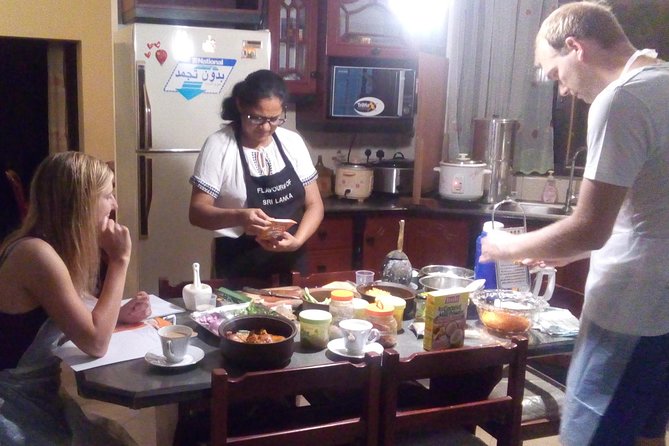
Reviewed · KANDY TOURS
Flavours of Sri Lanka
Fresh curry starts in the garden. This three-hour Kandy cooking class with Chitra takes you from picking herbs and vegetables to cooking and eating a Sri Lankan meal. I like the hands-on work and the warm, personal setting. I also like that you make rice with five curries, not just one token dish. The one thing to consider is the late 3:30 pm start, which may fill your evening.
You will crack coconuts, scrape them, make coconut milk, and prepare curry powder in the traditional way. The class costs $25 per person, a fair price when dinner, ingredients, equipment, and unlimited boiled and filtered spring water are included. The group is capped at eight people, though anyone seeking a polished restaurant-style lesson may find the home kitchen setting more relaxed than formal.
In This Review
- Key details before you book
- Why this Kandy cooking class is worth your afternoon
- Starting in the home garden
- Learning the logic behind Sri Lankan curries
- Cracking coconuts and making milk
- Cooking five curries in clay pots
- Eating dinner and talking with Chitra
- Price, group size, and dietary choices
- Who should book this experience
- Booking and cancellation tips
- FAQ
- How much does the Flavours of Sri Lanka cooking class cost?
- How long does the cooking class last?
- Where does the class begin and end?
- What time does the class start?
- What food will I prepare?
- Can the meal accommodate dietary preferences?
- What is included in the price?
- Should you book this Kandy cooking class?
Key details before you book
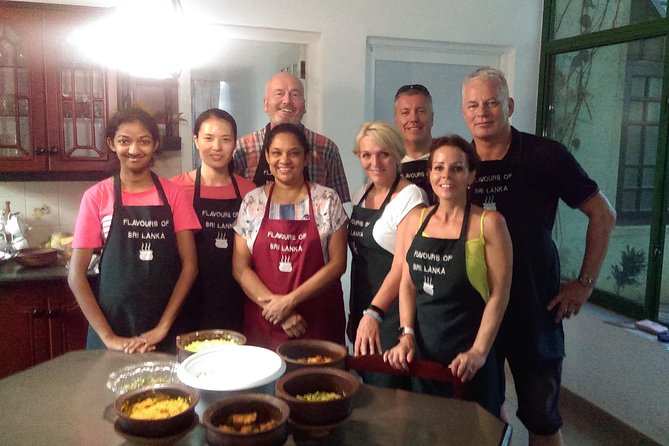
- Pick ingredients in Chitra’s home garden: Fresh vegetables and herbs move directly from the garden into your meal.
- Make rice with five curries: This is a full Sri Lankan dinner, with recipes adjusted for vegan, vegetarian, or gluten-free diets.
- Prepare coconut milk from scratch: You crack and scrape a coconut, then extract one of Sri Lanka’s most important cooking ingredients.
- Cook in traditional clay pots: Homemade curry powder and clay-pot cooking give the class a strong local focus.
- Enjoy the meal at Glory Homestay: The class begins and ends at 46 Meda Bowala Road in Kandy, with dinner served after the cooking.
- Keep the group small: A maximum of eight people gives you a better chance to handle the ingredients and ask Chitra questions.
Why this Kandy cooking class is worth your afternoon
Sri Lankan food is often described through its curries, but that word can make the cuisine sound simpler than it is. A curry may be built from toasted spices, coconut milk, lentils, jackfruit, vegetables, or a carefully balanced curry powder. This class gives you a chance to see how those parts work together.
I like that the lesson begins before anyone turns on a stove. You first visit Chitra’s home garden and pick fresh vegetables, herbs, and other ingredients. That small step matters. It connects the finished meal to the place where it is made, and it shows you that Sri Lankan cooking is not only about buying a jar of sauce and adding it to a pan.
The class is led by Chitra, an experienced cooking instructor whose warmth is a major part of the appeal. The published praise for her centers on two things: her friendly hospitality and the fact that the food is genuinely delicious. That combination is important. A cooking lesson can teach useful facts and still feel stiff. Here, the social side is part of the plan.
At the end, you sit down with Chitra and the rest of the group to eat what you prepared. Conversation may cover Sri Lankan history, culture, and daily life. You are not simply watching a demonstration, taking a few notes, and leaving with a small sample. You help create dinner, then share it at the same home where the lesson took place.
A few more tours worth weighing up
- Kandy Private Guided City Tour by Tuk Tuk
★ 4.9 · 1,307 reviews - From Kandy: Sigiriya Rock & Dambulla Cave Temple Adventure
★ 4.9 · 785 reviews - Sri Lanka Cooking Class with Granny
★ 5.0 · 587 reviews
Starting in the home garden
The meeting point is Glory Homestay at 46 Meda Bowala Road, Kandy 20000. The activity starts at 3:30 pm and ends back at the same place. It is near public transportation, which helps if you are making your own way across Kandy.
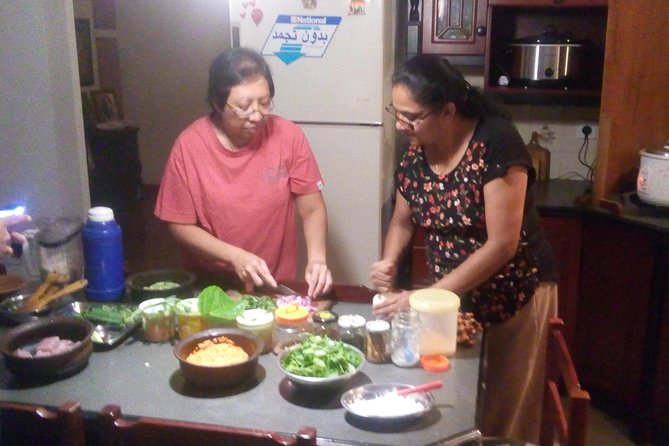
The garden visit gives the afternoon a natural rhythm. Instead of meeting at a classroom with ingredients already measured into neat bowls, you begin by choosing some of the produce. You might pick vegetables and herbs that will later become part of the curries. The supplied details do not name each plant or promise a particular harvest, so you should treat the garden visit as a hands-on introduction rather than a fixed farm tour.
This part is especially useful if you want to understand the link between Sri Lankan food and everyday home cooking. Chitra can explain what the ingredients are and how they fit into the meal. You also get a better sense of scale. Sri Lankan cooking uses many ingredients, but they are not mysterious once you see them, smell them, and work with them directly.
There is one practical point to remember. A home garden is not a formal sightseeing stop with a set display. Its value comes from participation and conversation. If you prefer a tightly timed tour with a guide delivering facts at every stage, this may feel informal. If you like learning by doing, it is a strong opening.
Learning the logic behind Sri Lankan curries
After the garden, Chitra introduces the curries and the spices used in the meal. This is where the class moves from pleasant activity to useful instruction. You learn the ingredients and the traditional approach to preparing curry powder, including the idea that the spice blend itself is part of the dish’s character.
The cooking choices can include lentils and jackfruit curry, along with other dishes that make up the meal. The exact menu can vary according to dietary needs and the ingredients available. That flexibility is helpful, especially for anyone who eats vegan, vegetarian, or gluten-free food.
I would pay close attention during the curry-powder section. It is the sort of tip you can carry home and use again, unlike a recipe that depends on a rare ingredient or a large piece of equipment. Chitra also shares cooking advice that is not easy to pick up from a standard restaurant meal. The supplied information does not list every spice or recipe, so you should ask questions as you go rather than expect a printed menu to tell the whole story.
The lesson is designed for hands-on involvement. You take part in each stage of preparation, rather than watching Chitra do the work. That is a major strength for beginners. Mistakes are easier to understand when you have actually mixed, scraped, stirred, or seasoned the food yourself.
Cracking coconuts and making milk
The coconut portion is one of the most distinctive parts of the afternoon. You crack coconuts, scrape the flesh, and extract coconut milk. This takes a familiar supermarket ingredient and shows you how it reaches the cooking pot in a traditional home kitchen.
Coconut milk is central to many Sri Lankan dishes, and making it yourself helps explain the texture and flavor of the curries. It also gives you a practical lesson in patience. The ingredient does not appear from a carton. You handle the coconut, prepare it, and turn it into something that will help form the base of dinner.
All necessary kitchen equipment is provided. Still, this is a working kitchen class, not a passive food tasting. You should expect to handle ingredients and take part in preparation. The class details do not specify the kitchen layout or list individual tools, so the focus is best understood as the method and meal rather than a technical equipment demonstration.
The coconut work also adds cultural value. Food traditions are often easiest to understand through ordinary tasks. Scraping a coconut may seem small, but it shows how much preparation can sit behind a simple bowl of curry.
A completely different kind of day out from Kandy:
- Kandy Village Cooking Class
★ 5.0 · 536 reviews - Kandy to Ella Train Tickets – Reserved Seats
★ 4.5 · 523 reviews - Kandy to Ambuluwawa & Kandy City Guided Tuk Tuk Day Tour
★ 4.8 · 270 reviews - Day tour to Sigiriya & Dambulla from Kandy
★ 5.0 · 252 reviews
Cooking five curries in clay pots
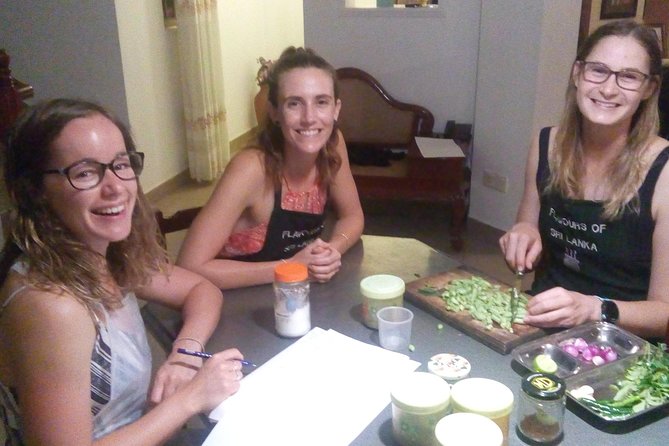
The centerpiece is a typical Sri Lankan meal of rice with five curries. All curries are cooked in traditional clay pots using homemade curry powder. That is a generous amount of cooking for a three-hour class, and it gives you a broader taste of Sri Lankan food than a single-dish lesson would.
Five curries also show contrast. Lentils, jackfruit, vegetables, and other recipes can have very different textures and seasoning even when they share some spices. You get to see how a meal works as a group, with rice balancing the stronger flavors and several curries providing variety.
Cooking in clay pots is another local touch. The important value here is not a promise that clay automatically makes every dish better. It is that the cooking method reflects a traditional style and helps place the meal in a real household setting. You are learning how Chitra prepares the food, not just how a restaurant kitchen might produce it for service.
Because the group can include up to eight people, you should have more opportunity to participate than in a large demonstration. Small groups do not guarantee that every person will handle every task for the same amount of time, but the limit makes personal questions and direct guidance more realistic. The strongest praise for this class focuses on the fun of cooking together, which fits the small-group format well.
Eating dinner and talking with Chitra
Once the cooking is complete, the work turns into dinner. You sit down and eat the meal you helped prepare, with Chitra and the other participants. This is the point where the class feels less like a lesson and more like a shared evening in a Sri Lankan home.
The meal is included in the $25 price, along with the equipment and unlimited boiled and filtered spring water. Alcoholic drinks are not included, so plan on a nonalcoholic dinner unless you arrange something separately. Since the activity ends at the meeting point, you do not need to find a second venue for the meal.
The conversation is part of the experience. Chitra shares information about Sri Lankan history, culture, and lifestyle, and the relaxed dinner setting gives you room to ask questions. I value this kind of exchange because food makes a useful doorway into a country. You can ask about what you have just cooked and connect the answer to daily life.
The evening timing has both benefits and drawbacks. Starting at 3:30 pm means you can use the morning and early afternoon for other Kandy plans. By the time you finish, you have had dinner. But the class takes up much of the late afternoon and evening, so do not pair it with another fixed event at the same time.
Price, group size, and dietary choices
At $25 per person, this class offers solid value. You receive approximately three hours of instruction, a garden visit, the ingredients for a full dinner, kitchen equipment, water, and the meal itself. You also get practical knowledge that may continue to pay off after your trip, especially if you cook with coconut, lentils, vegetables, or spice blends at home.
The value is strongest for people who care about participation. If you only want to eat Sri Lankan food, a restaurant meal will be simpler. If you want to understand how the meal comes together, the class gives you far more for your time.
Dietary flexibility is a clear advantage. Meals can be arranged for vegan, vegetarian, or gluten-free preferences. You should provide those details when booking so Chitra can plan the recipes. The information confirms that these options are available, but it does not promise that every possible allergy or restriction can be handled, so be clear about your needs before the class.
The maximum group size is eight. That is small enough to support personal attention without making the class feel like a private lesson. If the class fills, you will still share the kitchen and meal with several people, so anyone seeking complete one-on-one instruction should keep that distinction in mind.
Who should book this experience
I would recommend this class to food lovers, curious home cooks, and anyone who wants a direct connection to Sri Lankan daily life. It is also a good choice for people who enjoy meeting others around a shared meal. The cooking is active, and the final dinner gives the afternoon a clear reward.
It suits vegetarians, vegans, and people seeking gluten-free recipes particularly well because the meal can be adjusted. Beginners should feel comfortable too, since the format includes guidance through each preparation step.
You may want to skip it if your schedule is already packed in the late afternoon, if you dislike group cooking, or if you want a formal culinary school setting. The charm comes from Chitra, the home garden, the traditional methods, and the shared meal. Those same features may feel too informal if you want a highly structured professional kitchen.
The experience has a perfect five-star rating from seven published reviews, with special praise for the tasty food, enjoyable group atmosphere, and Chitra’s hospitality. That is a small sample, but the praise is consistent with the design of the class: cook together, learn directly, then eat together.
Booking and cancellation tips
Confirmation is received at the time of booking, and the activity accepts mobile tickets. The start time is 3:30 pm at Glory Homestay, and the activity returns to that meeting point.
Free cancellation is available if you cancel at least 24 hours before the local start time. A cancellation made less than 24 hours before the experience is not refunded, and changes inside that period are not accepted. This matters because the class involves food planning and a small group, so check your Kandy schedule before reserving.
FAQ
How much does the Flavours of Sri Lanka cooking class cost?
The price is $25 per person.
How long does the cooking class last?
The activity lasts approximately three hours.
Where does the class begin and end?
It begins and ends at Glory Homestay, 46 Meda Bowala Road, Kandy 20000, Sri Lanka.
What time does the class start?
The class starts at 3:30 pm.
What food will I prepare?
You can prepare a typical Sri Lankan meal of rice with five curries. Recipe choices can include dishes such as lentils and jackfruit curry, depending on the meal plan and dietary preferences.
Can the meal accommodate dietary preferences?
Yes. Vegan, vegetarian, and gluten-free meal options are available.
What is included in the price?
Dinner, all necessary kitchen equipment, unlimited boiled and filtered spring water, and meals suited to the stated dietary preferences are included. Alcoholic beverages are not included.
Should you book this Kandy cooking class?
Book it if you want more than a meal. For $25, you spend three hours picking ingredients, learning curry techniques, making coconut milk, cooking five curries in clay pots, and eating dinner with Chitra and the group.
The best reason to choose it is the combination of practical work and personal hospitality. You will not just hear that Sri Lankan food uses coconut and spices. You will crack the coconut, prepare the ingredients, cook the dishes, and taste the result. Skip it only if the 3:30 pm timing or informal home setting does not suit you. For most food-focused visitors in Kandy, this is an affordable and rewarding way to spend an afternoon.
Just added around Kandy
- Evening Tour at the Last Kingdom of Sri Lanka, Kandy★ 5.0 · 3 reviews
- Tour to Dambulla Cave, Sigiriya and Pidurangala Rock from Kandy★ 5.0 · 3 reviews
- Day Tour Kandy to Sigiriya with Dambulla Cave Temple Excursion★ 5.0 · 3 reviews
- Private Day tour from Kandy to Sigiriya, Dambulla & Pidurangala★ 5.0 · 3 reviews
- Kandy To Dambulla and Sigiria City Full Day by Laka Tours★ 5.0 · 3 reviews
- Full Day Tuk Tuk Tour – Explore Kandy with Local Expert★ 4.1 · 3 reviews
- Kandy to Ella★ 5.0 · 3 reviews
- From Kandy: Wilpattu National Park Safari with Hotel Pickup★ 5.0 · 3 reviews
Kandy Tours, compared.
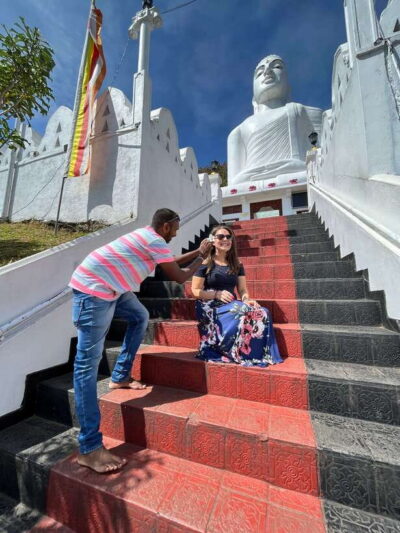




Kandy to Ambuluwawa & Kandy City Guided Tuk Tuk Day Tour
Read our review →
Kandy to Sigiriya Day Tour and Dambulla cave temple with private vehicle
Read our review →Browse the lists this tour appears in