
Reviewed · WALKING TOURS
Galle Fort Walk with a Local
History here is under your feet. This two-hour walk through UNESCO-listed Galle Fort combines colonial buildings, museums, cobbled lanes, and rampart views with a local guide who knows the town well. I like the personal scale of a private group and the way the route includes both major sights and quieter corners. The main drawback is that guide quality may vary, and the walk includes steps and warm, exposed sections.
I also like the early-start option, since one guide, Shirat, has led a 6:30 a.m. outing that finished before the worst heat arrived. You will need to pay for your own tea or king coconut, and the entrance-fee information should be confirmed before booking because the description says fees are included, while the formal inclusion list names only the guide.
In This Review
- Key points to know before you book
- Why a local walk helps you read Galle Fort
- Starting at National Tea Rooms on Lighthouse Street
- Cobblestone streets and Dutch-era buildings
- Museums that explain the port and the fort
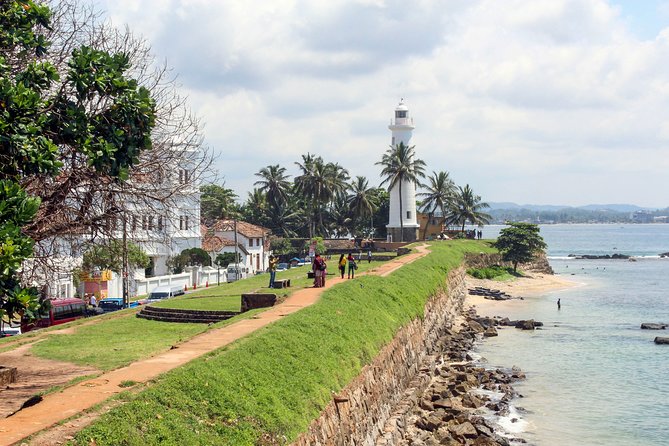
- Walking the ramparts to Galle Lighthouse
- What the guide adds, and where to be cautious
- Is $65 a fair price for two hours?
- Timing, comfort, and practical planning
- Who should book this Galle Fort walk?
- Should you book it?
- FAQ
- Where does the Galle Fort walk begin?
- Where does the tour finish?
- How long does the walk last?
- What is included in the tour?
- Are food and drinks included?
- Is hotel pickup included?
- How many people are required to book?
- What should I wear or bring?
- Can I cancel for a full refund?
Key points to know before you book
- A private group of two to 12 people: You do not join a large crowd, and your guide can respond to your questions.
- A 16th-century fort with Portuguese, Dutch, and British layers: The walk gives you a useful framework for reading Galle’s buildings.
- Ramparts and Galle Lighthouse: The route includes one of the best open-air views in the fort.
- Museums and archives: You see objects linked to Galle Fort and its harbor, not just exterior walls.
- Local connections: The guide is described as having a long family history in Galle and may share practical suggestions for food and shopping.
- A moderate walking outing: Wear comfortable shoes, bring a hat, and be ready for steps and heat.
Why a local walk helps you read Galle Fort
Galle Fort can look simple at first glance: attractive old houses, churches, shops, restaurants, and a broad stone wall beside the sea. Without context, you may photograph the doors and rooflines but miss how the fort worked as a port, military post, and colonial town.
This tour gives you that missing structure. The story begins with Galle’s natural harbor, known as a major trading point as far back as 1400 BC, when cinnamon was exported from the area. The Portuguese later made Galle a headquarters and built the first fortifications in the 1500s.
The Dutch took control in the 17th century and greatly expanded the fort. Their work included high stone ramparts, bastions, a church, storm drains, government buildings, and homes for officials and residents. The British arrived in 1796 and added more buildings, giving the fort another layer of architecture and administration.
That sequence matters because Galle Fort is not simply a Portuguese monument or a Dutch fort. It is a working town shaped by three European powers, local Sri Lankan life, trade, religion, weather, and modern conservation. A good guide can help you spot those changes in a single street.
The guide’s family connection to Galle is another useful feature. The experience is designed around local explanation rather than a recorded commentary, and the best accounts of the tour describe clear historical explanations, humor, and patient answers to questions about restoration and UNESCO status.
More Walking Tours in Galle
- Galle Fort Walking tour
★ 4.9 · 285 reviews - Galle Fort Walking Tour with a Resident
★ 5.0 · 88 reviews - Galle Fortt Guided Walking Tour with a Local
★ 4.9 · 33 reviews
Starting at National Tea Rooms on Lighthouse Street
You meet outside National Tea Rooms at 10 Lighthouse Street, inside the fort area. This is a practical meeting point because the route begins among the old streets rather than at a distant transport hub.
The tea-room connection adds a local touch. One guide is associated with a tea shop that his grandfather created for local people, and the walk may begin or include a stop there. The exact tea service is not included in the price, so budget separately for Ceylon tea or king coconut milk.
The meeting point also gives you an early chance to sort out the plan. Ask your guide how much time will be spent inside museums, when the drinks break will happen, and whether entrance fees are covered. The tour description says they are included, but the formal list of inclusions mentions only a local guide. That small mismatch is worth clearing up before you set off.
Cobblestone streets and Dutch-era buildings

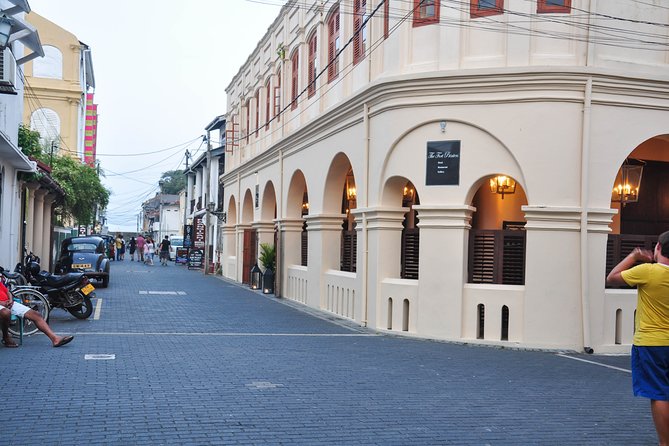
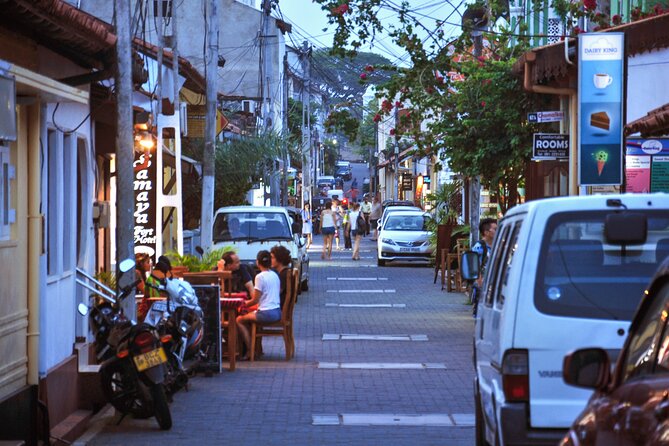
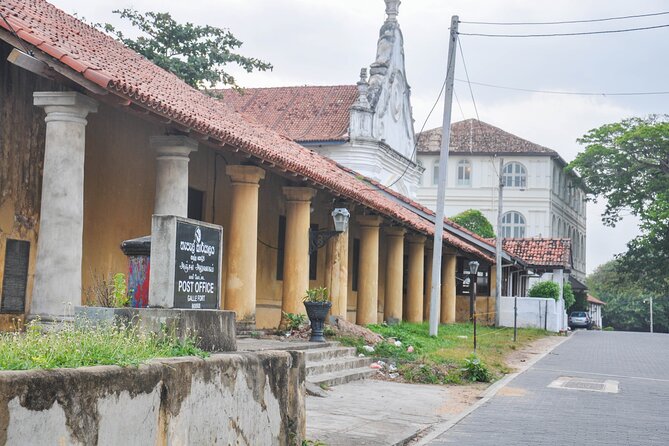
The first stretch takes you through Galle Fort’s maze-like streets. These lanes are compact, but you will not simply be walking from one attraction to another. The point is to see the fort as a planned town, with homes, churches, administrative buildings, shops, and restaurants fitted inside defensive walls.
Look for the low, gabled houses and Dutch street names. These details can be easy to pass without a guide, especially when newer businesses occupy old buildings. Your guide can connect the architecture to the people who used these structures and explain how the fort changed after the British takeover.
The buildings are attractive, but the fort is not a preserved stage set. It remains a lived-in district, and that is part of its appeal. You will see historic facades beside modern commercial spaces. Some areas may feel polished, while others show the practical strain of maintaining old buildings in a busy coastal town.
This is also where the private format earns its keep. With only your own group, you can stop for a question about a doorway, church, street name, or restoration project without holding up a large party. The maximum group size is 12, so confirm the expected number if a quiet, highly personal walk matters to you.
Museums that explain the port and the fort
The museum visits add substance to the outdoor sightseeing. The stated route includes the main museums, where you can see artifacts and archival material connected with Galle Fort and Galle harbor.
That balance is valuable. The walls and buildings show how the fort looks, while museum objects help explain how the place functioned. You get a clearer sense of the port’s commercial role, its administration, and the different eras that shaped the town.
Museum time can vary with the guide, group questions, and local conditions. If you care most about the collections, say so at the start. If you prefer architecture and views, your guide can likely keep the indoor stops focused and leave more time for the ramparts.
The museum portion is especially useful if you have only one day in Galle. It gives you more than a quick loop of the fort’s prettiest streets, while still keeping the outing to about two hours. That makes it a reasonable introduction before an independent return to the shops or buildings that catch your eye.
More walking tours:
- Galle Fort Heritage Walk by a Certified Heritage Interpreter
★ 5.0 · 31 reviews - Galle Fort Walk with Glamorous Stories
★ 5.0 · 17 reviews - Galle Fort Walking Tour with a local guide
★ 5.0 · 5 reviews - Colombo Walking Tour with Ajeet De Soyza
★ 5.0 · 43 reviews
Walking the ramparts to Galle Lighthouse
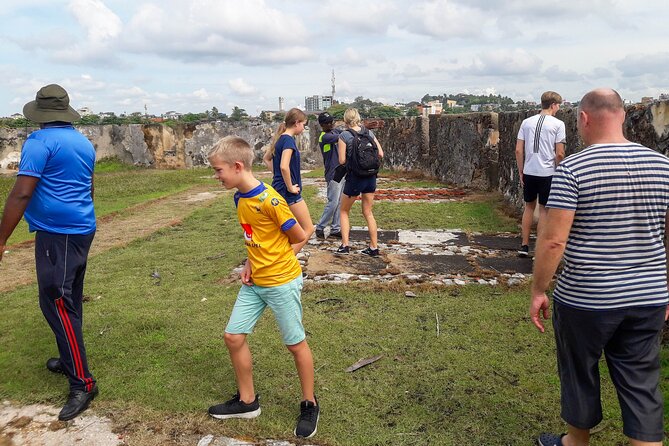
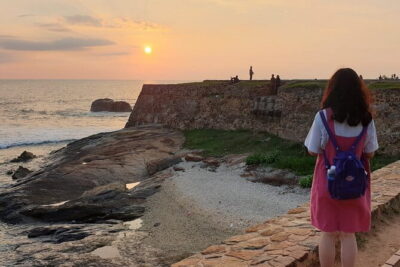
The ramparts are the outdoor highlight. From the fortified wall, you can look toward the harbor and coast while seeing how the bastions protected the settlement. The open position also helps you understand why Galle’s harbor made the town important long before the colonial period.
The walk leads toward the famous Galle Lighthouse. The current beacon dates to 1938 and is described as a replica of an earlier lighthouse built by the British. That detail is useful because the lighthouse often appears to be one of the fort’s oldest surviving structures, while its present form is comparatively recent.
The ramparts are exposed, so sun protection matters. A hat and water are sensible, and the supplied guidance specifically recommends comfortable walking shoes and hats. The experience includes a drinks break, but tea and king coconut are at your own expense, and you should not treat that stop as a substitute for carrying water.
The walk is described as moderate rather than strenuous, but some steps are involved. One account specifically advises caution for people with severe leg problems or asthma. Most people can take part, yet you should tell the operator about mobility or breathing concerns before booking rather than assuming the route is flat.
What the guide adds, and where to be cautious

The strongest part of this experience is the human interpretation. Shirat is praised in the available accounts for concise historical explanations, humor, punctuality, and helpful answers about UNESCO restoration. Another guide account gives the name Chirath, which may be a spelling variation or a different guide, so confirm who will lead your group.
The local angle can extend beyond dates and military history. The guide may point out places you would not find on your own and offer suggestions for eating and shopping after the walk. That is useful in Galle, where a short recommendation can save you from choosing a restaurant or shop based only on location.
Still, you should set realistic expectations. One account describes a very quiet guide who offered limited explanation and gave a date that did not match signage at the fort. The experience is therefore not equally strong with every guide or on every departure. Ask questions early, and politely request more detail if the commentary feels thin.
You can also ask your guide to separate documented fact from local tradition. Galle’s story includes several centuries, changing rulers, restored structures, and dates that can be presented differently depending on the building or source. A good guide should welcome that question.
Is $65 a fair price for two hours?

At $65 per person, this is not the cheapest way to see Galle Fort. You can walk the streets and ramparts independently, and the fort itself is an open urban area rather than a single attraction with one entry gate.
The price makes more sense if you value explanation, a private group, museum access, and a fixed route. For two people, you are paying for personal attention rather than a large coach experience. For a group of five or more, the private format can offer better value because the cost buys one guide for your party, up to the stated limit of 12 people.
The included-fee wording needs care. The overview says entrance fees are included, but the formal inclusion section lists only the local guide. Food, drinks, personal expenses, and hotel transfers are not included. Confirm the museum and other admission arrangements before paying so the final cost is clear.
The two-hour duration is both a strength and a limit. It works well as a first look, especially if you are visiting Galle for one day. It will not give you unlimited time inside every museum or allow a long, unhurried stop at every building.
Timing, comfort, and practical planning
Heat is the main factor when choosing a start time. A 6:30 a.m. departure has been used successfully, allowing the group to see the main sites before the day became too hot. If that early time is available for your booking, it may make the rampart walk more pleasant.
The tour starts and finishes at National Tea Rooms. Hotel pickup and drop-off are not included, but the meeting point is near public transportation. Plan your route to the fort separately and arrive ready to walk.
Bring comfortable shoes, a hat, and money for the tea or king coconut break. The fort’s cobbled streets, ramparts, and steps are manageable for most participants, but this is not a seated sightseeing tour. People with serious leg or breathing problems should check the route with the operator first.
The experience requires at least two people per booking and accepts up to 12. It is a private activity, so only your group participates. Free cancellation is available if you cancel at least 24 hours before the local start time. Changes or cancellations inside that window are not accepted for a refund.
Who should book this Galle Fort walk?
I would choose this tour if you want the fort’s story explained while you walk, especially on a first visit or a short stay. It suits people who like architecture, colonial history, museums, and local conversation more than those who only want a quick photo stop.
It is also a good match for families or small groups who want to ask their own questions. The private setup gives you more control than a standard group outing, though you should confirm the guide’s style and the precise route if historical detail is your main reason for booking.
Independent explorers may find the $65 price hard to justify. The fort is easy to continue exploring after the tour, and you could visit the streets and ramparts without paying for a guide. The value rests in the commentary, museum context, local suggestions, and time saved finding the key sites.
Should you book it?
Book the Galle Fort Walk with a Local if you want a compact, guided introduction with a personal feel. The strongest reasons are the private group, the combination of museums and ramparts, the local family connection, and the chance to start early in cooler conditions.
Skip it if you prefer to wander at your own pace, dislike steps, or want a guaranteed specialist historian. Before booking, confirm the guide’s name, the entrance-fee arrangement, the start time, and the planned museum stops. With those points settled, this is a useful way to understand why Galle Fort is more than a photogenic colonial quarter.
FAQ
Where does the Galle Fort walk begin?
The meeting point is outside National Tea Rooms at 10 Lighthouse Street, Galle 80000, Sri Lanka.
Where does the tour finish?
The activity ends back at the original meeting point.
How long does the walk last?
The experience lasts approximately two hours. The listed itinerary also gives about one hour and 30 minutes for the Galle portion.
What is included in the tour?
A local guide is included. The tour description also states that entrance fees are included, but the formal inclusion list names only the guide, so confirm this detail before booking.
Are food and drinks included?
No. Food and drinks are not included. The route includes an opportunity to stop for Ceylon tea or king coconut milk, which you pay for yourself.
Is hotel pickup included?
No. Hotel pickup and drop-off are not included. The meeting point is near public transportation.
How many people are required to book?
A minimum of two people is required per booking. The maximum is 12 people, and only your own group participates.
What should I wear or bring?
Comfortable walking shoes and a hat are recommended. The route includes cobbled streets, ramparts, and steps, so practical footwear is important.
Can I cancel for a full refund?
Yes, if you cancel at least 24 hours before the experience start time. Cancellations or changes made less than 24 hours before the local start time are not accepted for a refund.
Just added around Galle
- From Colombo: Day Trip to Galle City, Koggala and Unawatuna★ 4.2 · 3 reviews
- Stilt-Fishing Experience in Ahangama★ 4.0 · 3 reviews
- Galle Sightseein Rickshaw Tour★ 4.5 · 3 reviews
- Sinharaja Rainforest & Udawalawe Safari – 2 Days, All Inclusive★ 5.0 · 3 reviews
- Fully Private Udawalawe National Park Safari Tour★ 5.0 · 3 reviews
- Galle: All Inclusive City & Fort Guided Cycling tour★ 3.6 · 3 reviews
- Private Half Day Safari Tour to Yala NP From Tangalle and Drop Back★ 4.5 · 3 reviews
- Galle Instagram Tour: Most Famous Spots (Private & All-Inclusive)★ 5.0 · 3 reviews
Walking Tours, compared.


Sigiriya: Rock Fortress Private Guided Walking Tour
Read our review →
Galle Fort Heritage Walk by a Certified Heritage Interpreter
Read our review →
Browse the lists this tour appears in