
Reviewed · KANDY TOURS
Tea Fields & Factory Tour
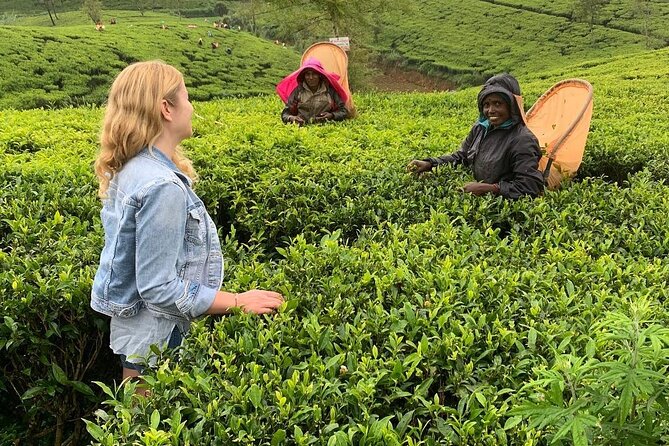
Tea country has a working rhythm. This three-hour outing in Hatton takes you from tea field to teapot, with time among the plants, at the weighing stations, and inside a processing factory. I like the direct contact with tea pluckers, and I like that the tour shows the full chain rather than stopping at a scenic viewpoint. The main consideration is the fixed 3:00 pm start and the fact that poor weather can cancel the experience.
I also like the small group limit of 10 people, which should make it easier to hear the explanations and ask questions. The $20 price is strong for a field visit, village and temple stop, factory tour, and freshly brewed tea, though you should plan carefully around the Norwood meeting point because the activity begins and ends there.
In This Review
- Key points at a glance
- Why Hatton is the right place for a tea tour
- Starting at 3:00 pm in Norwood
- Walking among the tea plants
- Meeting the tea pluckers and seeing village life
- Following leaves to the weighing stations
- Inside the factory: six steps from leaf to finished tea
- Withering
- Rolling
- Drying
- Shifting
- Testing
- Packing
- Finishing with freshly brewed tea
- What the $20 price really covers
- Who will enjoy this tea tour most
- Practical advice before you book
- Should you book the Hatton tea fields tour?
- FAQ
- Where does the tea tour take place?
- What time does the tour start?
- How long does the experience last?
- Where does the tour end?
- How much does the tour cost?
- How many people can join the tour?
- Is a mobile ticket available?
- Will I visit a tea factory?
- Can I try picking tea?
- What happens if the weather is poor?
Key points at a glance
- Walk through working tea fields: See the plants up close and learn how leaves are selected and picked.
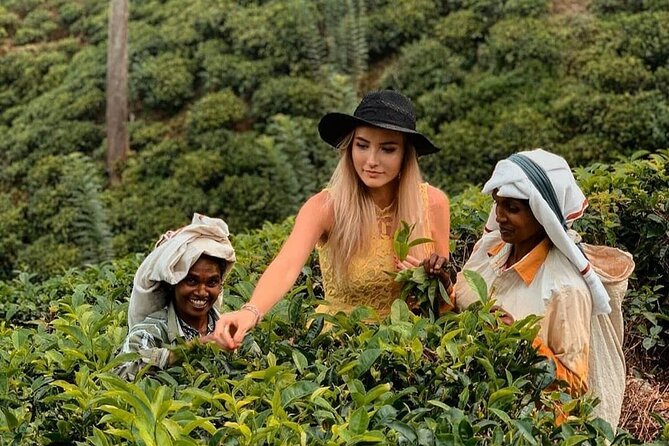
- Meet the pluckers: Watch their technique and try plucking tea yourself.
- Visit the weighing stations: Follow the leaves as they move from the field toward production.
- See the factory process: Learn about withering, rolling, drying, shifting, testing, and packing.
- Visit a nearby pluckers village and temple: This adds a human and local setting to the farm visit.
- Taste fresh Ceylon tea: The tour ends with tea that has been made and brewed locally.
Why Hatton is the right place for a tea tour
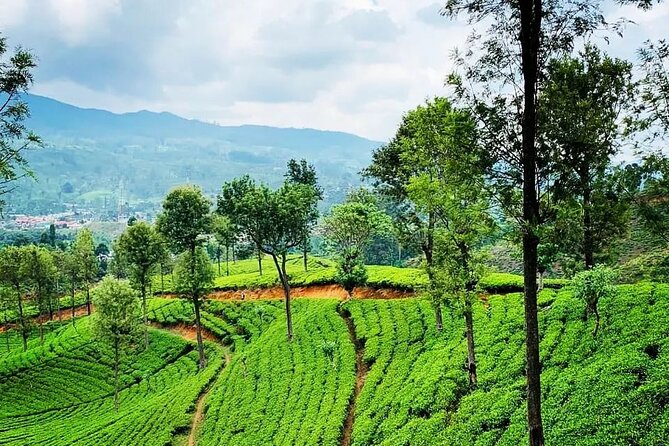
Hatton sits in central Sri Lanka’s Ceylon tea region, so this is not a staged tasting far from the source. The setting gives the tour its purpose. You are not only learning how tea tastes. You are seeing where the leaves grow, who picks them, how they are weighed, and what happens before they reach your cup.
That matters because tea production is easy to reduce to a packet on a shop shelf. Here, the process becomes visible. You can look at the plants, observe the pluckers, and then see the factory machinery and work areas that turn fresh leaves into a finished product.
The tour is also a useful choice if you want more than photographs of Sri Lanka’s tea country. The fields provide the scenic part, but the factory and village visits give you the practical story. You leave with a better sense of how much work sits behind a familiar drink.
The activity has a 5.0 rating from 67 reviews and is recommended by 100 percent of the people who rated it. That high score fits the strongest feature of the experience: clear explanations that connect every stage of production.
A few more tours worth weighing up
- Kandy Private Guided City Tour by Tuk Tuk
★ 4.9 · 1,307 reviews - From Kandy: Sigiriya Rock & Dambulla Cave Temple Adventure
★ 4.9 · 785 reviews - Sri Lanka Cooking Class with Granny
★ 5.0 · 587 reviews
Starting at 3:00 pm in Norwood
The meeting point is listed at RJR9+WC, Norwood, Sri Lanka. The tour begins at 3:00 pm and returns to the same meeting point, with a total duration of about three hours.
That timing gives you a clear afternoon plan, but it also means you need to arrive ready to begin. The meeting point is near public transportation, which helps, though the supplied information does not provide a hotel pickup service or detailed transfer instructions. I would check the map code carefully and allow enough time to reach Norwood before the start.
A mobile ticket is provided, so you can keep your confirmation on your phone. Confirmation is sent within 48 hours of booking, subject to availability. Since the group can have up to 10 people, this is not a private tour, but it is still small enough to feel more personal than a large coach outing.
The three-hour length is sensible for the amount covered. You get a proper introduction to tea without committing an entire day. Still, the schedule is fairly full. The field, pluckers, village, temple, weighing stations, factory, and tasting all need to fit into one afternoon. If you prefer slow photography or long conversations at every stop, you may find the pace brisk.
Walking among the tea plants
The first major part of the experience takes you into the tea fields. This is where the idea of Ceylon tea becomes physical. Instead of seeing only finished leaves or boxed tea, you can look at the plants and learn how the crop is gathered.
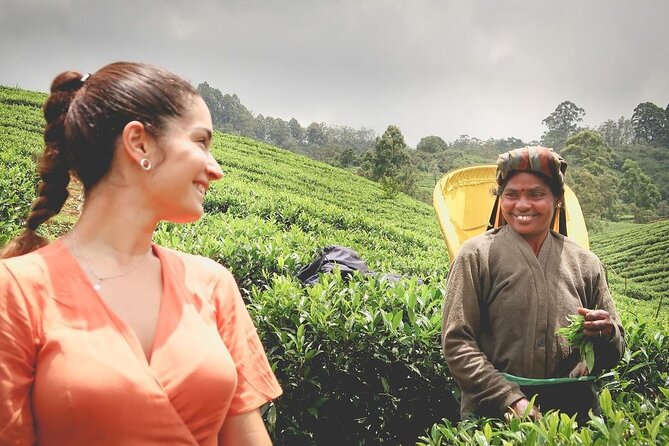
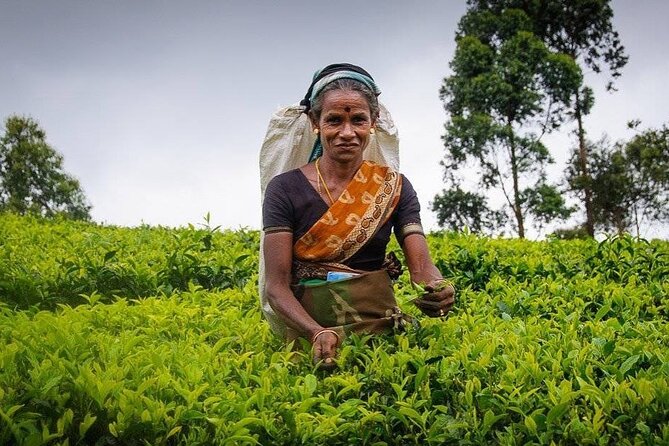
The guide explains what the pluckers do and how they work among the plants. The tour also gives you a chance to meet them, which adds a human side to the visit. This is one of the most useful parts for anyone who wants to understand the labor behind tea production rather than treating the fields as scenery.
You can try your hand at plucking. That small activity helps you understand the care involved in selecting leaves. It is one thing to hear about the technique, and another to attempt it yourself under guidance.
I would pay close attention here, because the field visit sets up everything that follows. The leaves you see being picked are not the end product. They are the raw material for a series of factory steps, and the tour keeps that connection clear.
The field walk may be less comfortable in wet weather, which is worth keeping in mind. The experience requires good weather, and the operator may offer another date or a full refund if conditions are poor.
Meeting the tea pluckers and seeing village life
The visit to the pluckers village and temple broadens the experience beyond agriculture. It gives you a glimpse of the community connected to the tea estates and shows that tea production is also a story about people and daily life.
The available details do not specify how long you spend at the village or temple, so you should expect a visit rather than a long cultural program. Even a short stop can help place the work in context. The pluckers are not an abstract part of a supply chain. They are people whose skills and labor keep the process moving.
This section is especially worthwhile if you are interested in local life as well as food and drink. It also breaks up the technical factory visit with a more personal setting.
The village and temple should not be treated as a separate major sightseeing attraction. The purpose is to connect the tea fields with the community around them. If you want a detailed religious or architectural tour, this activity is not described that way. Its focus remains tea.
A completely different kind of day out from Kandy:
- Kandy Village Cooking Class
★ 5.0 · 536 reviews - Kandy to Ella Train Tickets – Reserved Seats
★ 4.5 · 523 reviews - Kandy to Ambuluwawa & Kandy City Guided Tuk Tuk Day Tour
★ 4.8 · 270 reviews - Day tour to Sigiriya & Dambulla from Kandy
★ 5.0 · 252 reviews
Following leaves to the weighing stations
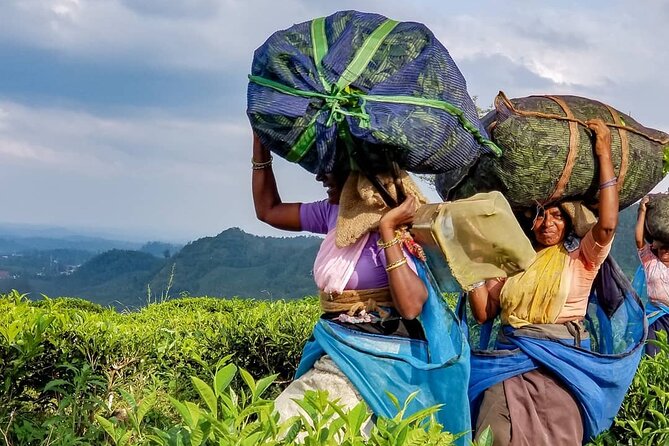
After picking, the leaves move toward weighing stations. This stop helps show that tea production involves careful handling from the start.
The weighing stage is easy to overlook, but it gives you a useful picture of how the crop is received and recorded before factory processing. You can see that the tea is not simply picked and poured into a machine without checks. The tour places this practical stage between field work and factory work.
This is also a good moment to ask questions. The tour’s strongest praise centers on the explanations, with several people describing the guide as clear and thorough. The information provided does not give the guide’s name, but the repeated praise for the teaching suggests that the tour is built around explanation rather than a quick walk-through.
If you have never visited a tea estate before, the weighing stations may be more interesting than expected. They show the handoff from the people working in the fields to the people handling production.
Inside the factory: six steps from leaf to finished tea
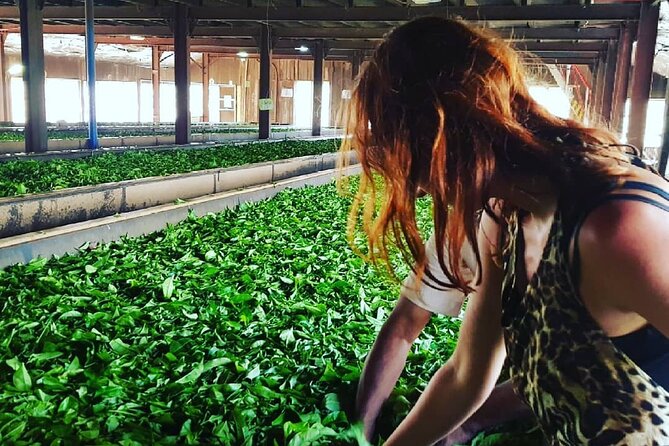
The factory visit is the heart of the tour. You learn about six stages: withering, rolling, drying, shifting, testing, and packing.
Withering
Withering is the early factory stage in the tour’s sequence. Freshly picked leaves need to move from the fields into processing, and this step begins the change from leaf to tea suitable for later handling.
The guide explains the purpose of the stage and how it fits into the wider process. Even if you already drink tea regularly, this is the point where you begin to see why fresh leaves cannot simply be packed and brewed immediately.
Rolling
Rolling follows withering. The leaves are worked so they can continue toward the form and character associated with finished tea.
This part can be especially helpful because it turns a vague idea of tea processing into a visible sequence. You are not just told that a factory changes the leaves. You are shown the stage-by-stage path.
Drying
Drying helps prepare the leaves for the next parts of production. It is one of the steps that makes the factory feel very different from the field. Outside, you see living plants and hand picking. Inside, controlled processing shapes what eventually goes into a packet.
The available information does not list the equipment or exact method used, so I would focus on the guide’s explanation rather than expecting a technical machinery tour.
Shifting
Shifting is included as its own stage, showing that tea is handled and sorted more than once. The term may be unfamiliar if you have only visited a tea shop or taken a tasting.
This is where a clear guide makes a real difference. One short explanation can help you understand why processed tea is moved through several stages instead of going directly from drying to packing.
Testing
Testing is another important reminder that tea production involves checks before the final product is packed. You learn that the factory does not treat all processed leaves as identical.
The experience is described as informative and clear, and this is one of the parts where that teaching matters most. A factory can be confusing if you do not know what to watch for. The tour gives you a framework for following the process.
Packing
Packing is the final listed factory stage. It completes the route from picked leaf to finished tea and prepares you for the tasting at the end.
Taken together, these six steps are what make the factory visit more than a quick look inside a building. You see how the product changes over time and why each stage has a place in the process.
Finishing with freshly brewed tea
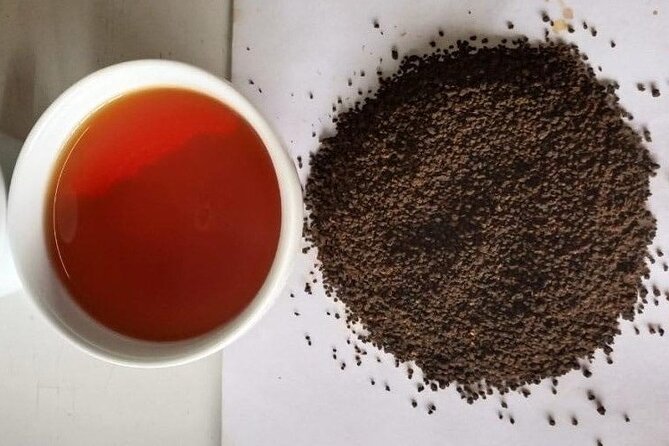
The final reward is freshly made and brewed tea. This gives the tour a satisfying endpoint, because you have already seen the plants, the picking, the weighing, and the factory work.
I like this tasting as a practical conclusion rather than a separate sales pitch. The cup means more after you have followed the leaves through production. You can connect the taste with the work you have just seen.
The supplied details do not say which tea is served, how many cups are included, or whether retail tea is available for purchase. You should therefore think of the tasting as part of the tour, not assume a large tasting menu or a shopping stop.
What the $20 price really covers
At $20 per person, the experience offers good value if you want a focused introduction to Sri Lankan tea. The price includes a field visit, contact with pluckers, a chance to try plucking, weighing stations, a village and temple visit, a factory explanation, and freshly brewed tea.
You are also paying for interpretation. The strongest praise focuses on the guide’s ability to explain the subject clearly, and that is important here. Without a guide, a tea field is pleasant to look at and a factory may be hard to understand. With explanations, the same places tell a connected story.
The group limit of 10 adds to the value. It should be easier to hear and ask questions than in a large group, though the activity is not described as private. The tour is recommended by 100 percent of its 67 ratings, with a 5.0 average, which supports the idea that the teaching and authenticity are its best features.
The price does not include a full-day estate excursion, detailed transport from your hotel, or a long food program based on the information available. If you need those things, you should compare other options. If you want a short, focused tea experience, $20 is reasonable.
Who will enjoy this tea tour most
I would choose this experience if you want to understand how tea is made rather than simply photograph tea fields. It suits people who enjoy food production, local work, practical demonstrations, and guided learning.
It also fits well into a Hatton itinerary because it lasts about three hours and begins in the afternoon. The return to the Norwood meeting point keeps the plan simple once the tour begins.
Families and mixed-age groups may find the plucking activity appealing, since it gives you something to do rather than only listen. The additional information says most people can participate, but it does not provide specific details about accessibility, terrain, or facilities.
Tea drinkers will get the most from the factory section and final cup. Even if you are not a serious tea enthusiast, the visit offers a useful look at one of central Sri Lanka’s defining industries.
You may want to skip it if you dislike organized explanations, have no flexibility around weather, or need a private schedule. The tour covers several elements in three hours, so it is better for a focused overview than a slow, unplanned visit.
Practical advice before you book
Arrive prepared for an outdoor visit followed by time in a factory. The activity requires good weather, and the operator may cancel in poor conditions. If that happens, you are offered another date or a full refund.
Keep the mobile ticket accessible and confirm the Norwood meeting point. The activity begins and ends there, and the supplied details do not state that pickup is included.
Leave room in your expectations for a compact tour. You will cover the tea fields, pluckers, weighing stations, village and temple, factory stages, and tasting in roughly three hours. That is efficient, but it may not allow long stops at every location.
You can cancel for a full refund up to 24 hours before the start time. Cancellations or changes made within 24 hours are not refunded or accepted, and all cut-off times use local time.
Should you book the Hatton tea fields tour?
Book it if you want an affordable and useful introduction to Ceylon tea, especially if you value direct explanations and a small group. The combination of field work, plucker contact, factory processing, and a fresh cup gives you a much fuller picture than a simple plantation photo stop.
I would be most likely to recommend it to first-time visitors to Hatton and anyone curious about how an everyday drink is produced. Just confirm the Norwood meeting point, protect the 3:00 pm start in your schedule, and keep a little flexibility for weather.
FAQ
Where does the tea tour take place?
The experience takes place in central Sri Lanka, in the Hatton tea region. The meeting point is in Norwood at RJR9+WC, Norwood, Sri Lanka.
What time does the tour start?
The tour starts at 3:00 pm local time.
How long does the experience last?
It lasts approximately three hours.
Where does the tour end?
The activity ends back at the same meeting point in Norwood.
How much does the tour cost?
The listed price is $20 per person.
How many people can join the tour?
The maximum group size is 10 people.
Is a mobile ticket available?
Yes. The experience includes a mobile ticket.
Will I visit a tea factory?
Yes. The factory visit explains withering, rolling, drying, shifting, testing, and packing.
Can I try picking tea?
Yes. The experience includes a chance to try your hand at plucking tea.
What happens if the weather is poor?
The experience requires good weather. If it is canceled because of poor weather, you will be offered a different date or a full refund.
Just added around Kandy
- Evening Tour at the Last Kingdom of Sri Lanka, Kandy★ 5.0 · 3 reviews
- Tour to Dambulla Cave, Sigiriya and Pidurangala Rock from Kandy★ 5.0 · 3 reviews
- Day Tour Kandy to Sigiriya with Dambulla Cave Temple Excursion★ 5.0 · 3 reviews
- Private Day tour from Kandy to Sigiriya, Dambulla & Pidurangala★ 5.0 · 3 reviews
- Kandy To Dambulla and Sigiria City Full Day by Laka Tours★ 5.0 · 3 reviews
- Full Day Tuk Tuk Tour – Explore Kandy with Local Expert★ 4.1 · 3 reviews
- Kandy to Ella★ 5.0 · 3 reviews
- From Kandy: Wilpattu National Park Safari with Hotel Pickup★ 5.0 · 3 reviews
Kandy Tours, compared.




Kandy to Ambuluwawa & Kandy City Guided Tuk Tuk Day Tour
Read our review →

Kandy to Sigiriya Day Tour and Dambulla cave temple with private vehicle
Read our review →Browse the lists this tour appears in