
Reviewed · COOKING CLASSES
Ella: Traditional Sri Lankan Cooking Class
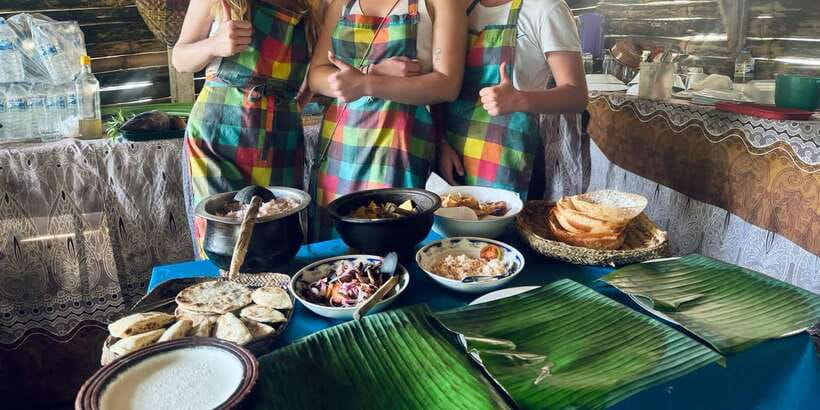
Sri Lanka tastes best from a banana leaf. This two-hour class in Ella brings you into an open-air traditional kitchen, where Ranjani guides you through fresh ingredients, local methods, and a generous shared meal. I like that you learn more than recipes, including how coconut is grated, how coconut milk is made, and why certain herbs and spices are used. I also like the warm, family-style setting, which makes it easy to meet people while you cook.
The main consideration is the format. You work together at a shared station rather than cooking an entire dish alone at your own bench. That suits you if you want cultural insight and a social meal, but it may disappoint if you expect a private, highly structured cooking lesson. The group is advertised as limited to eight, although some recent sessions have felt larger.
In This Review
- Key points to know before booking
- Entering Ella’s open-air cooking kitchen
- How the shared cooking format works
- Coconut, spices, and old-fashioned techniques
- The dishes you may prepare in two hours
- Eating from a banana leaf in Ella
- What Ranjani adds to the experience
- Timing, transport, and practical planning
- Is $19 good value?
- Who will enjoy this class most?
- Should you book the Ella cooking class?
- FAQ
- Where does the cooking class take place?
- How long does the class last?
- What time does the class begin?
- Is transportation included?
- What languages does the instructor speak?
- What is included in the price?
- Will I receive the recipes afterward?
- Is the class suitable for vegetarians or vegans?
- How many people are in the class?
Key points to know before booking
- Traditional cooking methods: You may see coconut grated by hand, coconut milk prepared from scratch, and old-fashioned tools used in the kitchen.
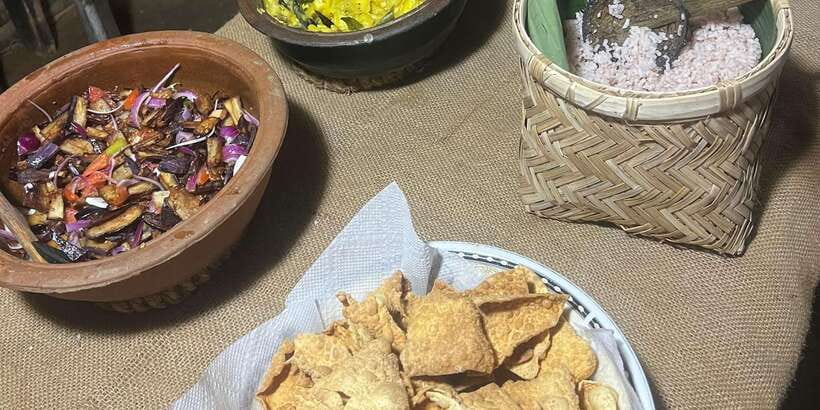
- A generous Sri Lankan meal: Classes can include dhal curry, chicken curry, aubergine, coconut sambol, papadam, rice, and other dishes.
- Ranjani’s ingredient lessons: The class includes practical explanations about spices, herbs, cooking methods, and their traditional health uses.
- A shared, social format: You take turns chopping, mixing, seasoning, and helping with the cooking before eating together.
- Good value at $19: The price includes instruction, ingredients, water, and the meal, with digital recipes sent through WhatsApp afterward.
- Flexible timing: Sessions normally begin at 11:00 AM or 5:00 PM, but you can ask about another time in advance.
Entering Ella’s open-air cooking kitchen
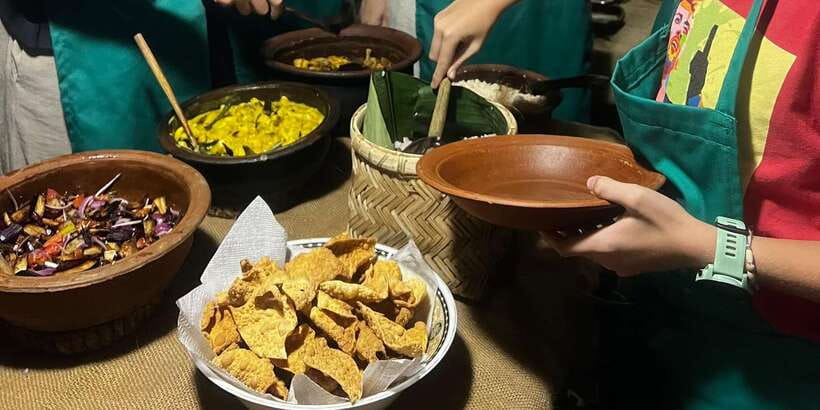
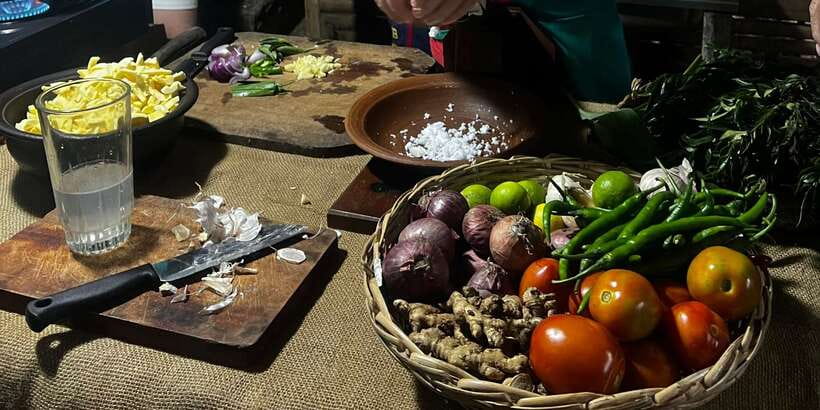
The class begins when you check in with the staff at Chamathka Cooking Class. You are welcomed into an open-air kitchen, where the surrounding greenery and moving air make the cooking area feel less enclosed than a conventional indoor classroom.
That setting matters in Ella. Cooking here is not presented as a polished demonstration behind glass. You see the ingredients, tools, and working methods up close. The open sides also help with ventilation, which is useful when chilies, spices, and hot pans enter the picture.
The first stage is an introduction to fresh produce and seasonings. Rather than simply handing you a printed recipe, Ranjani explains what you are using and how it fits into Sri Lankan food. Several people particularly valued her talks about the health uses of herbs and spices, though you should treat these as traditional food knowledge rather than medical advice.
You may begin with a welcome tea and biscuits. This is a small touch, but it sets a relaxed tone before the cooking starts. The class feels more like being welcomed into a home kitchen than attending a formal culinary school.
More Sri Lankan cooking classes:
- Ella: Sri Lankan Cooking Class with Neranji at Homestay
★ 5.0 · 276 reviews - Ella : Cooking class with amazing Spice Garden Tour
★ 5.0 · 239 reviews - Ella Sri Lanka : Mom’s Kitchen Cooking class
★ 5.0 · 113 reviews
How the shared cooking format works
The class is hands-on, but not in the way some Western cooking schools operate. You generally work together around one main workstation while Ranjani handles or demonstrates the more complicated techniques. She then invites participants to take turns with chopping, mixing, seasoning, stirring, and other jobs.
I see this as both the class’s strength and its limitation. You get to watch the complete process and ask questions as the meal comes together. You also see how separate dishes are timed and managed as one family meal, something a single-dish lesson often misses.
On the other hand, you may not personally prepare every part of every dish. If you want your own cutting board, stove, and finished plate, this is not the right format. If you prefer a friendly group where everyone contributes a little, it works well.
The stated maximum is eight people, which should keep a small-group atmosphere. Still, accounts of some sessions describe groups of 13, with everyone receiving several turns at the stove and preparation area. Group size can affect how much time you get with the tools, so it is worth confirming the expected number when you book.
Coconut, spices, and old-fashioned techniques
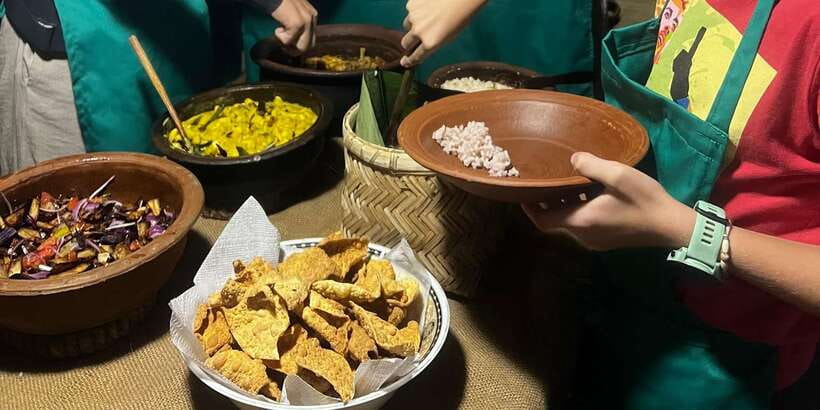
One of the most valuable parts of the lesson is seeing techniques that are easy to miss in a restaurant. The class can include grating coconut, making coconut milk, preparing coconut sambol, and building the base of a dhal curry.
These steps explain why Sri Lankan food tastes different from a quick curry made with a jarred sauce. Coconut is not just a garnish. It can provide texture, richness, and liquid for a dish. The order in which spices are added also matters, and Ranjani explains how they are handled and cooked.
You may also see traditional tools that look strange if you are used to a modern kitchen. One person described a machete-like tool and another old-fashioned equipment used to prepare the food. That is part of the appeal, though the traditional approach can make the process slower than it would be with an electric food processor.
The lesson is not only about following instructions. You learn how a home-style cook works with what is available, uses fresh produce, and builds several dishes at once. That knowledge is more useful at home than memorizing a restaurant-style recipe with hard-to-find ingredients.
The dishes you may prepare in two hours
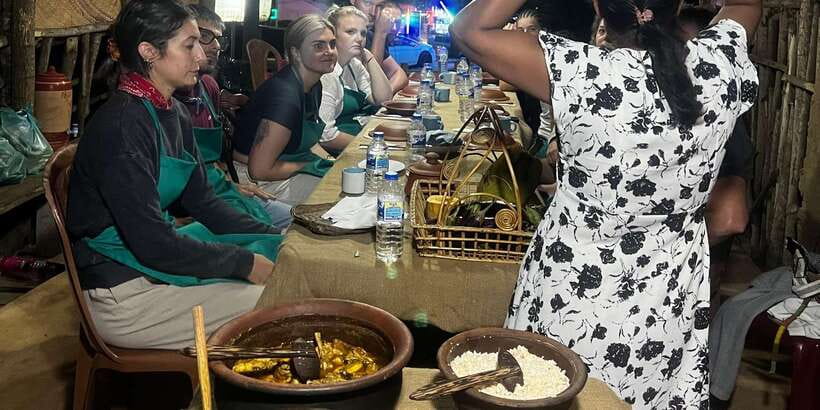
The exact menu can vary, and you do not normally choose every dish yourself. That is worth knowing before you arrive. The class may cover hoppers, rice and curry, string hoppers, and honey roti, while many sessions also include a selection of curries and side dishes.
A particularly well-liked combination includes:
- Dhal curry
- Chicken curry
- Aubergine salad
- Coconut sambol
- Papadam
- Rice and additional vegetable dishes
The menu can include both vegetarian and nonvegetarian food. A vegan participant was able to eat almost everything except one dish, and the host was willing to consider different diets. You should still tell the provider about your needs in advance rather than relying on a last-minute adjustment.
Hoppers are bowl-shaped pancakes, often crisp at the edges and soft in the middle. String hoppers are fine rice-flour noodles pressed into small nests. Honey roti gives the class a sweeter finish, while rice and curry show the everyday side of Sri Lankan cooking.
The range of dishes is important. You are not spending two hours on one curry and then leaving. You build a spread with contrasting textures and flavors, from creamy dhal to fresh coconut sambol and crisp papadam.
A few more tours worth weighing up
- Ella: First Class Scenic Train Ticket To/From Nanuoya
★ 4.2 · 19 reviews - Private cooking class – Personalized classic menu
★ 5.0 · 5 reviews - Organic cooking class sigiriya (kumara & family)
★ 5.0 · 650 reviews - Sri Lanka Cooking Class with Granny
★ 5.0 · 587 reviews
Eating from a banana leaf in Ella
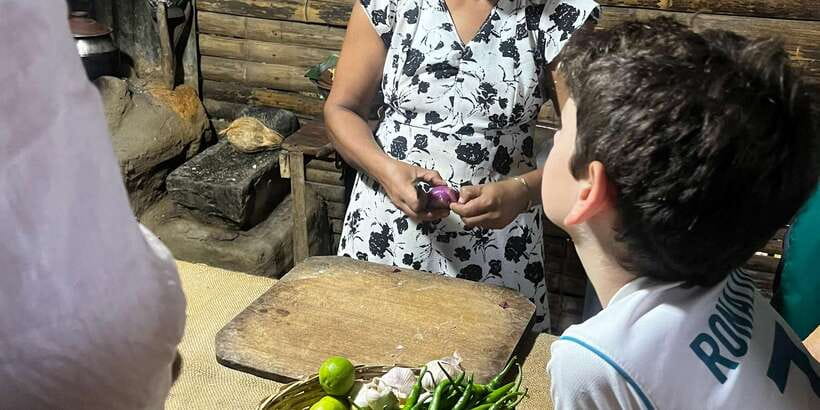
When the food is ready, you sit down and eat what the group has made. The meal is served on banana leaves, a simple tradition that reduces the need for plates and gives the final course a strong local feel.
The portion size appears to be generous. Several people found there was enough food for seconds, and one account described a feast with leftovers. That makes the $19 price look especially good, since you are paying for instruction, ingredients, bottled water, and a full meal rather than a short demonstration.
The shared meal is also where the social side of the class pays off. You have worked beside people from different countries, then sit down together with the results. It is an easy way to spend an evening in Ella without adding another formal sightseeing stop.
Do not expect to eat only the item you personally cooked. The food is prepared as a group, so the final meal is a communal result. For me, that is closer to the way a family meal works, but it is less satisfying if you want a strict link between your individual work and your individual serving.
What Ranjani adds to the experience

Ranjani is repeatedly praised for her warmth, patience, and clear explanations. Her teaching goes beyond showing when to stir a pot. She explains the purpose of ingredients, how cooking methods affect the final result, and how spices are used in traditional food.
Her approach seems especially useful for first-time cooks. Instructions are described as step by step, and participants are encouraged to help rather than left watching from the edge. She also keeps the mood light, which helps when several dishes are cooking at once.
The health information is a recurring part of the class. You hear about the traditional benefits associated with ingredients such as herbs and spices, along with advice on their use in everyday cooking. Again, take this as cultural and culinary context, not a substitute for professional health guidance.
The class also seems designed with home kitchens in mind. One especially useful feature is the effort to show recipes that you can recreate outside Sri Lanka, including places where certain local ingredients are harder to find. That gives the lesson a longer life than the meal you eat at the end.
Timing, transport, and practical planning
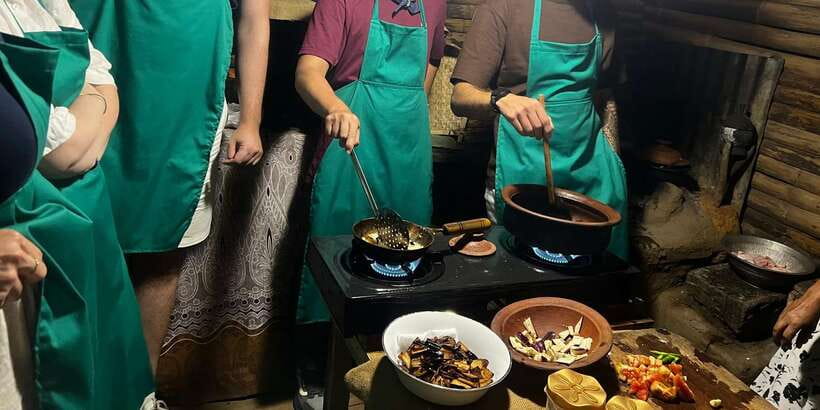
The experience lasts about two hours, though you should allow extra time. A large meal, conversation, and the final eating session can push the visit closer to two and a half hours. If you have a car waiting or a fixed evening plan, leave a buffer.
Classes normally run at 11:00 AM and 5:00 PM. The provider may be flexible if you contact them ahead of time, which helps if your train, hike, or other plans do not fit those slots.
Transportation to the meeting point is not included. You need to arrange your own way to Chamathka Cooking Class, so check the location and allow time to arrive before the start.
The class is offered in English and Sinhala. The small-group format should make questions possible, but the amount of personal cooking time depends on the number of people present and the pace of the session.
Recipes are sent digitally through WhatsApp after class. Some people have also received a cookbook PDF when they asked. Save the recipes while you have them, especially if you plan to buy spices or coconut products before leaving Sri Lanka.
Is $19 good value?
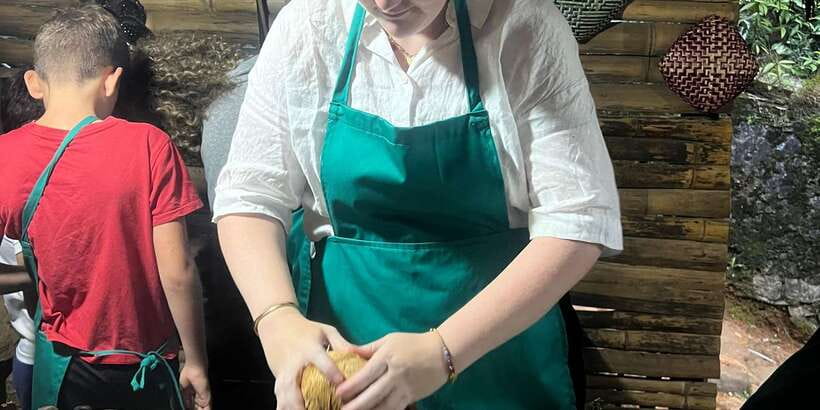
At $19 per person, this is an easy experience to recommend on price alone, but the real value comes from the combination of food and instruction. You receive fresh ingredients, a teacher, a traditional meal, bottled water, and recipes for later use.
A restaurant meal might cost less in some parts of Sri Lanka, but it would not show you how the food is made. A more formal cooking school could offer more individual equipment, but often at a much higher price. Here, you trade private workspace for a generous menu and a local kitchen setting.
The value is strongest if you care about learning techniques you can repeat at home. Coconut sambol, dhal, rice, and curry are not just holiday curiosities. They are practical dishes, and the class explains enough of the process to give you a starting point.
The price is less compelling if you only want a polished meal or a quiet dinner. You will spend time standing, helping, listening, and waiting for your turn. This is an activity, not simply a restaurant reservation.
Who will enjoy this class most?
I would recommend it to you if you want a social evening, enjoy trying food, and like learning through conversation and demonstration. It is also a good choice for couples, solo visitors, families, and anyone looking for a rainy-day activity in Ella.
Vegetarians and vegans should contact the provider in advance. The menu can include nonvegetarian dishes, but dietary needs have been accommodated during previous classes.
You do not need advanced cooking skills. The instructions are designed to be easy to follow, and the shared format lets you learn by watching and doing. More experienced cooks may still enjoy the coconut preparation and traditional tools, though they may wish for more individual control.
This class is not ideal for you if:
- You need a private lesson
- You want an individual workstation
- You expect to select the entire menu
- You have a tightly timed onward journey
- You dislike group meals or shared preparation
Should you book the Ella cooking class?
Book it if you want more than a recipe card. The best parts are the open-air setting, Ranjani’s friendly teaching, traditional coconut and spice techniques, and the large meal served on banana leaves.
I would be comfortable calling this one of Ella’s better-value cultural activities. Just confirm the group size, mention dietary needs, and allow at least 30 extra minutes beyond the advertised two hours. If you are happy to cook as a team rather than run your own mini kitchen, the class offers a tasty and useful connection to Sri Lankan home cooking.
FAQ
Where does the cooking class take place?
You check in with staff at Chamathka Cooking Class in Ella, Sri Lanka.
How long does the class last?
The advertised duration is two hours. You should allow additional time for eating, conversation, and the possibility of a later finish.
What time does the class begin?
Classes normally begin at 11:00 AM or 5:00 PM. The provider may be flexible if you contact them in advance.
Is transportation included?
No. Transportation to the meeting point is not included, so you must arrange your own way there.
What languages does the instructor speak?
The class is offered in English and Sinhala.
What is included in the price?
The $19 price includes the instructor, fresh ingredients, the cooking class, the meal, and bottled water.
Will I receive the recipes afterward?
Yes. Recipes are sent digitally through WhatsApp after the class.
Is the class suitable for vegetarians or vegans?
Vegetarian and vegan options are available, but you should tell the provider about your diet in advance. One vegan participant was able to eat all but one dish.
How many people are in the class?
The activity is advertised as a small group limited to eight participants. Some sessions have reportedly been larger, so confirm the expected group size if personal cooking time matters to you.
Just added around Ella
- Ella Sri Lanka , Private Photoshoot | Photography Tours★ 5.0 · 3 reviews
- Sri Lanka private tour package 10 Days. and luxury hotel★ 5.0 · 3 reviews
- From Tangalle / Hiriketiya : Yala Safari tour & Drop – Ella★ 3.0 · 3 reviews
- Explore Ella: Rock Hike, Loop, Falls, Nine arch & Train View★ 5.0 · 3 reviews
- Ella Full-Day Tour from Mirissa/Ahangama/Hikkaduwa/Bentota★ 4.6 · 3 reviews
- Kandy to Ella via Nuwara Eliya Scenic Day Tour★ 3.3 · 4 reviews
- From Ella- All Inclusive Day Trip to Experience Ella & Train★ 3.9 · 4 reviews
- Ella: Cinnamon, Spice Garden & Waterfall tour★ 3.4 · 4 reviews
Cooking Classes, compared.

Organic cooking class sigiriya (kumara & family)
Read our review →


Sri Lankan Cooking Class with Neranji at Homestay
Read our review →

Browse the lists this tour appears in