
Reviewed · YALA NATIONAL PARK SAFARIS
Yala Village Tour: Pottery Class, Lake and Temple Visits
Village life rewards curious visitors. This private Yala outing links ancient Buddhist heritage with a family pottery workshop, lakeside birdwatching, a bat colony, and sunset over Tissa Lake. I like the hands-on pottery class most, because you do more than look at local tradition. You make something with your own hands. I also like the quiet pace around the lakes, where your guide explains how five connected lakes and canals support village farming. The main consideration is cost: the advertised price is about $40 for one group, but the Yala National Park entrance fee is separate and listed at roughly $45 per adult.
This is a good choice if you want more than a standard wildlife drive. Guide-led storytelling gives the temples and irrigation system a clear local setting, while the private format lets you spend time at the places that interest you. The day can also be combined with a Yala safari, though that creates a long schedule, beginning around 5 a.m. and continuing until early evening.
In This Review
- The main reasons to consider this village tour
- Why this is more than a stop between safaris
- Yatala Tissa Stupa brings Sri Lanka’s early Buddhism close
- A pottery class where your hands do the learning
- Debarawewa Lake explains the village water system
- The bat colony adds a surprising wildlife stop
- Tissa Lake provides the quietest ending
- Combining the village tour with a Yala safari
- Transport, pickup, and onward travel
- What the guide adds to the day
- Who will enjoy it most
- Is the $40 price good value?
- Should you book the Yala Village Tour?
- FAQ
- Where does the Yala Village Tour begin?
- How long does the tour last?
- Can I combine the village tour with a Yala safari?
- Is the Yala National Park entrance fee included?
- What is included in the tour price?
- Is the pottery class suitable for beginners?
- Can the operator drop me somewhere other than Tissamaharama?
The main reasons to consider this village tour
- A 2,300-year-old stupa: Visit Yatala Tissa Stupa, built by King Mahanaga to mark the birth of his son, Yatala Tissa.
- A real pottery lesson: Work with wet clay at a small, family-run workshop and take home a small piece, such as a clay oil-lamp holder.
- Five connected lakes: Learn how rainwater moves through canals and supports traditional paddy farming near Tissamaharama.
- Birds and bats: Use the supplied binoculars to watch birds at Debarawewa Lake, then see a large natural bat colony.
- A calm finish: End at Tissa Lake, where the sunset and water provide a quiet close to the afternoon.
- Flexible private transport: Pickup is available around Tissamaharama, with car or jeep transport and possible onward drop-off arrangements.
Why this is more than a stop between safaris
Tissamaharama is best known as a base for Yala National Park, but the surrounding villages offer a different kind of Sri Lankan experience. Here, the focus shifts from searching for leopards and elephants to seeing how people worship, work with clay, manage water, and live beside lakes.
I like that this tour joins those subjects rather than treating them as isolated stops. The stupa gives you history. The pottery class gives you personal contact with a local craft. The lakes explain farming and birdlife. The sunset gives the day room to slow down.
The tour is private, with an English-speaking guide, so you are not tied to the rhythm of a large coach group. That matters at the pottery workshop and temples, where a little time to ask questions can make the visit much more useful.
The advertised duration is broad, from three to twelve hours, because the experience can be booked as a village outing alone or combined with a Yala safari. If you book both, expect a full day rather than a quick afternoon activity.
More Yala safaris we have reviewed:
- Yala National Park Safari Tours: Morning/Evening/Full Day
★ 4.8 · 818 reviews - Full day Safari – Yala National Park – 04.30 am to 06.00 pm with – Janaka safari
★ 5.0 · 603 reviews - Ella: Drop to Tangalle/Hiriketiya/Mirissa/Galle & Yala Tour
★ 4.9 · 518 reviews
Yatala Tissa Stupa brings Sri Lanka’s early Buddhism close
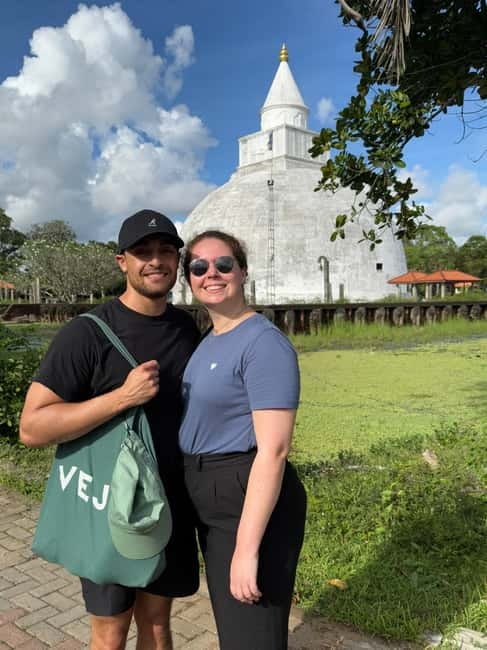
The first major cultural stop is Yatala Tissa Stupa, an ancient Buddhist monument with around 2,300 years of history. It was built by King Mahanaga to commemorate the birth of his son, Yatala Tissa.
That story gives the site a human starting point. You are not only looking at an old religious structure. You are hearing why it was built and how it connects to the early Buddhist past of southern Sri Lanka.
Your guide can add context about the stupa, its religious role, and the surrounding area. This is where the quality of the guide matters most. One guide named Uchith received particularly warm praise for explaining Buddhist culture and life in Tissa in clear English. If he is assigned to your tour, you can expect the historical and cultural side to receive careful attention.
The adjoining Buddhist Museum adds another layer. Its older artifacts and relics help connect the monument outside with the objects and beliefs preserved inside.
A practical point: this is a religious site, not just an archaeological photo stop. Dress and behave respectfully, and be prepared for a quieter visit than the wildlife portions of the day. The available information does not specify a detailed dress code, so modest clothing is the sensible choice.
A pottery class where your hands do the learning
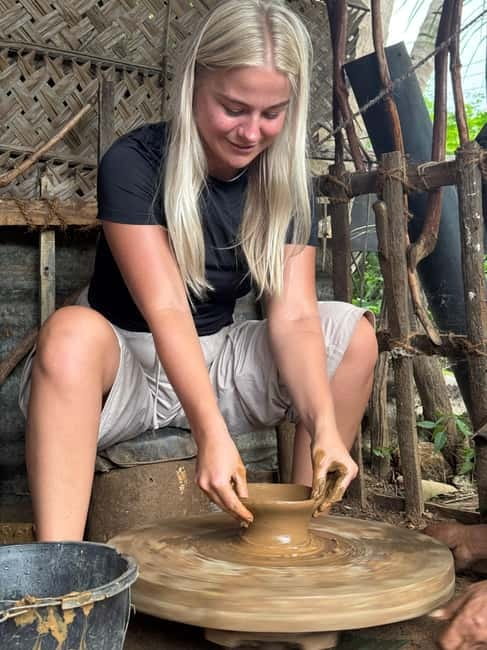
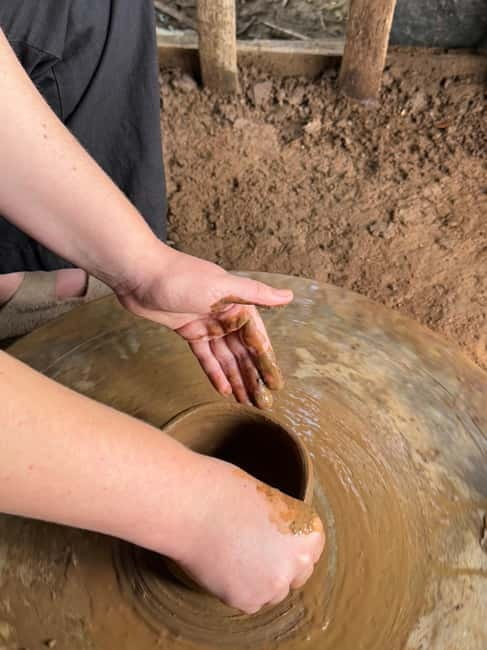
The family-run pottery workshop is the most distinctive part of the experience. You watch local artisans shape clay using techniques passed down through generations, then try forming your own piece.
This is not a polished factory tour. The small-scale setting is part of its appeal. You see a working family craft business and get a direct look at how clay becomes a useful or decorative object.
The class is also forgiving in the best way. You do not need previous pottery experience. The point is to handle wet clay, learn the basic motion, and enjoy the process. Several people especially liked putting their hands into the clay and shaping small oil lamps. A small piece is given as a keepsake, which adds value without turning the class into a shopping stop.
I would allow yourself to make something imperfect. A lopsided clay lamp made during a village visit tells a better story than a flawless souvenir bought in a shop.
The pottery stop may be especially good for families with older children, couples, and anyone who tires of looking at monuments. The tour is not suitable for babies under one year, and the listed upper age limit is 95. Those limits are broad, but the clay work and vehicle transfers may still be worth discussing with the operator if mobility is a concern.
Debarawewa Lake explains the village water system
The tour then moves to Debarawewa Lake, surrounded by paddy fields and open views. This is the birdwatching part of the afternoon, and binoculars are provided.
The birdlife is not presented as a guaranteed checklist. You may spot local and migratory species, along with other animals in the area, but sightings depend on timing and conditions. That is normal for a lakeside birdwatching session. The value lies in having a guide point out what you might otherwise miss and explain how the water supports the village.
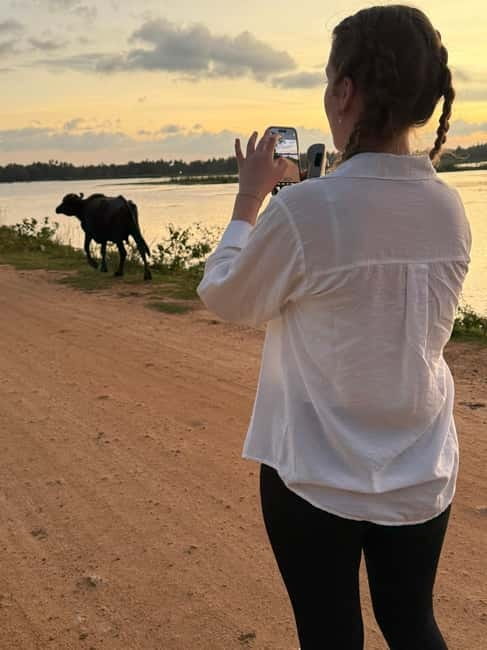
A particularly useful detail is the connected lake system. Five major lakes are linked by canals, collecting rainwater and directing it toward traditional farming areas. This makes the view more than a pretty stretch of water. You are seeing part of an irrigation system that helps sustain paddy cultivation.
I appreciate this kind of explanation because it gives the countryside a working purpose. The fields, canals, birds, and settlement are connected. Your guide can help you understand those links rather than leaving you with only photographs.
The birdwatching stop may feel less dramatic than a national park safari. That is the fair comparison. You are not getting a jeep search for large mammals here. You are getting a slower look at wetland life and village agriculture, usually with fewer other tourists around.
More village experiences:
- Kandy Village Cooking Class
★ 5.0 · 536 reviews - Cooking With Village Family
★ 5.0 · 104 reviews - Half-Day Lagoon and Village Cycling Tour in Galle
★ 5.0 · 90 reviews - Day Trips from Kandy to Sigiriya with Village Experiences
★ 5.0 · 42 reviews
The bat colony adds a surprising wildlife stop
The next stop is a natural bat colony. You can observe thousands of bats roosting in their natural setting.
This is a memorable contrast to the birds at Debarawewa Lake. First you are watching animals move through the wetland environment. Then you are looking up at a dense colony resting together.
The information available does not identify the bat species or promise a particular behavior, so keep expectations sensible. The attraction is the scale of the colony and the chance to see bats in a natural roost, not a staged animal display.
Wildlife lovers should enjoy this stop, especially if you have already seen Yala National Park and want a different kind of encounter. It also breaks up the cultural portions of the day without turning the whole outing into another safari.
Tissa Lake provides the quietest ending
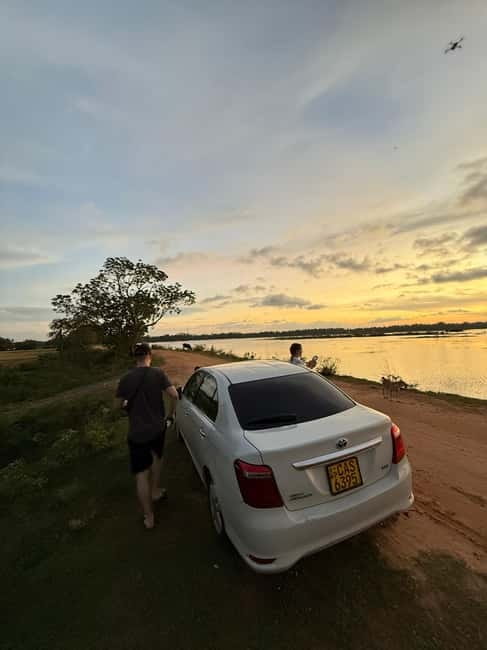
The final stop is Tissa Lake for sunset. The lake’s still surface reflects the changing evening colors, giving the day a peaceful finish.
This is not a packed sightseeing stop with a long list of things to do. You are there to sit, look, and let the day settle. After the stupa, museum, workshop, birdwatching, and bat colony, the slower ending makes good sense.
Sunset timing depends on the season and weather, but the village tour is scheduled to finish around 6 p.m. to 6:30 p.m. when combined with the safari package. If sunset is your priority, ask for the exact pickup and return timing when you book.
I would not treat this as a major photographic production. The appeal is the calm. If you want the most restful part of the tour, Tissa Lake is likely to be it.
Combining the village tour with a Yala safari
The combined schedule begins with pickup around 5 a.m. from accommodation near Tissamaharama. You travel by car or jeep to Yala National Park for the safari, then return around 10 a.m.
After the safari, you have a break for lunch. The operator can arrange lunch or dinner on request, and one visitor particularly enjoyed a Sri Lankan-style meal prepared by Uchith’s wife after the tour. That hospitality became an important part of the experience for that person, but meals are not included in the stated price, so confirm the arrangement and cost before agreeing.
The village portion begins around 3 p.m. and runs until approximately 6 p.m. or 6:30 p.m. That creates a useful five-hour rest period between the morning safari and afternoon outing. You can return to your accommodation, eat lunch, and get out of the midday heat.
The combined day is appealing if you have limited time in the Tissamaharama area. It also gives you two very different views of southern Sri Lanka: protected wildlife in the morning and lived-in village culture later.
The drawback is stamina. A 5 a.m. start, safari, lunch, and afternoon tour is a long day, especially after travel or a previous early morning. If you want a gentler schedule, book only the village tour and arrange a later pickup.
There is also an important pricing detail. The village activity is advertised at about $40 per group up to one person, while the Yala National Park entrance fee is not included and is listed at approximately $45, or LKR 13,500, per adult. The wording around group pricing is unusual, so confirm the total for your party and whether you are booking the village experience alone or the combined safari package.
Transport, pickup, and onward travel
Pickup is included from accommodation near Tissamaharama. The listed transfer time is about 20 minutes each way, and transport is by car or jeep.
For a village-only booking, pickup and return are generally centered on the Tissamaharama area. The operator also offers onward drop-off by taxi after the village tour to places including Ella, Mirissa, Tangalle, Hiriketiya, Galle, Hikkaduwa, Ahangama, and Weligama.
Treat that as a useful possibility, not an automatic inclusion. Ask about the fare, vehicle, and exact destination before booking. The tour information names Kotapola as the location, but the practical pickup details consistently center on Tissamaharama, so clarify your location if you are staying elsewhere.
Water and binoculars are included. Personal expenses are not, and the national park entrance fee is separate. Those details make the tour easier to budget, but lunch, dinner, souvenirs, and optional transfers should be confirmed in advance.
What the guide adds to the day
A strong guide is central to this experience. Without explanation, the stupa is an old building, the lakes are scenic water, and the pottery class is simply a craft activity. With a good English-speaking guide, those pieces connect to Buddhist belief, village irrigation, family work, and everyday life in Tissa.
The strongest praise has centered on warmth, clear English, and the ability to explain local culture and history without making the tour feel like a lecture. Uchith is the guide named most specifically, and his hospitality included a home-style Sri Lankan meal for one visitor. You should not assume every booking includes a meal or that Uchith will personally lead every departure, but you can request him when making arrangements.
The private format also helps. You can ask about the stupa, the lake system, or the pottery process as you go. That is more useful than receiving a fixed speech and being hurried back to the vehicle.
Who will enjoy it most
I would recommend this outing to you if you want:
- A cultural experience to pair with a Yala safari
- A hands-on activity rather than only sightseeing
- Smaller-scale local contact
- Birdwatching, wetlands, and traditional farming
- Buddhist sites explained by an English-speaking guide
- A private schedule with accommodation pickup
- A quiet sunset rather than a crowded attraction
It is less suitable if your only goal is seeing large mammals. The village tour includes birds and bats, but it is not a replacement for a national park safari.
It may also disappoint you if you expect a tightly timed museum-and-monument tour with premium facilities. The appeal is its simple, local character. You are visiting a family workshop, village lakes, religious sites, and a natural bat colony.
Is the $40 price good value?
For a private village experience, $40 can be fair, particularly if you are traveling alone and want transport, a guide, binoculars, water, several stops, and a pottery class in one outing.
The value becomes stronger when you care about the range of activities. You are not paying only for a sunset or a temple visit. The price covers a guided route through heritage, craft, wetland nature, and village life.
The cost is less straightforward if you add the safari. The park entry fee alone is listed at about $45 per adult, so the total can quickly pass $80 per person before meals or optional transport. That may still suit you if time is short and you want one operator to arrange the day, but compare the combined total carefully.
For one person, ask how the advertised group price is applied. For more than one person, confirm the exact rate before paying. The listing says private group and up to one person, which is not fully clear as written.
Free cancellation up to 24 hours before the activity and the option to reserve now and pay later make the booking less rigid. Those policies are useful, but they do not change the need to confirm pickup area, park fee, meals, and onward drop-off.
Should you book the Yala Village Tour?
Yes, if you want to see the human side of the Tissamaharama area. The pottery class is the strongest reason to book, while the stupa, connected lakes, birdwatching, bat colony, and sunset give the outing real variety.
I would book the village-only version if you value a relaxed afternoon. I would add the safari if you have limited time and can handle a 5 a.m. start followed by a full afternoon.
Before booking, confirm four things: your exact pickup point, the total price for your party, the separate Yala entrance fee, and whether lunch or onward transport costs extra. With those details clear, this is a thoughtful alternative to spending every hour near a safari jeep. It offers the clay, water, temples, wildlife, and conversation that make a place feel lived in.
FAQ
Where does the Yala Village Tour begin?
Pickup is provided from accommodation in or near Tissamaharama. For a village-only booking, the tour returns to the same general area unless an onward taxi drop-off is arranged.
How long does the tour last?
The stated duration is between three and twelve hours. The village portion combined with the safari begins after lunch around 3 p.m. and finishes around 6 p.m. to 6:30 p.m.
Can I combine the village tour with a Yala safari?
Yes. The combined schedule includes a 5 a.m. pickup, a Yala National Park safari, return around 10 a.m., a break for lunch, and the village tour in the afternoon.
Is the Yala National Park entrance fee included?
No. The entrance fee is separate and is listed at approximately $45, or LKR 13,500, per adult.
What is included in the tour price?
Transportation by car or jeep, drinking water, binoculars, accommodation pickup, and the guided tour are included. Personal expenses and the national park entrance fee are not included.
Is the pottery class suitable for beginners?
Yes. You can watch local artisans make pottery and then try shaping your own clay item. Small pottery keepsakes, including clay oil-lamp holders, have been provided during the experience.
Can the operator drop me somewhere other than Tissamaharama?
The operator can arrange a taxi drop-off after the village tour to destinations including Ella, Mirissa, Tangalle, Hiriketiya, Galle, Hikkaduwa, Ahangama, and Weligama. Confirm the destination and any extra cost before booking.
More Workshops
- Ella: Traditional Sri Lankan Cooking Class
★ 4.9 · 788 reviews - Organic cooking class sigiriya (kumara & family)
★ 5.0 · 650 reviews - Sri Lanka Cooking Class with Granny
★ 5.0 · 587 reviews - Galle: Traditional Gems & Jewellery Workshop with Transfers
★ 4.9 · 539 reviews
Just added around Yala National Park
- Yala National Park Safari | Jeep with Tickets★ 5.0 · 3 reviews
- Colombo/Bentota: Safari Trip to Yala & Udawalawe w/ Picnic★ 3.9 · 3 reviews
- 1 Day tour to Yala National Park or Udawalawe National Park★ 4.5 · 3 reviews
- Half-Day Wild Safari in Yala National Park★ 5.0 · 3 reviews
- Yala National Park: Half Day or Full Day Leopard Safari Tour★ 3.8 · 3 reviews
- Yala National Park : Half Day or Full Day Safari Tours★ 3.4 · 3 reviews
- Day Excursion to Yala National Park From Colombo★ 4.5 · 3 reviews
- Yala: All Inclusive Overnight Glamping and Safari★ 4.5 · 3 reviews
Yala National Park Safaris, compared.
Yala National Park Safari Tours: Morning/Evening/Full Day
Read our review →
Full day Safari – Yala National Park – 04.30 am to 06.00 pm with – Janaka safari
Read our review →
Drop to Tangalle/Hiriketiya/Mirissa/Galle & Yala Tour
Read our review →
Yala National Park: Half, 7-Hour, or Full-Day Safari & Meals
Read our review →
Yala National Park Wildlife Safari/ Game Drive – by Ajith Safari
Read our review →Drop to Tangalle/Hiriketiya/Mirissa/Galle & Yala Tour
Read our review →
Drop to Tangalle/Hiriketiya/Mirissa & Yala Safari
Read our review →
Browse the lists this tour appears in