
Reviewed · COOKING CLASSES
Ella: Sri Lankan Authentic Cooking expirience
Come hungry, leave with recipes. This two-hour class at Honey Bee Garden Cooking Class gives you a practical taste of Sri Lankan home cooking, with Ruwini guiding you through spices, curries, coconut roti, and a full shared meal. I like the hands-on format, especially the chance to crack and scrape fresh coconuts rather than simply watch a demonstration. I also like the small-group limit of 10, which keeps the class personal without making it too private or costly.
The main consideration is transport. Getting to and from the traditional home is not included, so you need to arrange that yourself. A group of 10 may also mean that some cooking jobs are shared, while smaller sessions give you more time at the stove.
At $22 per person, this is a strong value if you enjoy food and want something useful to take home. The meal alone would make the price reasonable, but the real benefit is learning how Sri Lankan cooks build several different curry flavors from a small set of familiar ingredients.
In This Review
- Key things to know before booking
- Meeting Ruwini in a traditional Sri Lankan home
- The spice introduction gives the meal its logic
- Cracking coconuts makes this more than a recipe lesson
- Cooking seven dishes in two hours
- The shared meal is the payoff
- Why the $22 price makes sense
- Group size, access, and getting there
- Who will enjoy this class most?
- What to remember after the class
- Should you book the Honey Bee Garden cooking class?
- FAQ
- Where is the Sri Lankan cooking class held?
- How long does the cooking class last?
- How much does the experience cost?
- What food will I prepare?
- Is a meal included?
- Is the class taught in English?
- Are ingredients and cooking equipment included?
- Will I receive the recipes afterward?
- Is transportation included?
Key things to know before booking
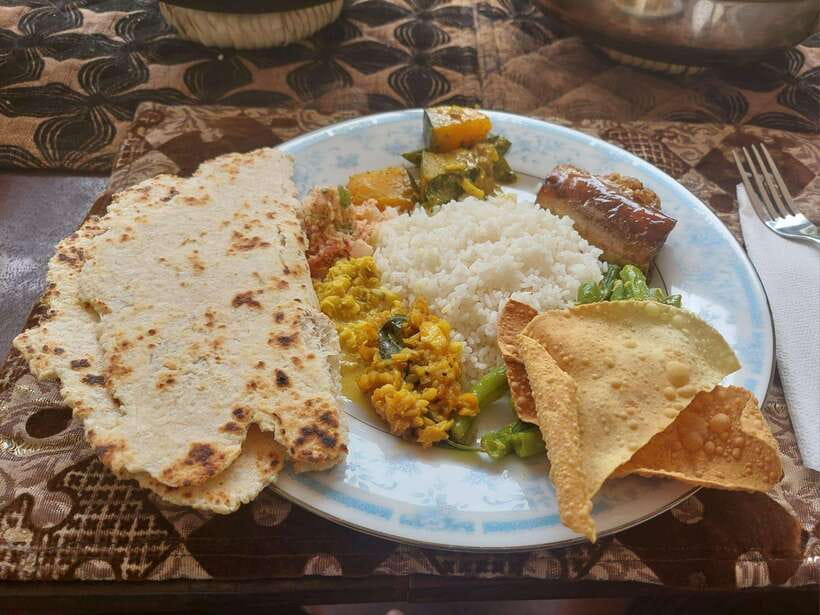
- You prepare a complete rice and curry meal: The class includes rice, aubergine modju, dhal curry, pumpkin curry, beans curry, coconut sambal, coconut roti, and papadam.
- Coconut is part of the lesson: You may crack coconuts, scrape the flesh, and prepare fresh coconut milk and sambal.
- Ruwini leads the class in English: She is described as warm, patient, humorous, and clear when explaining spices and cooking methods.
- The meal comes after the work: You sit down to eat the dishes you have helped make, rather than receiving a separate restaurant meal.
- Vegetarians are well catered for: The menu is built around vegetables, lentils, rice, coconut, and spices.
- Recipes are sent by email: You can use the class at home, with ingredient substitutions explained for cooks outside Sri Lanka.
Meeting Ruwini in a traditional Sri Lankan home
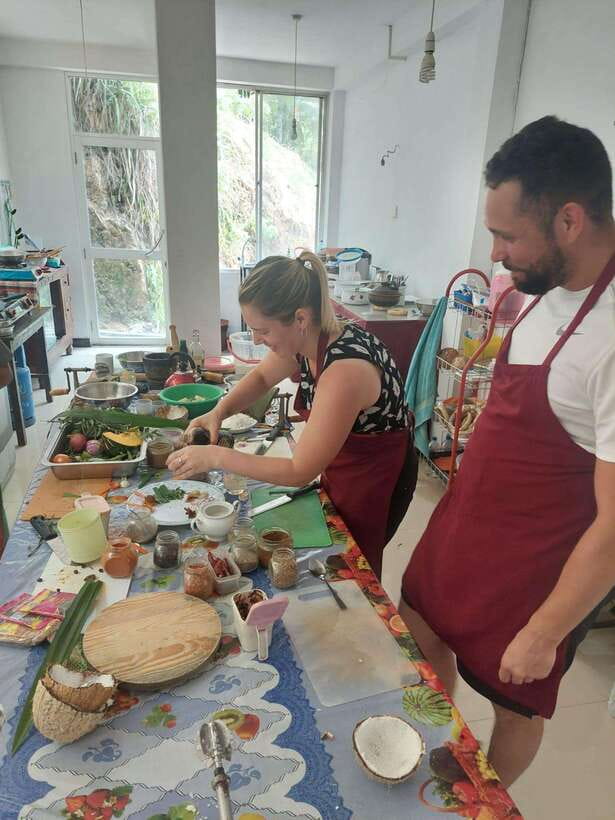
This class begins with a setting that feels more personal than a cooking school kitchen. You meet your host, Ruwini, in a traditional Sri Lankan home and start with an introduction to local spices. That opening matters because Sri Lankan food is not simply hot food with curry powder added. The character of each dish comes from how spices, coconut, vegetables, and cooking methods work together.
Ruwini teaches in English, which makes the class accessible to international participants. Her approach appears to be friendly and active rather than formal. She brings people into the process, explains what each ingredient does, and gives practical advice on changing a dish when a particular spice or vegetable is hard to find at home.
That last point is especially useful. A recipe can look simple on paper but become difficult when you return home and cannot find the same coconut, aubergine, or spice blend. Knowing what you can substitute helps turn a pleasant holiday activity into something you can actually cook again.
The atmosphere is also part of the appeal. You are not only learning recipes. You are seeing how food is prepared in a local home, with the host’s own knowledge of everyday Sri Lankan cooking. I would choose this kind of class over a polished hotel demonstration if you want a closer look at ordinary food culture.
More Sri Lankan cooking classes:
- Ella: Traditional Sri Lankan Cooking Class
★ 4.9 · 788 reviews - Ella: Sri Lankan Cooking Class with Neranji at Homestay
★ 5.0 · 276 reviews - Ella : Cooking class with amazing Spice Garden Tour
★ 5.0 · 239 reviews
The spice introduction gives the meal its logic
The first lesson focuses on Sri Lankan spices. The information provided does not list every spice covered, so you should not expect a fixed catalogue of ingredients. You can expect a short explanation of the flavors used in the dishes you will cook.
This introduction is important for beginners. Several curries are prepared during the session, and each one has a different flavor profile. The class helps you see why dhal curry does not taste like pumpkin curry, and why aubergine modju has a different character from a bean curry, even though the dishes share some basic ingredients.
The strongest part of this style of teaching is that it connects the spice to the dish. You are not just memorizing a recipe. You are learning how the same broad family of ingredients can produce different results through balance and preparation.
If you are sensitive to heat or have food allergies, tell Ruwini in advance. Dietary restrictions and allergies should be shared before the class so the cooking can be planned safely.
Cracking coconuts makes this more than a recipe lesson
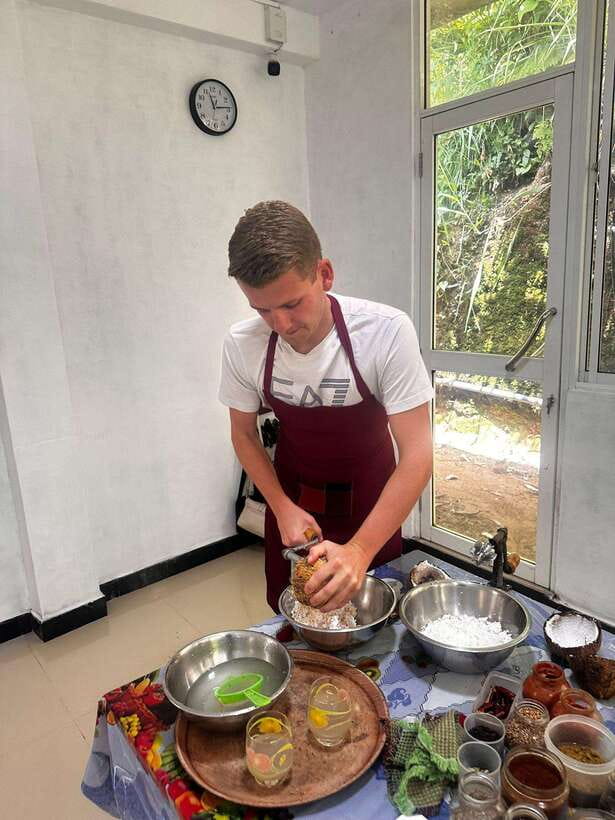
The coconut work is one of the most distinctive parts of the experience. You may help crack the coconut, scrape out the flesh, prepare fresh coconut milk, and make coconut sambal. These tasks take time in a home kitchen, yet they are often skipped in short cooking demonstrations.
For you, this offers a better sense of how much work sits behind a Sri Lankan meal. Coconut is not merely a garnish. It helps form the base, texture, and gentle sweetness of several dishes. Freshly prepared coconut also gives the class a clear connection to local kitchen practice.
Coconut roti uses the same ingredient in a different way. The dough becomes a simple, satisfying flatbread that pairs well with curry. It is a good dish for a class because you get to handle the mixture directly, rather than waiting for a finished item to appear.
The physical work also keeps the session lively. You are chopping, mixing, scraping, and preparing rather than standing behind a counter for two hours. If you prefer a quiet demonstration with minimal participation, this may feel more active than expected. The class specifically encourages you to take part.
Cooking seven dishes in two hours
The menu is generous for a two-hour session. You prepare rice, aubergine modju, dhal curry, pumpkin curry, beans curry, coconut sambal, coconut roti, and papadam. The exact pace will depend on the group, but the format is clearly designed to produce a complete meal rather than one showcase dish.
Here is what each part adds:
- Rice: The central base for the meal and the item that brings the different curries together.
- Aubergine modju: A sweet, sour, and savory preparation that gives the meal a different balance from the softer curries.
- Dhal curry: A familiar Sri Lankan staple made from lentils, useful for understanding how a simple ingredient becomes a full-flavored dish.
- Pumpkin curry: A soft vegetable curry with a gentler profile.
- Beans curry: Another vegetable dish that adds contrast in texture and color.
- Coconut sambal: A fresh coconut preparation that brings brightness and texture to the plate.
- Coconut roti: A flatbread made with coconut, giving you a hands-on dough preparation.
- Papadam: A crisp side that adds crunch to the rice and curry meal.
This menu works well because it shows variety without relying on meat. Vegetarian cooks and diners get a proper meal, not a reduced version of the main menu. The class is also useful for anyone trying to understand the Sri Lankan habit of serving several small preparations together.
The possible weakness is time. Seven dishes is a lot to cover in 120 minutes, especially if the group reaches its limit of 10 participants. In a larger group, you may share responsibilities rather than personally complete every step. That is not a flaw, but it is worth knowing before you book. If you want maximum stove time, ask about a private session.
A few more tours worth weighing up
- Ella: Drop to Tangalle/Hiriketiya/Mirissa/Galle & Yala Tour
★ 4.9 · 518 reviews - Ella: Little Adam’s Peak, Nine Arches Bridge & Waterfalls
★ 4.9 · 402 reviews - ELLA: Drop to Tangalle/Hiriketiya/Mirissa/Galle & Yala Tour
★ 4.1 · 336 reviews - From Ella: Drop to Tangalle/Hiriketiya/Mirissa & Yala Safari
★ 4.8 · 296 reviews
The shared meal is the payoff
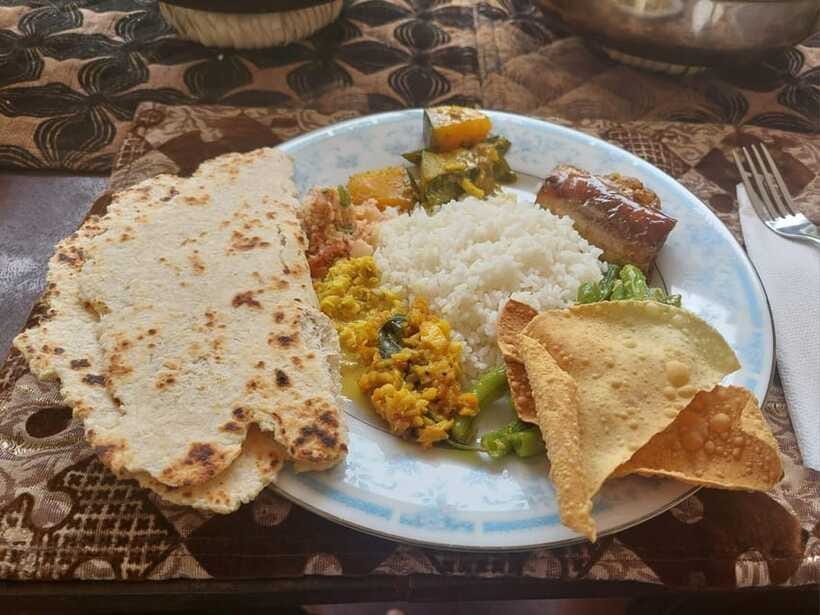
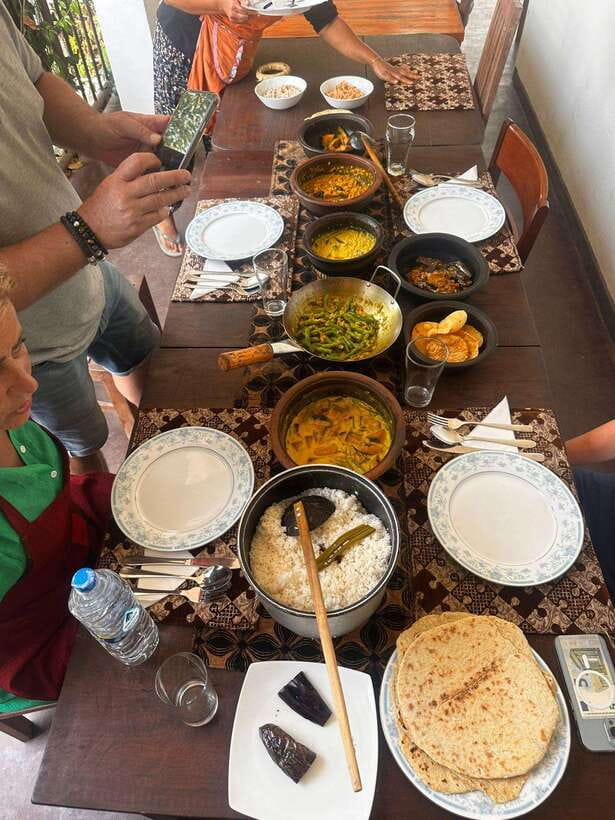
After the cooking, you sit down and eat the food prepared during the class. This is the point where the separate dishes make sense as a meal. Rice, curry, sambal, roti, and papadam are meant to be enjoyed together, with different textures and spice levels on the same plate.
The meal also lets you judge what you have learned. You can taste the result while the techniques are still fresh in your mind. That is more useful than taking a recipe card home without knowing how the finished dish should taste.
The food receives the strongest praise in the supplied feedback. People particularly enjoyed the eggplant dish, the range of curries, the fresh ingredients, and the generous final meal. Several described it as among the best food they had eaten during their time in Sri Lanka. That is subjective, of course, but it points to a class where the eating portion is not an afterthought.
You can request upcountry black tea as part of the experience. Since it is available upon request, ask for it if you would like to add a familiar Sri Lankan drink to the meal.
Why the $22 price makes sense
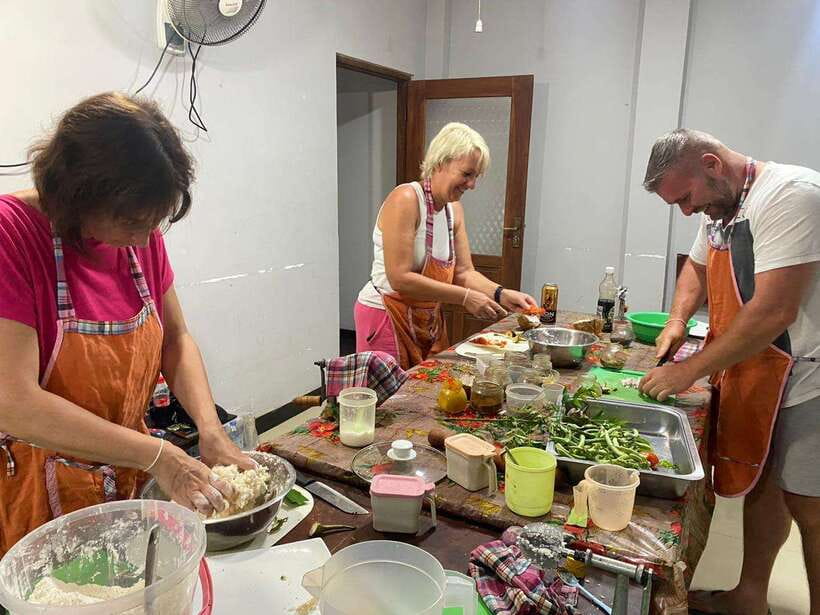
At $22 per person, this is not simply a meal with a short cooking show attached. The price includes the spice introduction, instruction in English, ingredients, equipment, hands-on cooking, the complete meal, and recipes sent by email.
I consider that good value for a two-hour food activity, especially because the menu includes several separate dishes. If you were to order a full rice and curry spread in a restaurant, you would receive the food but not the technique, kitchen context, or recipe guidance.
The value is strongest for couples, solo food lovers, and small groups who will use the recipes later. It is less compelling if you only want to eat and have no interest in cooking. You are paying for participation, so the experience works best when you are willing to chop, mix, scrape, and help with the preparation.
Private sessions are available on request, with time adjustments possible. That option may suit you if you want more direct instruction, have a specific dietary need, or prefer not to share tasks with a larger group. The private price is not provided, so check before booking.
Group size, access, and getting there
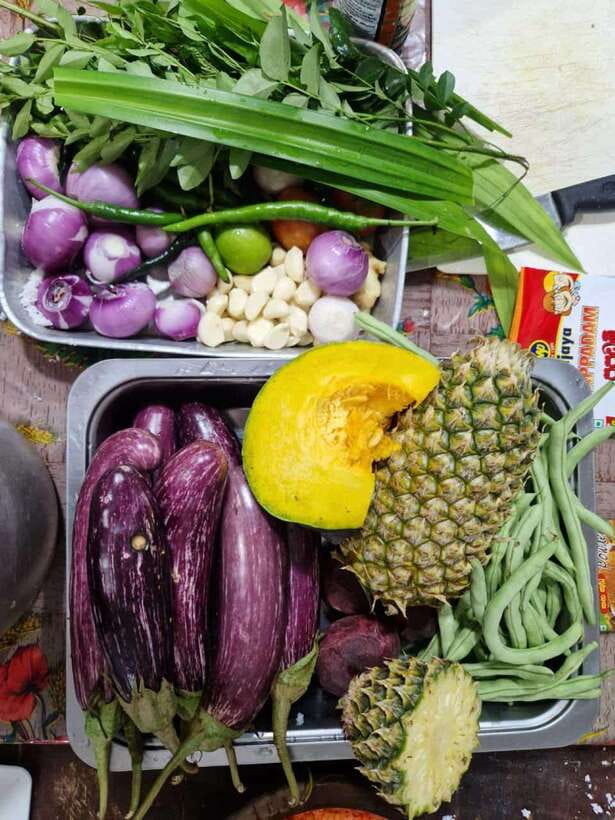
The standard class is a small-group experience with a maximum of 10 participants. That is small enough for conversation and group instruction, but it does not guarantee that every person will have the same amount of cooking time. The class size is one reason to ask about a private session if hands-on practice is your main goal.
The activity is listed as wheelchair accessible. Since it takes place in a traditional home, you may still want to confirm any specific access requirements before arrival. The supplied information confirms accessibility, but it does not describe entrances, kitchen surfaces, or restroom arrangements.
Transportation is not included. Plan your route to the cooking location in advance and allow enough time to arrive ready for the scheduled start. Starting times vary, so check availability when selecting your date.
Cancellation is flexible, with a full refund available if you cancel at least 24 hours ahead. You can also reserve now and pay later, which helps if your Ella plans are still moving around.
Who will enjoy this class most?
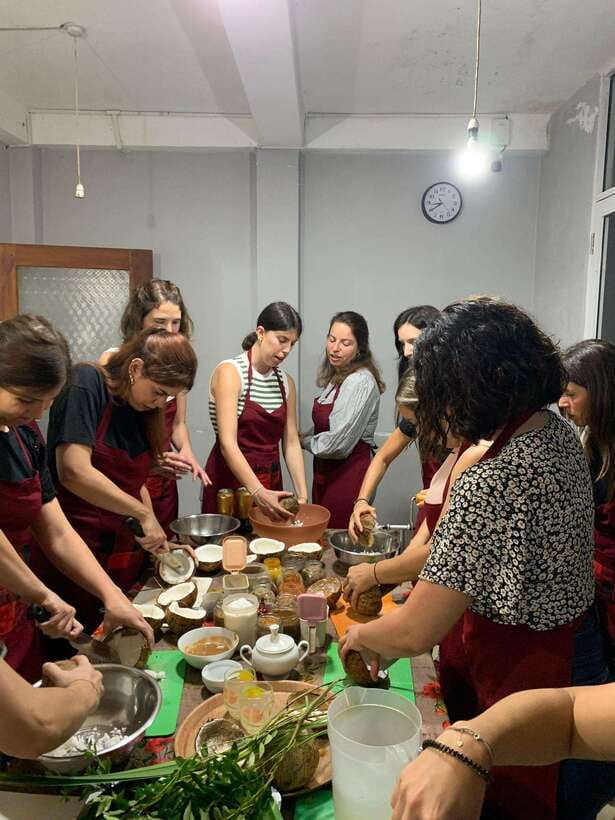
I would recommend the experience to anyone who wants a useful cultural activity between sightseeing stops. It suits people who enjoy eating but do not consider themselves expert cooks. The recipes are presented as practical home food, and the class encourages you to take part rather than perform for an audience.
It is also a good choice for vegetarians. The included meal is centered on vegetable curries, dhal, rice, coconut, roti, and papadam, and specific feedback describes the vegetarian catering as very good.
Families and mixed-ability cooking groups may also like the format, though the supplied information does not state a minimum age. Ask the provider if children will be attending with you.
You may want to skip it if you dislike group cooking, have very limited time, or want a class devoted to one advanced dish. The two-hour format is broad and lively, but it is not designed for slow, technical study of a single recipe.
What to remember after the class
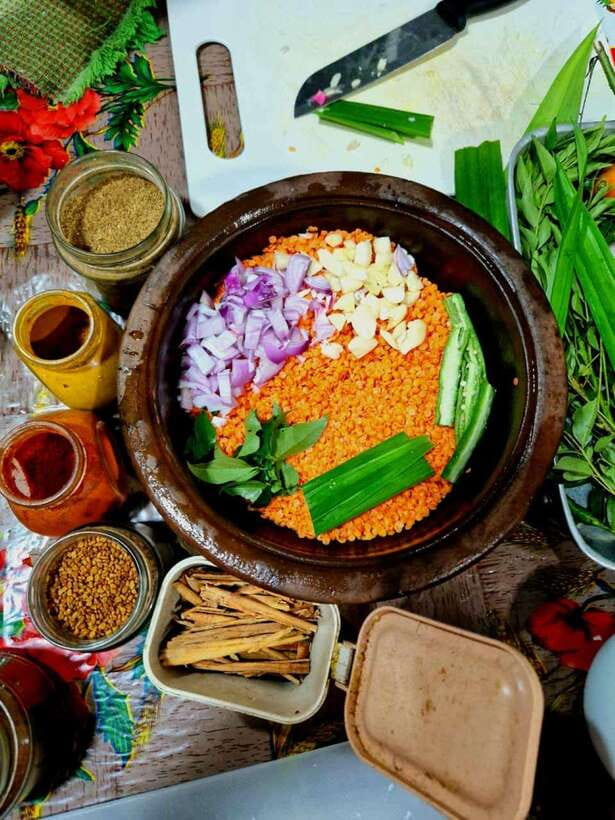
The recipes are one of the best practical extras. They are sent by email, and one recent participant received them within hours of finishing the class. Ruwini also explains substitutions for ingredients that may be unavailable in your home country.
That advice can make the difference between a recipe that sits in your inbox and one that becomes part of your regular cooking. Before leaving, make a quick note of the spice combinations, the texture you want in the dhal, and how the coconut is used in the different preparations.
I would also remember that Sri Lankan curry is not one fixed recipe. The class appears to teach a set of dishes while showing you how flavors can be adjusted. That gives you room to replace vegetables or change the spice balance later without losing the basic style of the meal.
Should you book the Honey Bee Garden cooking class?
Book it if you want food, conversation, and practical cooking in a local home. The best reasons are the wide menu, the fresh coconut preparation, Ruwini’s friendly English instruction, and the full meal at the end. At $22, it offers more lasting value than a standard restaurant dinner because you leave with recipes and techniques.
Think twice if you need private, unhurried instruction but do not arrange a private session in advance. Also remember to organize your own transport and share allergies or dietary restrictions before the class.
For most food-focused visitors to Ella, this is an easy recommendation. You get to cook a real Sri Lankan meal, eat it while the lesson is still fresh, and take the flavors home with you.
FAQ
Where is the Sri Lankan cooking class held?
The class is held at Honey Bee Garden Cooking Class in a traditional Sri Lankan home in Ella, Sri Lanka. The activity information lists the location in Sri Lanka’s Eastern Province.
How long does the cooking class last?
The class lasts two hours. Starting times vary, so check availability when booking.
How much does the experience cost?
The listed price is $22 per person.
What food will I prepare?
You will prepare rice, aubergine modju, dhal curry, pumpkin curry, beans curry, coconut sambal, coconut roti, and papadam.
Is a meal included?
Yes. You eat the dishes prepared during the class after the cooking session.
Is the class taught in English?
Yes. English is the listed instruction language, and the host is described as a fluent English speaker.
Are ingredients and cooking equipment included?
Yes. All cooking ingredients and equipment are included in the experience.
Will I receive the recipes afterward?
Yes. The recipes are sent by email after the class.
Is transportation included?
No. Transportation to and from the cooking class location is not included.
Just added around Ella
- Ella Sri Lanka , Private Photoshoot | Photography Tours★ 5.0 · 3 reviews
- Sri Lanka private tour package 10 Days. and luxury hotel★ 5.0 · 3 reviews
- From Tangalle / Hiriketiya : Yala Safari tour & Drop – Ella★ 3.0 · 3 reviews
- Explore Ella: Rock Hike, Loop, Falls, Nine arch & Train View★ 5.0 · 3 reviews
- Ella Full-Day Tour from Mirissa/Ahangama/Hikkaduwa/Bentota★ 4.6 · 3 reviews
- Kandy to Ella via Nuwara Eliya Scenic Day Tour★ 3.3 · 4 reviews
- From Ella- All Inclusive Day Trip to Experience Ella & Train★ 3.9 · 4 reviews
- Ella: Cinnamon, Spice Garden & Waterfall tour★ 3.4 · 4 reviews
Cooking Classes, compared.


Organic cooking class sigiriya (kumara & family)
Read our review →


Sri Lankan Cooking Class with Neranji at Homestay
Read our review →

Browse the lists this tour appears in