
Reviewed · COOKING CLASSES
Sajee’s Place Cooking Class
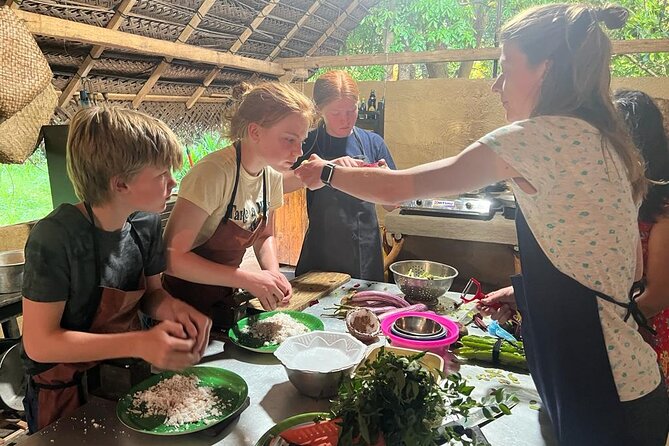
Come hungry, leave with curry skills. Sajee’s Place Cooking Class offers a friendly, hands-on way to learn Sri Lankan food in Sigiriya. Sajeeva, known as Sajee, and his wife Suzy explain the spices, cooking methods, and small steps that turn ordinary vegetables, rice, lentils, chicken, or fish into a full Sri Lankan meal. I especially like the chance to make fresh coconut milk and prepare several curries instead of watching a single demonstration.
The other strong point is the personal teaching. Sajee and Suzy adjust explanations for beginners, discuss spice levels, and show you how to repeat the dishes at home. The main consideration is time: three hours can feel long if you want only a quick meal, and the number of curries may mean a busy session rather than a relaxed restaurant-style lesson.
In This Review
- Key points at a glance
- What makes this Sigiriya cooking class worthwhile
- Meeting Sajee and Suzy at No 92
- Learning Sri Lankan spices by smell and taste
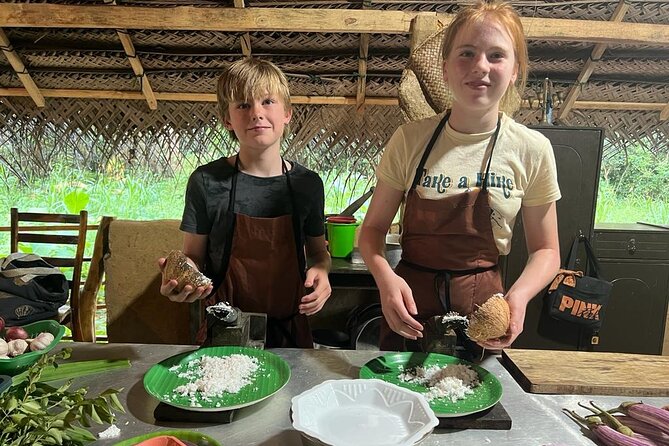
- Making coconut milk from fresh coconut
- Cooking the curry spread
- Coconut sambol and the role of side dishes
- Sitting down to eat what you made
- Why the small group matters
- Is $35 good value?
- Who should book this experience?
- Booking, timing, and cancellation
- Should you book Sajee’s Place?
- FAQ
- Where does Sajee’s Place Cooking Class take place?
- How long does the cooking class last?
- How much does the class cost?
- What food will I prepare?
- Is the class suitable for beginners and families?
- How many people can join the class?
- Can I cancel for a full refund?
Key points at a glance
- Make coconut milk from scratch: This practical step gives the class a genuine Sri Lankan home-cooking feel.
- Cook several dishes in one session: Depending on the menu, you may prepare six or seven curries, rice, lentils, and accompaniments.
- Learn the purpose of spices: Sajee explains their origins, benefits, aromas, and everyday use.
- A welcoming couple leads the class: Sajee and Suzy are praised for their warmth and careful instruction.
- Good for families and beginners: Children and teenagers can take part in the hands-on preparation.
- Small-group setting: The class accepts a maximum of 10 people, keeping the lesson more personal than a large demonstration.
What makes this Sigiriya cooking class worthwhile
Sigiriya is famous for its ancient rock fortress, but food gives you another way to understand the area. Sri Lankan cooking is built around layers of spice, coconut, rice, lentils, and seasonal produce. A cooking class lets you see how these ingredients work together instead of meeting them only as finished dishes.
At Sajee’s Place, you are not simply handed a plate of curry. You help prepare the meal, smell the spices as they are introduced, and follow the process from raw ingredients to lunch or dinner. That makes the class useful for anyone who wants to take a piece of Sri Lanka home.
The price is $35 per person. For about three hours of instruction, food, and a shared meal, that is a fair price, especially if the session includes six or seven curries. You are paying for more than a recipe sheet. You get guidance from Sajee and Suzy, a chance to ask questions, and a full meal at the end.
The value is strongest if you enjoy food and want to learn. If you only want to eat, a local restaurant will be faster. This class makes sense because the meal is part of the lesson.
More Sri Lankan cooking classes:
- Organic cooking class sigiriya (kumara & family)
★ 5.0 · 650 reviews - Cooking Class: Sajee’s Place Cooking Class sigiriya
★ 5.0 · 117 reviews - Organic Cooking Class sigiriya home Kitchen(Kumara & family)
★ 5.0 · 116 reviews
Meeting Sajee and Suzy at No 92
The class begins at Sajee’s Place Cooking Class, No 92 Fourth Mile Post, Sigiriya 21120. The activity ends at the same location. It is near public transportation, and the maximum group size is 10 people.
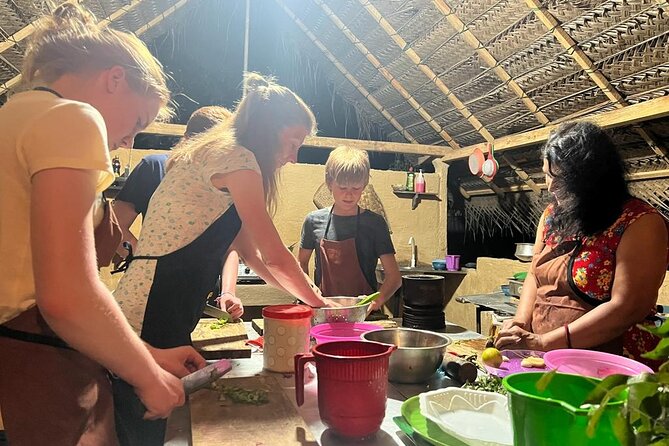
The setting appears to be one of the experience’s best features. The class is described as taking place in a calm environment, which matters when you are working with several pots, ingredients, and new techniques. A quiet setting also gives you more room to focus on the smells and textures of the food.
Sajee and Suzy lead the session together. Sajee handles much of the explanation, while both hosts help with preparation and cooking. Their friendly approach suits first-time cooks, and the teaching is aimed at people who may not know Sri Lankan food at all.
You should contact the hosts through WhatsApp or by direct call if you need more information before booking. The listed WhatsApp number is 0094767419738. Confirmation is provided when you book.
Learning Sri Lankan spices by smell and taste
Spices are the heart of the class. Instead of treating them as a mysterious mix, Sajee explains what they are, where they come from, and how to use them. You get to smell and taste them directly, which is much more helpful than reading a list of ingredients.
This matters because Sri Lankan curry is not defined by one fixed powder. The balance changes with the dish, the vegetables, the protein, and the cook. You learn why one curry may taste mild and creamy while another has a sharper, warmer flavor.
The class also explains the benefits associated with different spices. You should treat this as cultural and culinary information, not medical advice, but it adds useful context to the lesson. You begin to understand how everyday Sri Lankan cooking uses ingredients that are valued for both flavor and traditional household benefits.
I like this part because it helps you cook at home without needing exact measurements for every situation. The important lesson is how to judge aroma, quantity, and balance. That is a more lasting skill than simply copying a recipe once.
Making coconut milk from fresh coconut
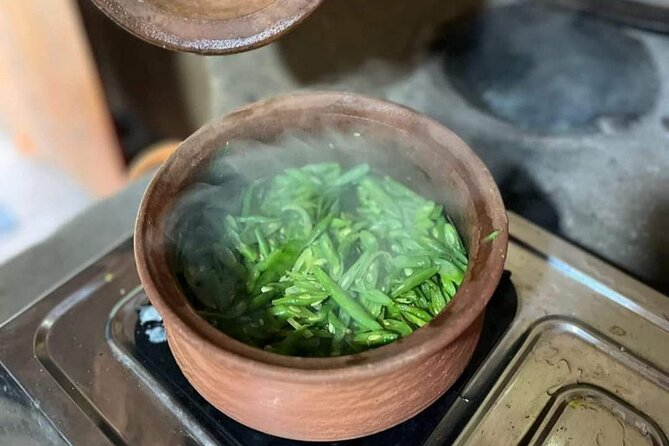
One of the most memorable activities is making coconut milk yourself. This is a small but important detail because coconut milk gives many Sri Lankan curries their body and gentle sweetness.
The process also shows how much work can sit behind a simple bowl of curry. You begin with the coconut, prepare it, and turn it into an ingredient for the meal. That connection between raw product and finished dish gives the class a home-kitchen character.
Fresh coconut milk also helps explain the difference between Sri Lankan cooking and recipes that rely on packaged ingredients. You learn how coconut is used as part of the cooking method, not just added at the end for flavor.
For people who cook at home, this is one of the most useful takeaways. You may not make coconut milk from scratch every week, but knowing the traditional method gives you a clearer idea of how the dish should taste and feel.
A few more tours worth weighing up
- Organic Cooking Class Sigiriya TASTY TASKS
★ 5.0 · 17 reviews - Sigiriya Rock Climb, Village Tour+Cooking Class & Elephant Safari
★ 5.0 · 9 reviews - Ella: Traditional Sri Lankan Cooking Class
★ 4.9 · 788 reviews - Sri Lanka Cooking Class with Granny
★ 5.0 · 587 reviews
Cooking the curry spread
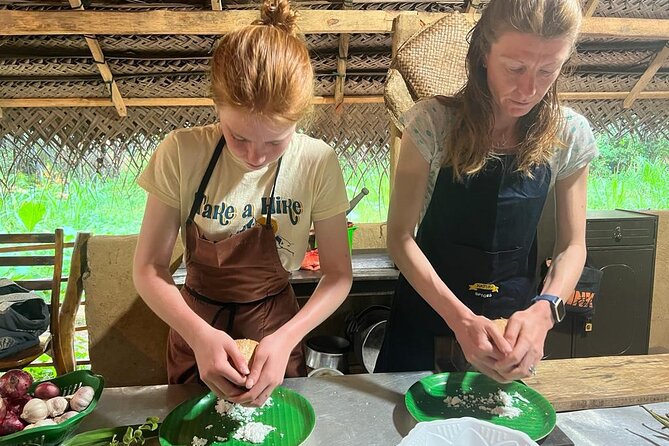
The menu centers on Sri Lankan rice and curry. The exact selection can change with the season and the preferences of the group, but the class commonly includes seasonal vegetable curries, coconut sambol, and either chicken or fish curry.
Several sessions have included six or seven curries. Dishes described by participants include potato, carrot, lentil, pumpkin, chicken, and a vegetable similar to zucchini or beans. The meal can be mostly vegetarian, with one meat or fish dish added according to the group.
That mix is a real strength. Sri Lankan rice and curry is not one curry poured over rice. It is a collection of smaller dishes, each with a different texture, color, and spice balance. You may have a creamy vegetable dish beside a drier curry, lentils, sambol, and rice.
The cooking is hands-on. You may wash rice and lentils, prepare vegetables, work with spices, and help with each stage of the recipes. Families can divide up the jobs, which gives children and teenagers something useful to do instead of asking them to wait for the food.
The drawback is that seven curries require organization. You should expect a busy class with several tasks happening during the same session. If you prefer a slow, quiet lesson focused on one dish, this may feel like too much. If you want a broad introduction to Sri Lankan cooking, the variety is a major benefit.
Coconut sambol and the role of side dishes
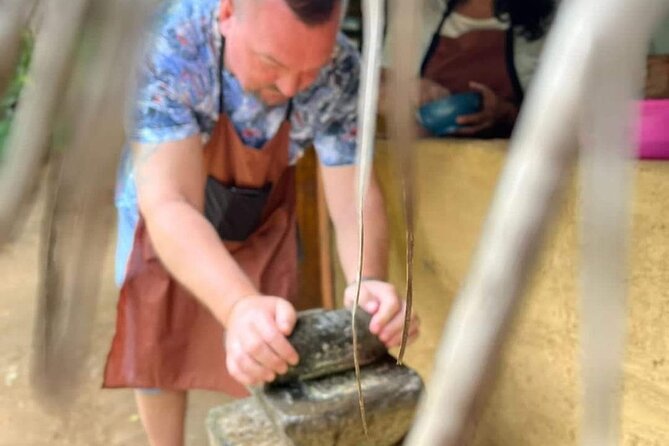
Coconut sambol may look simple, but it shows how Sri Lankan meals gain contrast. The coconut brings texture and sweetness, while the seasoning adds sharper flavor. It is the kind of side dish that changes the experience of rice and curry without requiring a long cooking time.
The class uses side dishes to show that a Sri Lankan meal is about balance. A plate may include soft rice, creamy lentils, vegetables, a richer chicken or fish curry, and a fresh or spicy accompaniment. Each part has a job.
This is also where spice preferences matter. The hosts take spiciness into account, along with vegetarian and meat-eating preferences. You should tell them about your needs when arranging the class so the meal can suit the group.
The menu is not presented as a fixed restaurant tasting. Seasonal vegetables and group preferences can shape what you cook. That makes the experience more personal, though it also means you should not book expecting one exact list of dishes.
Sitting down to eat what you made
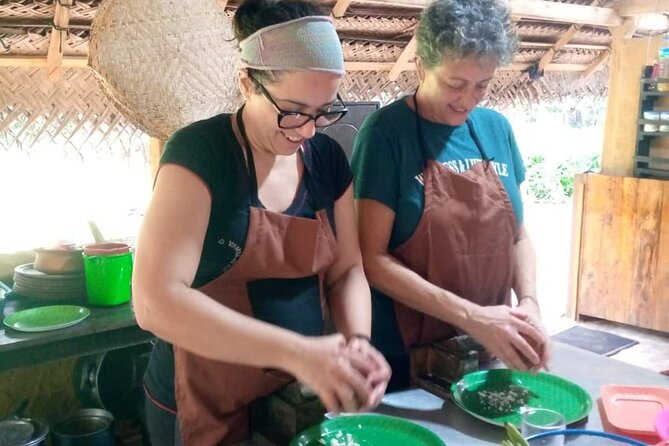
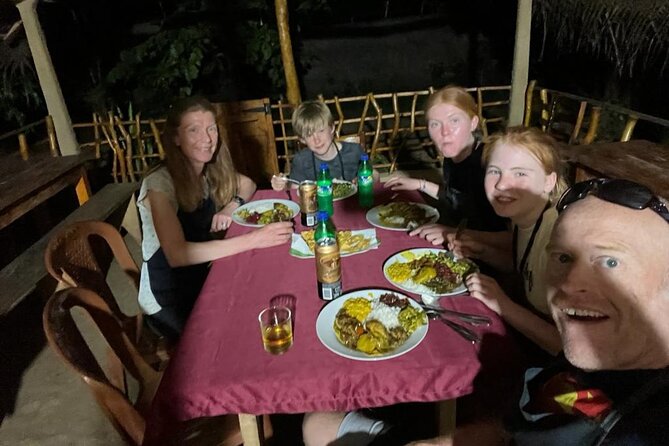
After the cooking, you share the meal at the same location. This final stage is more than a reward for finishing the work. It gives you a chance to compare the dishes and see how the separate components fit together.
You also taste the food with a better understanding of what went into it. The aroma of the spices, the texture of the lentils, and the use of coconut all make more sense after you have prepared them yourself.
The hosts leave time for the meal, but the class lasts about three hours, so do not expect an all-day cooking workshop. The pace is designed to cover several dishes and end with a proper meal within one session.
I would plan this as a main activity for the morning or evening rather than squeezing it between several sightseeing stops. You will get more from it if you are not watching the clock.
Why the small group matters
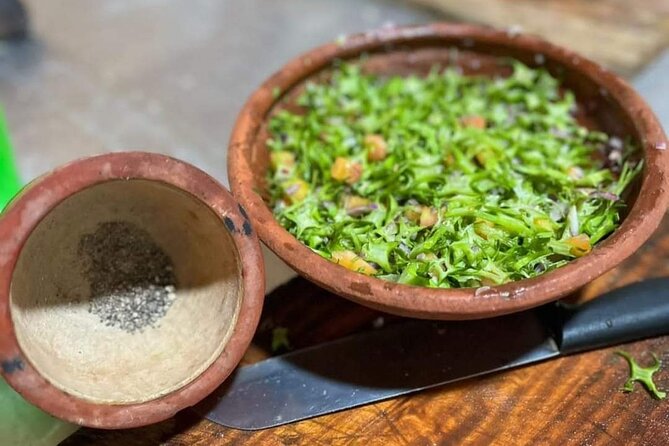
The class has a maximum of 10 participants. That is not a private lesson, but it is small enough to support questions and practical help.
A smaller group matters most when you are learning unfamiliar cooking methods. You can see what Sajee is doing, ask why a spice is added at a certain time, and get help with preparation. The class may feel especially comfortable for families or couples who want a shared activity.
The size can vary. One session had four participants plus Sajee and Suzy, while the official limit is 10. A smaller group will usually feel more personal, while a full group may mean sharing tasks more widely.
The hosts also seem comfortable teaching mixed groups. Vegetarian diners, meat eaters, and people with different spice preferences can all take part, provided their needs are discussed ahead of time.
Is $35 good value?
At $35 per person, the class sits in a reasonable range for a three-hour food experience. The price includes instruction, ingredients, preparation, and the meal you cook. You also get practical knowledge that can be reused after your holiday.
The value improves if you eat a large selection of dishes. Preparing seven curries, rice, lentils, coconut sambol, and coconut milk gives you a broad taste of Sri Lankan food in one sitting.
It is less compelling if you are not interested in cooking. The class is not designed as a quick food stop or a simple tasting. You will spend time washing, chopping, seasoning, and waiting for dishes to cook.
Group discounts are available, which may help families or larger parties. Because the class maximum is 10 people, larger groups should confirm the arrangement before booking.
Who should book this experience?
I would recommend Sajee’s Place to first-time visitors who want a friendly introduction to Sri Lankan food. You do not need advanced cooking skills. The instruction is aimed at beginners, and the recipes are intended to be repeatable at home.
It is also a good choice for families. Children and teenagers can take part in the preparation, and the hands-on format gives everyone a role. The class has worked well for families with children aged 10 and 13, according to the information provided.
Vegetarians should find plenty to enjoy because the meal can be mostly or entirely focused on vegetable dishes, depending on the group. Meat and fish eaters can also have a chicken or fish curry.
You may want to choose another activity if you dislike group instruction, have very limited time, or want a polished restaurant meal without preparation. This is a working kitchen experience, not a passive food show.
Booking, timing, and cancellation
The class lasts approximately three hours and returns to the starting point. It accepts mobile tickets, and confirmation is provided at booking.
Free cancellation is available if you cancel at least 24 hours before the local start time. Cancellations within 24 hours are not refunded, and changes made inside that period are not accepted.
For questions, you can search for Sajee’s Place Cooking Class Sigiriya on Google or use the listed WhatsApp number. It is sensible to confirm the meeting details, preferred menu, and dietary needs before the day of the class.
Should you book Sajee’s Place?
Book it if you want to understand how Sri Lankan rice and curry is built, not just taste it. The chance to make coconut milk, prepare several curries, smell and taste the spices, and eat your own meal gives the experience real substance.
I especially recommend it for families, beginner cooks, vegetarians, and anyone staying in Sigiriya for more than a single rushed night. The one caution is the pace. Six or seven curries in roughly three hours is ambitious, so expect an active session.
At $35, Sajee’s Place offers good value for a substantial meal and a practical lesson led by Sajee and Suzy. If you leave with even one curry you can recreate at home, the class has done more for you than another restaurant dinner.
FAQ
Where does Sajee’s Place Cooking Class take place?
The class starts and ends at Sajee’s Place Cooking Class, No 92 Fourth Mile Post, Sigiriya 21120, Sri Lanka.
How long does the cooking class last?
The experience lasts approximately three hours.
How much does the class cost?
The listed price is $35 per person. Group discounts are available.
What food will I prepare?
The class includes seasonal vegetable curries, coconut sambol, and either a chicken or fish curry. Sessions may also include rice, lentils, and several additional curries.
Is the class suitable for beginners and families?
Yes. The instruction is designed for cooking beginners, and children and teenagers can take part in the hands-on preparation.
How many people can join the class?
The activity has a maximum of 10 participants.
Can I cancel for a full refund?
Yes, if you cancel at least 24 hours before the experience start time. Cancellations made less than 24 hours before the start time are not refunded.
Just added around Sigiriya
- Tour to Dambulla Cave, Sigiriya and Pidurangala Rock from Kandy★ 5.0 · 3 reviews
- Private Day tour from Kandy to Sigiriya, Dambulla & Pidurangala★ 5.0 · 3 reviews
- Day Tour Kandy to Sigiriya with Dambulla Cave Temple Excursion★ 5.0 · 3 reviews
- Colombo: Sigiriya Rock Fortress & Dambulla Cave Temple Tour★ 4.3 · 3 reviews
- Private day tour to Sigiriya and Dambulla from Colombo★ 5.0 · 3 reviews
- Full Day Tour to Sigiriya & Dambulla from Negombo★ 5.0 · 3 reviews
- From Colombo: Sigiriya and Dambulla Full-Day Private Tour★ 3.4 · 3 reviews
- Half Day – Minneriya National Park Safari Tour From Habarana/Sigiriya★ 3.5 · 3 reviews
Cooking Classes, compared.


Organic cooking class sigiriya (kumara & family)
Read our review →


Sri Lankan Cooking Class with Neranji at Homestay
Read our review →
Browse the lists this tour appears in