
Reviewed · COOKING CLASSES
Hands-On Cooking Class in Anuradhapura: Cook Like a Local
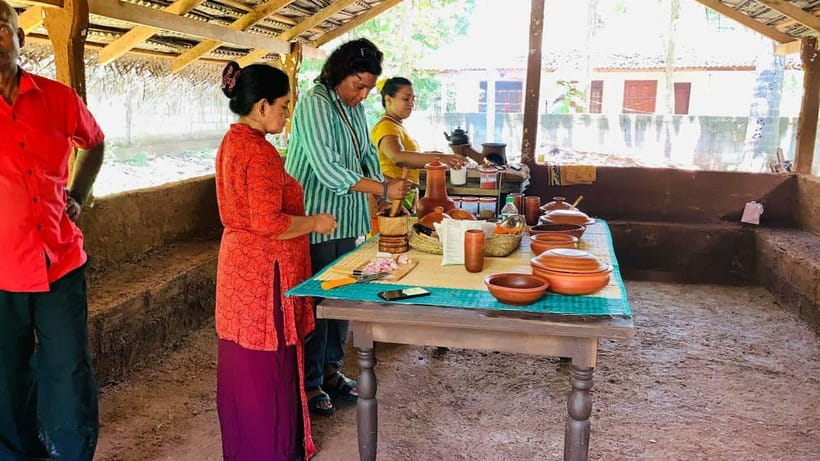
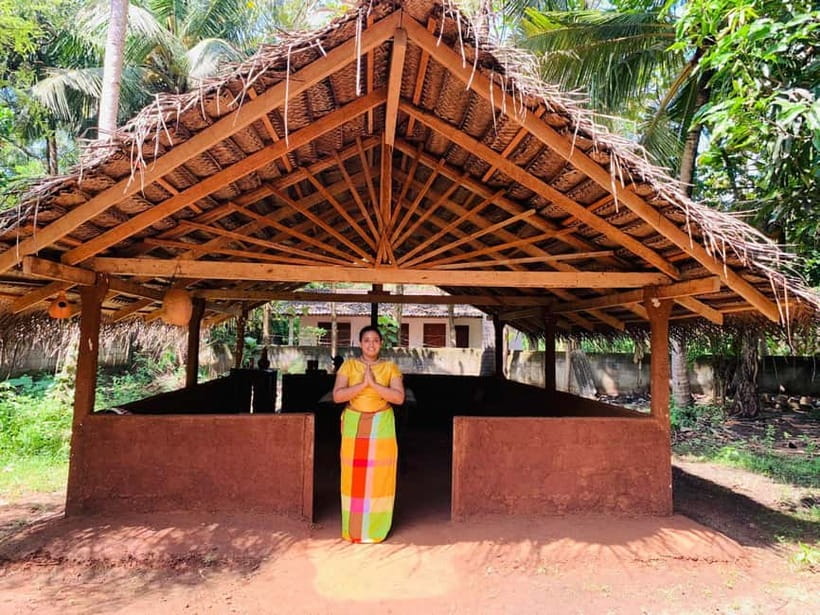
Sri Lanka tastes best from a wood fire. This three-hour cooking class in Anuradhapura takes you into a clay kitchen beneath a coconut-leaf shelter, where you prepare a full Sri Lankan meal with traditional tools and local ingredients. It is less a polished demonstration and more a practical lesson in how village cooking works.
I like the chance to grind spices on a miris gala and scrape coconut with a hiramanaya. I also like the menu, especially the ambarella curry, banana blossom dish, lake fish curry, coconut sambal, and pumpkin curry. These are not generic restaurant staples. They show you how fruit, flowers, greens, fish, and coconut become everyday Sri Lankan food.
The main consideration is comfort. You will cook near an open fire in a rustic outdoor setting, and mosquitoes may be present, so bring repellent. The class is private, English-speaking, and wheelchair accessible, but the experience is intentionally simple rather than sleek or air-conditioned.
In This Review
- Five things to know before you book
- Arriving at the Rajarata clay kitchen
- Learning the tools before the recipes
- Cooking with firewood, clay pots, and coconut shells
- The Sri Lankan menu you will prepare
- Rice, the daily foundation
- Ambarella curry
- Banana blossom mallum
- Lake fish curry
- Kathurumurunga mallum
- Coconut sambal
- Pumpkin curry
- Finishing with curd, treacle, and fruit
- What the $40 price gets you
- Who will enjoy this class most
- Timing, cancellation, and practical planning
- Should you book the Rajarata cooking class?
- FAQ
- Where does the cooking class take place?
- How long does the experience last?
- How much does the class cost?
- What food will I prepare?
- Which traditional cooking tools will I use?
- Is the class conducted in English?
- Can I cancel or pay later?
Five things to know before you book
- The cooking happens in a clay house kitchen: A coconut-leaf roof, natural surroundings, and old-style tools give the lesson a genuine village feel.
- You prepare the food yourself: This is hands-on from spice grinding to cooking over a firewood stove, not a sit-back cooking show.
- The menu goes beyond curry and rice: Ambarella, banana blossom, kathurumurunga greens, lake fish, pumpkin, and coconut all appear in the meal.
- You can pick a coconut from the tree: The activity connects the ingredient on your plate with the work needed to prepare it.
- The meal ends with curd and treacle: Fresh curd, sweet treacle, and ripe papaya provide a cool finish after the spicy dishes.
- The price reflects the personal format: At $40 per person for three hours, the value is strongest if you want cultural context and active participation, not just lunch.
Arriving at the Rajarata clay kitchen
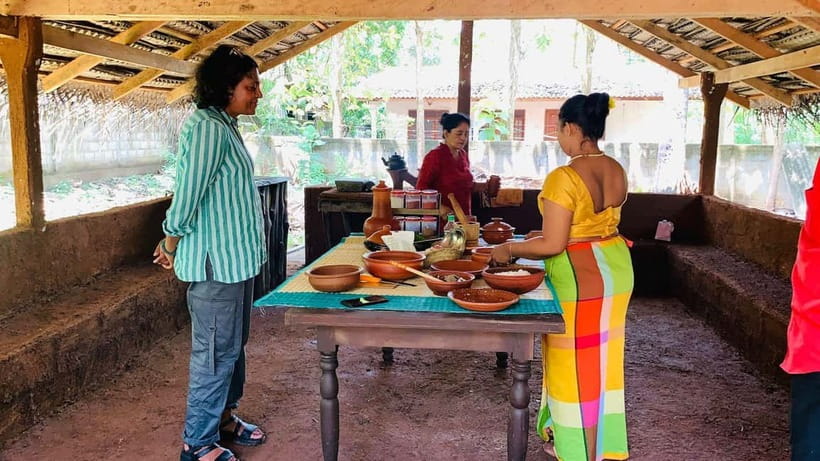
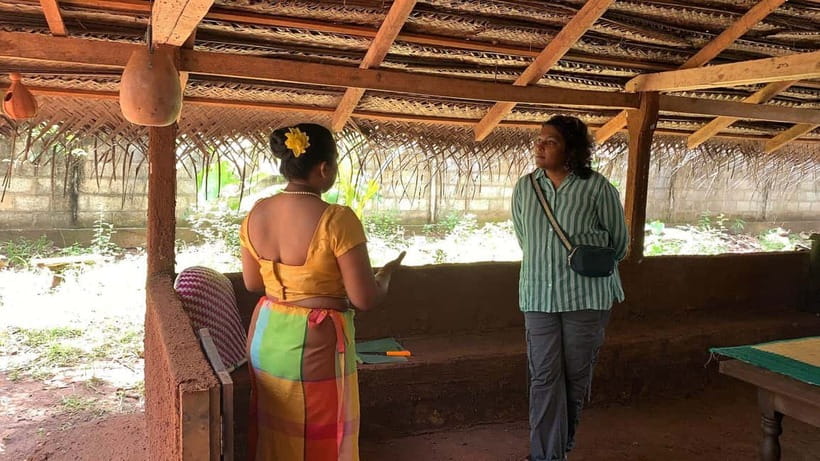
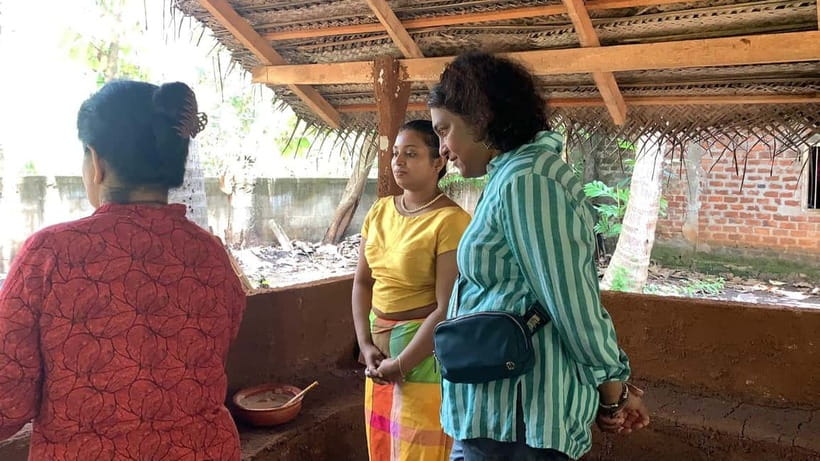
The meeting point is GK Immersions, described on Google Maps as GK Immersions, Best Things to Do Provider in Anuradhapura. The cooking takes place at a clay house kitchen covered by a traditional coconut-leaf shelter. That setting matters. You are not simply being shown a recipe in a modern studio. The tools, fire, roof, and surroundings help explain how food has long been prepared in village homes around Rajarata.
Rajarata refers to the ancient north central kingdom associated with Anuradhapura. The class uses that regional identity as its backdrop, connecting the food to older household customs rather than treating Sri Lankan cooking as a list of exotic ingredients.
You receive a refreshing local drink at the start. It is a small touch, but useful in Anuradhapura’s warm climate and a pleasant way to begin before the practical work starts.
The setting is likely to appeal to you if you value atmosphere as much as food. You should not expect a formal kitchen, individual workstations, or the kind of polished production found in a culinary school. The charm comes from the rustic surroundings and the chance to handle the same types of tools used in traditional home cooking.
More Sri Lankan cooking classes:
- Ella: Traditional Sri Lankan Cooking Class
★ 4.9 · 788 reviews - Organic cooking class sigiriya (kumara & family)
★ 5.0 · 650 reviews - Sri Lanka Cooking Class with Granny
★ 5.0 · 587 reviews
Learning the tools before the recipes
The best part of the class is that the tools are not merely displayed. You use them.
First comes the miris gala, a traditional stone grinder used for crushing spices. Grinding by hand releases the scent of the spices in a way that packaged curry powder cannot match. You feel the texture change under the stone and begin to understand why freshly prepared spice mixtures have such a strong smell.
The class also introduces the hiramanaya, a coconut scraper. Fresh coconut is a basic part of many Sri Lankan dishes, and scraping it by hand gives you a direct sense of the work behind the cuisine. It is a simple technique, but it can be surprisingly satisfying once you find the right rhythm.
You also get the chance to pick your own coconut straight from the tree. That links the whole process together: coconut begins as a crop, becomes an ingredient, and then turns into sambal, curry, or a creamy base for fish. For children and first-time visitors, this may be one of the most memorable parts of the session.
These tools also add useful cultural context. Sri Lankan cooking depends on repeated small actions: grinding, scraping, pounding, stirring, and balancing heat. The class gives you a better feel for that process than a quick tasting ever could.
Cooking with firewood, clay pots, and coconut shells
After the tools come into play, you cook over a traditional wood-fired stove. Coconut-shell firewood helps fuel the fire, and clay pots are used for preparing the dishes.
A wood fire changes the pace of cooking. You have to pay attention to heat, timing, and the order in which ingredients go into the pot. The smoky aroma becomes part of the meal, especially when compared with food prepared on a modern electric or gas stove.
This is also where the class earns its hands-on label. You are not just stirring a finished curry for a photograph. You take part in preparing several dishes and see how individual ingredients build toward a shared meal.
The open-fire format has a practical downside. Smoke, heat, and outdoor conditions are part of the experience, so wear comfortable clothes and shoes you do not mind using around a rustic kitchen. Mosquito repellent is a particularly sensible addition. One useful firsthand tip from the class feedback was simply to bring it.
The cooking lasts about three hours, giving enough time for the techniques and meal to feel connected. It is not a rushed food stop. Still, the number of dishes means the experience is about learning a broad range of preparations rather than mastering one recipe in great depth.
The Sri Lankan menu you will prepare
The meal includes rice and several vegetable, fish, and coconut-based dishes. Together, they show how a Sri Lankan table works: rice provides the foundation, curries bring different textures and levels of spice, and sambal or greens add contrast.
A few more tours worth weighing up
- Galle: Traditional Gems & Jewellery Workshop with Transfers
★ 4.9 · 539 reviews - Kandy Village Cooking Class
★ 5.0 · 536 reviews - Sea waves sri lankan cooking class
★ 5.0 · 467 reviews - Ella: Sri Lankan Cooking Class with Neranji at Homestay
★ 5.0 · 276 reviews
Rice, the daily foundation
You may prepare yellow rice or white rice. White rice is soft and plain, allowing the curries to take the lead. Yellow rice brings color and seasoning while still serving the same basic role at the center of the meal.
Rice may seem ordinary, but it is an important part of understanding the cuisine. Sri Lankan food is not built around one large main course. Instead, rice gives you a base for tasting several small portions together.
Ambarella curry
Ambarella is a tropical fruit with a sharp, tangy flavor. In this class, it is treated as a savory curry ingredient rather than a sweet snack.
This dish is a good example of the class’s regional character. You learn that Sri Lankan cooking does not divide ingredients neatly into fruit for dessert and vegetables for dinner. The ambarella curry brings acidity and a bright edge to the meal, helping balance heavier coconut-based dishes.
Banana blossom mallum
Banana blossom is the flower of the banana plant. Its layered texture and earthy taste make it very different from the sweet banana most people know.
Here, the blossom becomes a mallum, a preparation that combines finely handled greens or vegetables with coconut and spices. The banana blossom dish gives you a useful lesson in making food from parts of a plant that are often discarded elsewhere.
Lake fish curry
The lake fish curry brings local freshwater flavor to the table. It is cooked with spices and creamy coconut milk, creating one of the meal’s more substantial dishes.
This curry also connects the food to the water sources of the Rajarata area. The class describes the fish as locally caught, and the preparation gives it a place beside the vegetable curries rather than treating it as a separate Western-style main course.
Kathurumurunga mallum
Kathurumurunga is a local leafy green. Mixed gently with coconut and spices, it becomes a light mallum with a soft texture and fresh taste.
This dish is useful if you want to understand the balance in a Sri Lankan meal. Not every item is rich or fiery. Greens and coconut provide a milder counterpoint to sambal and more heavily spiced curries.
Coconut sambal
Coconut sambal is simple in its ingredients but strong in character. Freshly grated coconut is mixed with red chili, lime, and onion.
The lime cuts through the heat, while the coconut gives the sambal body. You will probably notice how quickly a few fresh ingredients can change the flavor of plain rice or a mild curry.
Pumpkin curry
Pumpkin curry is creamy, gently spiced, and slightly sweet. It offers familiar comfort while still fitting the broader Sri Lankan pattern of seasoning vegetables with coconut and spices.
I like its place on the menu because it prevents the meal from becoming a test of heat tolerance. You get sharp ambarella, spicy sambal, savory fish, leafy greens, and soft pumpkin, all with different roles.
Finishing with curd, treacle, and fruit
The meal ends with fresh curd and treacle, along with ripe papaya. Curd is cool and mild, while treacle adds deep sweetness. Papaya keeps the final course light and fresh.
This is a fitting ending after a meal cooked over firewood. The dessert is not elaborate, but it continues the focus on local ingredients and everyday food traditions. It also gives you a break from the spices without sending you into a completely separate style of cuisine.
The final meal is one of the class’s strongest rewards. You can taste the dishes together and see why the earlier work mattered. The aroma from the fire, the texture of freshly grated coconut, and the balance between hot, sour, sweet, and creamy flavors all make more sense once you have helped prepare them.
What the $40 price gets you
At $40 per person, the class is priced above a simple restaurant meal in Anuradhapura. The comparison is not quite fair, though. You are paying for three hours of instruction, ingredients, a private group format, use of traditional tools, a full meal, and a cultural activity in addition to the food.
The value is good for someone who wants an active experience. The class includes the welcome drink, rice, lake fish curry, ambarella curry, kathurumurunga mallum, coconut sambal, pumpkin curry, banana blossom mallum, and the curd, treacle, and fruit finish.
The value is less clear if you only want to eat local food cheaply. Anuradhapura has other ways to sample Sri Lankan dishes, and this class takes a sizeable part of a day. You should book it for the process as much as the plate.
The private-group arrangement improves the experience for couples, families, or friends who want to ask questions and work at their own pace. The instructor speaks English, which is important when learning unfamiliar ingredients and techniques.
Who will enjoy this class most
I would recommend this experience to food lovers, families, and anyone looking for cultural things to do in Anuradhapura beyond the ancient sites. You do not need to be an experienced cook. The emphasis is on learning by doing, and the techniques are introduced as practical household skills.
It also suits people who want photographs with real context. The clay kitchen, coconut-leaf shelter, stone grinder, coconut tree, firewood stove, and finished dishes all provide natural subjects. Still, bring your camera as a secondary concern. The class is most rewarding when you pay attention to the cooking.
You may want to choose another activity if you dislike smoke, outdoor heat, rustic tools, or spicy food. The menu contains several chili and spice-based dishes, although the variety includes mild, sweet, sour, and creamy flavors too.
The wheelchair-accessible format is a useful feature, but the information provided does not describe the exact layout or surface conditions at the clay kitchen. If you need specific access details, contact GK Immersions before booking.
Timing, cancellation, and practical planning
The activity lasts three hours, and starting times depend on availability. That makes it easy to fit around sightseeing in Anuradhapura, but you should check the available time before setting your day around it.
You can cancel up to 24 hours in advance for a full refund. A reserve-now, pay-later option is also available, so you do not need to pay at the time of booking.
Wear clothes suited to cooking near a fire and bring mosquito repellent. English is the listed language, and the group is private. Since the class takes place at the clay house kitchen, confirm the meeting point on Google Maps before setting out.
Should you book the Rajarata cooking class?
Book it if you want to understand Sri Lankan food through your hands, not just your appetite. The traditional tools, open-fire cooking, fresh coconut, and unusual produce make this more memorable than a standard restaurant meal or a short kitchen demonstration.
The strongest reason to go is the combination of instruction and setting. You learn how the dishes are prepared while also seeing how a village kitchen works. The menu is broad, and the final meal gives you a satisfying payoff.
Skip it if you want a fast, polished, air-conditioned activity or if three hours of cooking feels too long. For everyone else, $40 is a fair price for a private cultural experience that teaches real techniques and feeds you well afterward.
FAQ
Where does the cooking class take place?
The class takes place at GK Immersions in Anuradhapura, in a clay house kitchen shaded by a traditional coconut-leaf shelter. You can find the meeting point on Google Maps under GK Immersions, Best Things to Do Provider in Anuradhapura.
How long does the experience last?
The cooking class lasts three hours. Available starting times vary, so check the schedule when booking.
How much does the class cost?
The price is $40 per person.
What food will I prepare?
The menu includes yellow rice or white rice, lake fish curry, ambarella curry, kathurumurunga mallum, coconut sambal, pumpkin curry, and banana blossom mallum. Dessert includes fresh curd with treacle and ripe papaya.
Which traditional cooking tools will I use?
You can grind spices with a miris gala, scrape coconut with a hiramanaya, and cook with clay pots on a traditional wood-fired stove. You can also pick a coconut straight from the tree.
Is the class conducted in English?
Yes. The listed instructor language is English.
Can I cancel or pay later?
You can cancel up to 24 hours in advance for a full refund. A reserve-now, pay-later option is also available.
Just added around Anuradhapura
- Minneriya: Minneriya National Park Private Jeep Safari★ 4.4 · 3 reviews
- From Kandy: Anuradhapura Day Trip with Lunch★ 3.2 · 3 reviews
- From Dambulla: Minneriya National Park wild Jeep Safari★ 5.0 · 3 reviews
- From Colombo: Galle & Mirissa Private All Inclusive Day Tour★ 5.0 · 3 reviews
- Polonnaruwa Day Tour from Kandy (Private )★ 5.0 · 3 reviews
- Wild Elephant Safari in Minneriya National Park★ 3.5 · 3 reviews
- Minneriya National Park Safari | Jeep with Tickets★ 5.0 · 3 reviews
- Half Day – Minneriya National Park Safari Tour From Habarana/Sigiriya★ 3.5 · 3 reviews
Cooking Classes, compared.


Organic cooking class sigiriya (kumara & family)
Read our review →


Sri Lankan Cooking Class with Neranji at Homestay
Read our review →

Browse the lists this tour appears in