
Reviewed · COOKING CLASSES
Cooking Classes in Sri Lanka
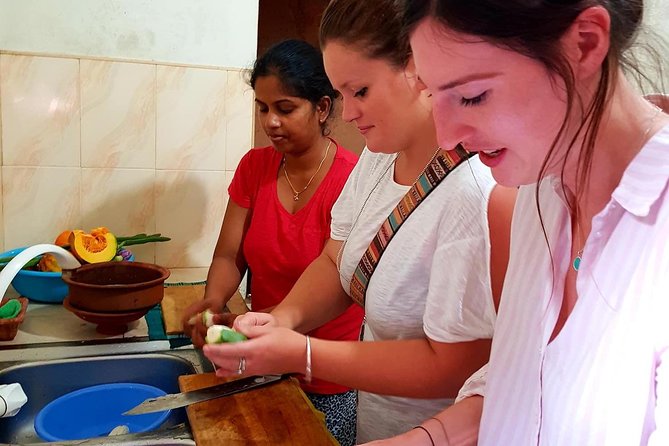
Come hungry, leave with new kitchen skills. This private cooking class in Negombo takes you into a family home, where you prepare curry, rice, coconut milk, sambal, and dessert before sitting down to eat. I like the hands-on format, especially the chance to cut and chop the vegetables yourself, and I like that the class teaches everyday methods instead of handing you a recipe and sending you on your way.
The welcome cup of tea or coffee sets an easy tone, and the family setting gives the meal a personal touch. I also appreciate the choice between vegetarian and non-vegetarian cooking, plus the optional market visit. The main point to consider is that the experience lasts about three hours, so it is a focused introduction rather than a full culinary course with many different dishes.
In This Review
- Key things to know before booking
- Why this Negombo class feels different
- Starting with tea, coffee, and a family welcome
- Learning how Sri Lankan coconut milk is made
- Choosing vegetables and building your curry
- Spices, herbs, and the logic of Sri Lankan flavor
- Cooking the meal, then eating what you made
- The optional market visit: worth the extra time?
- Is $45 a fair price?
- Who will enjoy this experience most?
- Practical details for planning your day
- Small drawbacks to keep in mind
- Should you book the Negombo cooking class?
- FAQ
- Where does the Sri Lankan cooking class take place?
- How long does the cooking class last?
- Is this a private activity?
- What happens when I arrive?
- Will I learn how to make coconut milk?
- Can I choose the vegetables for the curry?
- Does the class include a market visit?
- Is the class suitable for vegetarians?
- Is dinner included?
- Can I cancel for a full refund?
Key things to know before booking
- You cook in a family home: This is not a restaurant demonstration. You prepare food in a local household and eat around the host’s table.
- Coconut milk is part of the lesson: You learn how to make it, an important part of many Sri Lankan curries and side dishes.
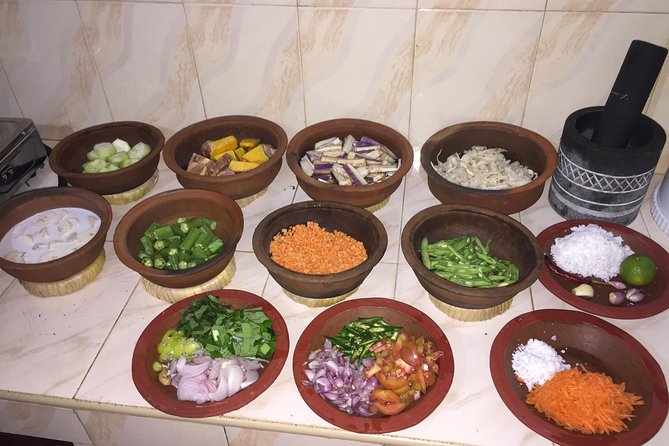
- You choose and prepare vegetables: The class includes selecting vegetables for curry, then cutting and chopping them yourself.
- Spices and herbs get proper attention: You receive an introduction to Sri Lankan seasonings and how they are used in cooking.
- Dinner and dessert are included: You eat the dishes you helped prepare, followed by a traditional dessert.
- A market visit is optional: You can upgrade to visit a market, select vegetables, and hear more about local spices and herbs.
Why this Negombo class feels different
Many cooking classes are built around watching someone else work. This one puts you in the kitchen. You begin with a welcome drink, then move into the practical work of making coconut milk, selecting vegetables, chopping ingredients, and cooking the dishes.
That difference matters. Sri Lankan food can look simple on the plate, but its flavor depends on small choices: how ingredients are cut, when spices are added, and how coconut milk is prepared. You get a better sense of those choices when you handle the ingredients yourself.
I also like the private format. Only your group takes part, so the pace can feel more relaxed than a large class. You can ask questions as they come up, and you are not trying to hear instructions over a crowd. The experience is listed at about three hours, which gives enough time to cook and eat without turning dinner into an all-day commitment.
The setting at Andiambalama, Katunayake, in the Negombo area, also makes this a practical choice if you are staying nearby or using Negombo as your first or last stop in Sri Lanka. The meeting point is close to public transportation, and the activity ends back there.
More Sri Lankan cooking classes:
- Cooking Class and Market Visit in Negombo
★ 5.0 · 4 reviews - Ella: Traditional Sri Lankan Cooking Class
★ 4.9 · 788 reviews - Organic cooking class sigiriya (kumara & family)
★ 5.0 · 650 reviews
Starting with tea, coffee, and a family welcome
The class begins with tea or coffee. That sounds like a small detail, but it helps set the mood. You are not rushed straight into a work station or given a long formal speech. You arrive, settle in, and meet the family before the cooking begins.
The family-home setting is the heart of the experience. You get a look at how food preparation works in a local household, rather than seeing a polished restaurant kitchen designed for tourists. That does not mean the class is rough or disorganized. It simply feels more personal and less staged.
One useful detail is the flexibility shown by the host. A booking can sometimes be accepted with less than 24 hours notice, although you should not rely on last-minute availability. The class is normally booked well ahead, with an average lead time of about 36 days. If your dates are fixed, booking early is sensible.
Learning how Sri Lankan coconut milk is made
The first cooking lesson focuses on coconut milk. This is a strong choice because coconut milk is not just an extra ingredient in Sri Lankan food. It helps form the base of many curries and gives dishes their familiar creamy texture.
You learn the process rather than simply being handed a can or bowl of prepared milk. That makes the lesson more useful if you want to recreate the food at home. The class does not promise a printed recipe, and that is part of its appeal. You learn by watching, handling ingredients, and following the host’s method.
Still, you should know what this means. If you prefer exact measurements, numbered instructions, and a recipe card for every dish, this may feel less precise. The class is built around home cooking and direct teaching, not a technical cooking-school format.
Choosing vegetables and building your curry
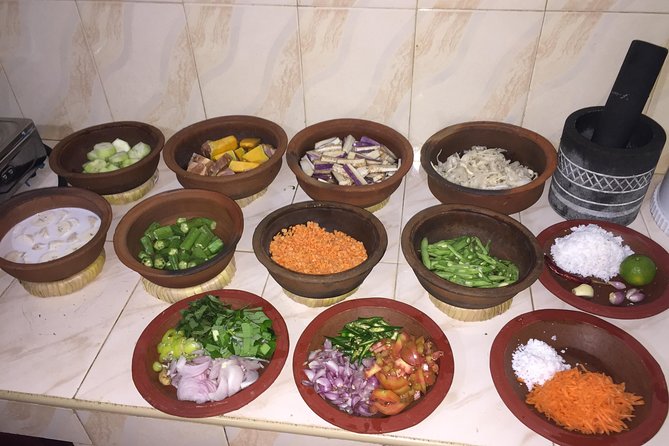
Next, you choose which vegetables you want to cook as curry. This gives you some control over the meal and helps make the class work for different tastes. The cooking is suitable for vegetarians and non-vegetarians, and the vegetable curry provides a clear centerpiece for a plant-based meal.
You then cut and chop the vegetables yourself. I consider this one of the most valuable parts of the class. Chopping may sound basic, but it lets you understand the size and shape the host wants, and it keeps you involved from start to finish.
The exact vegetable choices are not fixed in advance. That is useful if you have preferences, but it also means the final menu can vary. You should think of the experience as a lesson in Sri Lankan home cooking rather than a guaranteed menu of named dishes.
If you choose the optional market visit, you can select vegetables before cooking. You also hear more about local spices and herbs while making those choices. This upgrade adds context that you would not get from simply arriving at the home and starting to chop.
A few more tours worth weighing up
- Sri Lanka Cooking Class with Granny
★ 5.0 · 587 reviews - Galle: Traditional Gems & Jewellery Workshop with Transfers
★ 4.9 · 539 reviews - Kandy Village Cooking Class
★ 5.0 · 536 reviews - Sea waves sri lankan cooking class
★ 5.0 · 467 reviews
Spices, herbs, and the logic of Sri Lankan flavor
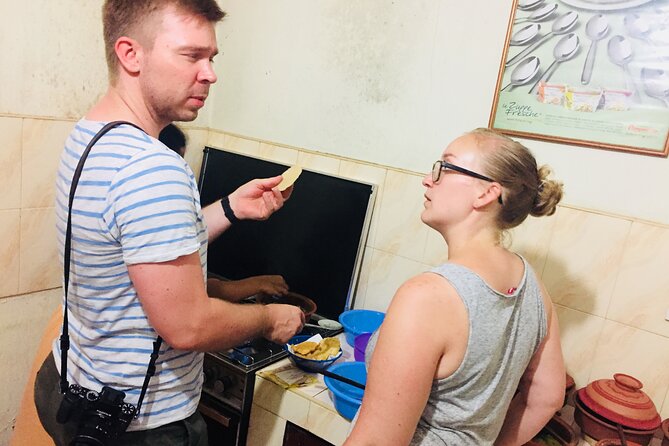
Sri Lankan cooking is not only about adding heat. Spices and herbs give the food its character, and the class includes an introduction to both. You learn what is being used and how the cooking process brings those flavors together.
This is where the direct teaching format pays off. You can ask why a spice goes in at a certain point or how the host judges when a dish is ready. The available information does not promise a full catalog of spices or a detailed lesson on regional food, so you should keep your expectations practical. You are learning the home method for the dishes prepared that day.
The class is also a good fit if you are cautious about spicy food. You choose the vegetables, and the private setup makes it easier to discuss preferences with the host. Still, the exact level of heat is not stated, so ask about it when you arrive if you have a low tolerance.
Cooking the meal, then eating what you made
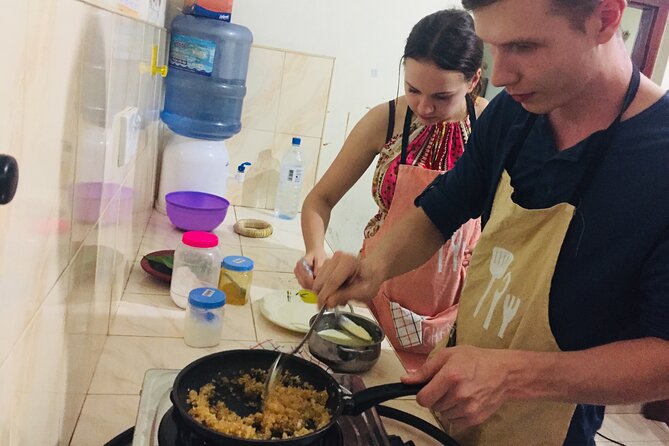
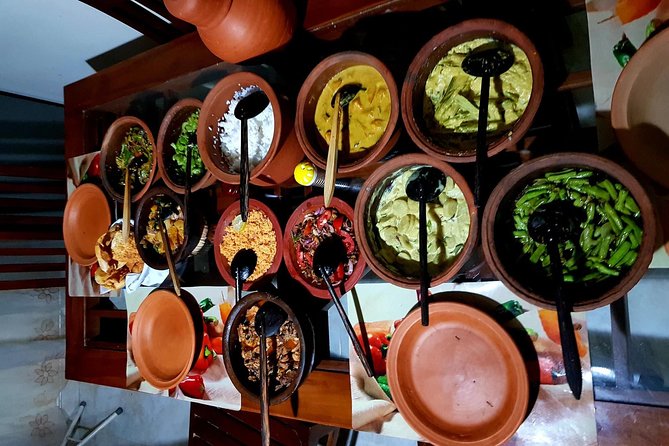
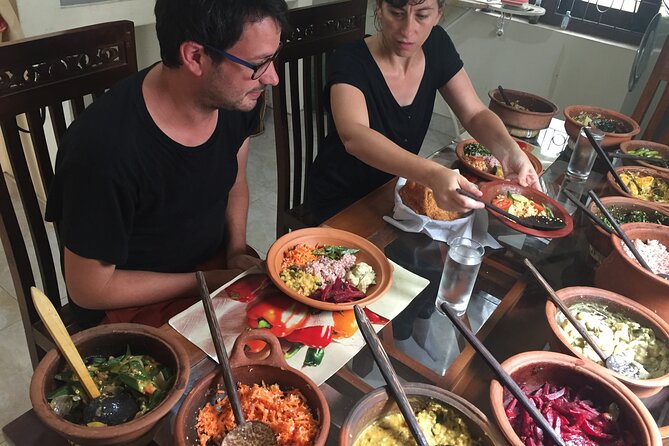
After the chopping and spice lesson, you cook the dishes. The meal includes curry, rice, coconut milk preparation, and other treats. One highly praised combination is fresh coconut sambal with dhal, which gives you a useful pairing of a creamy lentil dish and a fresh coconut side.
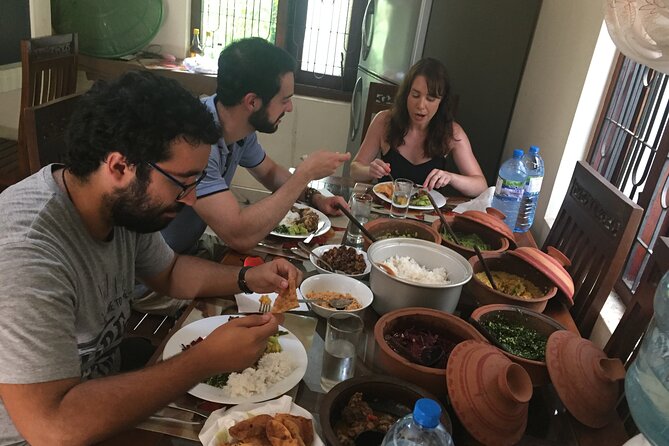
The best part comes when you sit down for dinner around the family table. You are not watching someone else serve a meal prepared hours earlier. You are eating food connected to the work you just completed.
That makes the dinner more than a standard restaurant meal. It also gives you a chance to ask final questions while the food is fresh in your mind. You may leave with a better sense of how to build a Sri Lankan plate, not just a memory of its flavor.
A traditional dessert finishes the experience. The dessert is not specified, so do not book expecting a particular sweet. Treat it as a final sample of home cooking, with the exact offering likely depending on what is prepared that day.
The optional market visit: worth the extra time?
The market upgrade is worth considering if you want more than the cooking session itself. You visit a market, choose vegetables, and learn about local spices and herbs before heading into the kitchen.
This gives the ingredients a clearer context. Instead of seeing vegetables appear on the counter, you take part in choosing them. You also get a stronger connection between shopping, seasoning, and cooking, which is how home meals are often planned.
The trade-off is time and cost. The base experience lasts about three hours, while the market option adds another part to the outing. The supplied details do not state the upgrade price or its exact duration, so confirm those points before booking.
I would choose the market option if you enjoy food shopping and want to understand ingredients. If your main goal is simply to cook and eat, the standard class should cover the central experience.
Is $45 a fair price?
At $45 per person, this is not the cheapest meal you could buy in Negombo. That comparison misses the point. You are paying for private instruction, ingredient preparation, dinner, a traditional dessert, and access to a family home.
The value is strongest for people who want participation. A restaurant meal gives you food. This class gives you the meal plus a skill, an introduction to spices and herbs, and a personal setting. You also avoid the work of arranging a similar experience independently, which can be difficult when you do not know local hosts or kitchens.
The value is less clear if you are only looking for a quick dinner or if you dislike chopping and hands-on work. Three hours is a long time for someone who wants only to sample Sri Lankan food.
The private format improves the price calculation for couples, families, or small groups. You get the host’s attention rather than sharing the lesson with a large crowd. The activity has a five out of five rating from 110 ratings and a 99 percent recommendation rate, which supports the idea that the personal format is a major part of its appeal.
Who will enjoy this experience most?
I would recommend this class to you if you enjoy learning through doing. It suits curious eaters, home cooks, couples, families, and anyone who wants a local food experience that feels more personal than a restaurant visit.
Vegetarians should find the format especially useful because you choose the vegetables for curry. Non-vegetarians can also take part, although the supplied details do not specify a particular meat or fish dish. Ask about the menu if that matters to you.
The class also works well for first-time visitors to Sri Lanka. You do not need deep knowledge of local food to enjoy it. You start with tea or coffee, learn the basics, and finish with a meal.
I would be more cautious about recommending it to someone with strict dietary restrictions. The experience is described as suitable for vegetarian and non-vegetarian cooking, but no detailed allergy or dietary policy is provided. Contact the provider before booking if you need firm ingredient guarantees.
Practical details for planning your day
The meeting point is Negombo Cooking Class at Andiambalama, Katunayake, Negombo 11450, Sri Lanka. The activity ends at the same meeting point, and it is near public transportation.
The class lasts about three hours. Add extra time if you select the market visit, though the exact additional duration is not provided. Since this is a private activity, only your group participates.
A mobile ticket is provided, and confirmation arrives at booking. The class requires good weather, and it also requires a minimum number of participants. If poor weather or low participation causes cancellation, you are offered another date or experience, or a full refund.
You can cancel for a full refund if you do so at least 24 hours before the local start time. Changes or cancellations inside that window are not accepted for a refund, so keep your plans reasonably settled.
Small drawbacks to keep in mind
The biggest limitation is the lack of a fixed menu. That flexibility is part of the home-cooking feel, but you may not know the exact dishes until the session begins. If you want to learn a named specialty, ask the provider before confirming.
The class also teaches without relying on recipes. I see that as a strength for understanding technique, but it may frustrate you if you want exact quantities to take home. Bring a phone or small notebook if you want to record useful details, but ask before photographing or filming inside the home.
Finally, the meeting point is in Andiambalama, Katunayake, rather than a clearly stated central Negombo hotel pickup. Check your route before the day of the class. Public transportation is nearby, but the provided information does not include hotel transfers.
Should you book the Negombo cooking class?
Book it if you want to cook, not just eat. The strongest reasons are the private family setting, the chance to prepare coconut milk and curry yourself, and the relaxed dinner around the host’s table.
Choose the market upgrade if ingredients and food shopping interest you. Skip it if you have limited time and want to focus on the kitchen session.
At $45 per person, the class offers good value for a personal three-hour experience with food included. It is especially appealing for vegetarians, home cooks, and anyone who wants a friendly introduction to Sri Lankan flavors without a large tour group. Just confirm dietary needs, the likely menu, and the meeting-point details before you pay.
FAQ
Where does the Sri Lankan cooking class take place?
The class takes place at Negombo Cooking Class, Andiambalama, Katunayake, Negombo 11450, Sri Lanka.
How long does the cooking class last?
The experience lasts approximately three hours.
Is this a private activity?
Yes. Only your group participates in the activity.
What happens when I arrive?
You receive tea or coffee as a welcome drink before the cooking begins.
Will I learn how to make coconut milk?
Yes. The class includes instruction on how to make coconut milk.
Can I choose the vegetables for the curry?
Yes. You can choose which vegetables you want to prepare as curry and chop them yourself.
Does the class include a market visit?
A market visit is available as an optional upgrade. It includes choosing vegetables and learning about local spices and herbs.
Is the class suitable for vegetarians?
Yes. The experience is described as suitable for vegetarian and non-vegetarian participants.
Is dinner included?
Yes. You eat the meal you help prepare, and a traditional dessert is also included.
Can I cancel for a full refund?
Yes. You can receive a full refund if you cancel at least 24 hours before the experience start time.
Just added around Negombo
- Ten Days Scenic Sri Lanka★ 5.0 · 3 reviews
- Colombo Airport (BIA) to Galle Private Airport Transfer★ 5.0 · 3 reviews
- 08 Days private round trip in Sri Lanka★ 4.5 · 3 reviews
- Full Day Tour to Sigiriya & Dambulla from Negombo★ 5.0 · 3 reviews
- From Negombo: White Water Rafting Adventure★ 5.0 · 3 reviews
- Transfer between colombo Airport (CMB) and Marino Beach, Colombo★ 5.0 · 3 reviews
- Airport transfer to Arugambay★ 5.0 · 3 reviews
- Airport Pick-up from Colombo Airport to Kandy★ 5.0 · 3 reviews
Cooking Classes, compared.


Organic cooking class sigiriya (kumara & family)
Read our review →


Sri Lankan Cooking Class with Neranji at Homestay
Read our review →

Browse the lists this tour appears in