
Reviewed · COOKING CLASSES
Authentic Sri Lankan Cooking Class in Kandy by Local Family
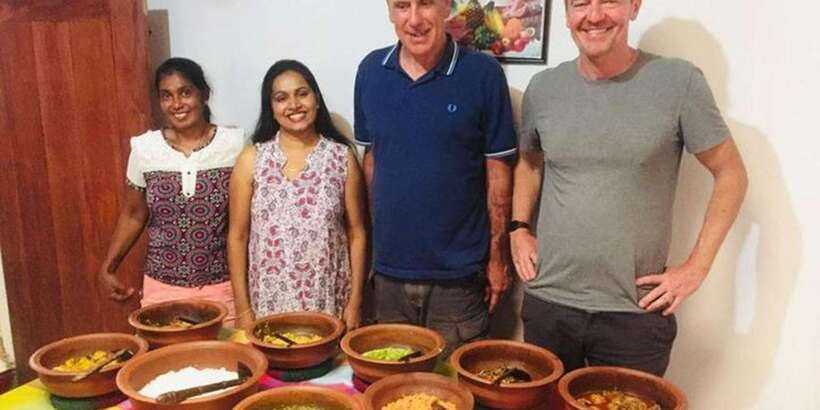
Sri Lankan curry is better made at home. This three-hour class near Kandy’s Bahirawakanda Buddha statue brings you into a real family kitchen, where the lessons focus on daily food, local ingredients, and the small habits that make each dish taste right. I like the small group size of two and the chance to visit a local market before cooking. The old sambol grinding stone, said to be 100 years old, is a fine touch.
I also like the sheer amount of food: ten vegetable dishes, fish or chicken, coconut sambol, and coconut roti. The main consideration is that this is a family cooking session, not a polished chef school. With so many dishes in only three hours, the family does much of the chopping and cooking, while you season, learn, and take part.
In This Review
- Key points to know before booking
- A quiet home near Kandy’s Buddha statue
- The optional market visit comes first
- Inside the kitchen, the lesson is about balance
- The old stone gives sambol its character
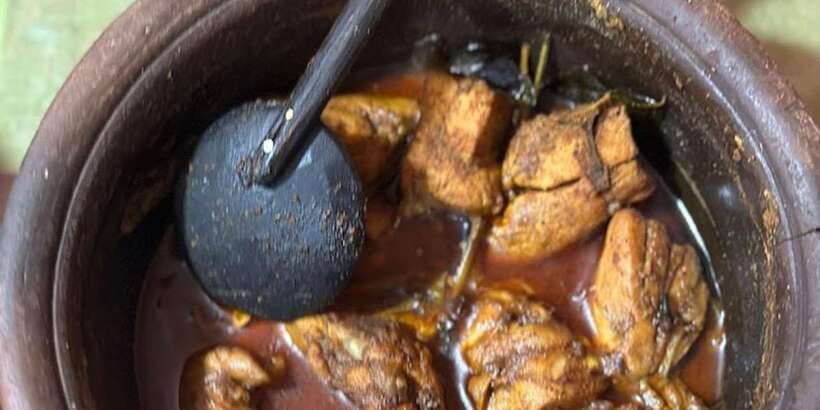
- Fish or chicken, plus a table full of vegetables
- What the three-hour format does well
- Price, pickup, and practical value
- Who will enjoy this Kandy cooking class
- Should you book The Best Kandy Kitchen?
- FAQ
- How long does the cooking class last?
- What food is included?
- Is hotel pickup included?
- Is the class held in a professional cooking school?
- Can I visit a local market?
- What language is used, and how many people can join?
Key points to know before booking
- Cook inside a family home: Your teachers are the host’s wife, sister, and mother, with the three young daughters sometimes joining in.
- Visit the local market if you choose: You can learn about Sri Lankan spices and vegetables while buying ingredients for the meal.
- Expect a very large menu: The class includes ten vegetable dishes, fish or chicken, coconut sambol, and coconut roti.
- The 100-year-old sambol stone is special: Grinding coconut and spices by hand gives the lesson a clear link to older kitchen traditions.
- Pickup is included around Kandy town: Hotel pickup and drop-off can be arranged, with a lobby meeting time 10 minutes before departure.
- Best for curious eaters: You will get more from this class if you want family contact and practical food knowledge, not just a chef demonstration.
A quiet home near Kandy’s Buddha statue
The setting helps explain the appeal. The family home is close to Kandy city center and near the large Buddha statue on Bahirawakanda Mountain, yet the house sits in calm, green surroundings. You get a local neighborhood setting rather than a restaurant dining room or a hotel classroom.
That change of scene matters. Kandy can feel busy around its central streets, traffic, and major sights. Here, the class shifts attention to the household kitchen, where Sri Lankan food is prepared as part of everyday life. The family explains that the main teachers are the women of the household because they cook traditional food several times a day. That is the point of this experience: practical family knowledge rather than formal culinary theater.
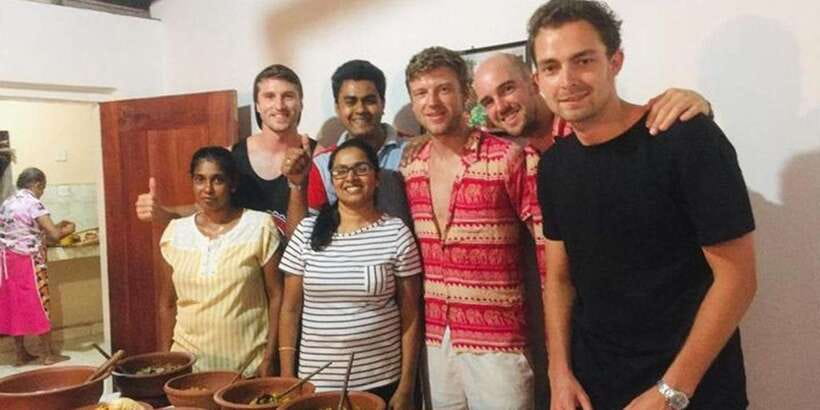
Your host may be joined by his wife, sister, mother, and three little girls. The family atmosphere is one of the strongest reasons to choose this class. It can feel warm and informal, though you should also understand that a home kitchen may be less spacious and less organized than a professional cooking studio.
The class is conducted in English. The available information does not give the teachers’ individual names, but one host, Dinesha, helped guide a market visit for one group. If you arrange pickup, give the provider your hotel details in advance and wait in the lobby 10 minutes before the scheduled time.
More Cooking Classes in Kandy
- Sri Lanka Cooking Class with Granny
★ 5.0 · 587 reviews - Kandy Village Cooking Class
★ 5.0 · 536 reviews - Private Traditional Sri Lankan Cooking Class in Kandy with Hotel Transfers
★ 5.0 · 115 reviews
The optional market visit comes first
If you want the full experience, ask to include the local market visit. It is not simply a shopping stop. The family uses the market to explain the spices and vegetables that go into the meal, helping you connect the finished curry with the raw ingredients.
You might see the family select produce for the evening’s cooking, then return with the items that will be prepared in the house. That gives the class a useful rhythm: market, kitchen, meal. It also lets you ask what each vegetable is called, how it is used, and why certain spices belong together.
The market visit is especially useful if you are new to Sri Lankan food. Menus can list curry as if it were one dish, but a Sri Lankan meal often includes several separate preparations with different textures and levels of heat. Seeing the ingredients before they are cooked makes the final spread easier to understand.
There is one practical point to keep in mind. The experience is advertised as three hours, and the market visit uses part of that time or may affect the schedule. If you are keen to cook every item yourself, ask how the timing will work. The meal includes so many dishes that the family must handle a good deal of the preparation.
Inside the kitchen, the lesson is about balance
Once you reach the house, you can expect a relaxed welcome before the main cooking begins. One group was offered tea and delicious pancakes while the family prepared ingredients. That small pause is useful, especially if you have just come from sightseeing or the market.
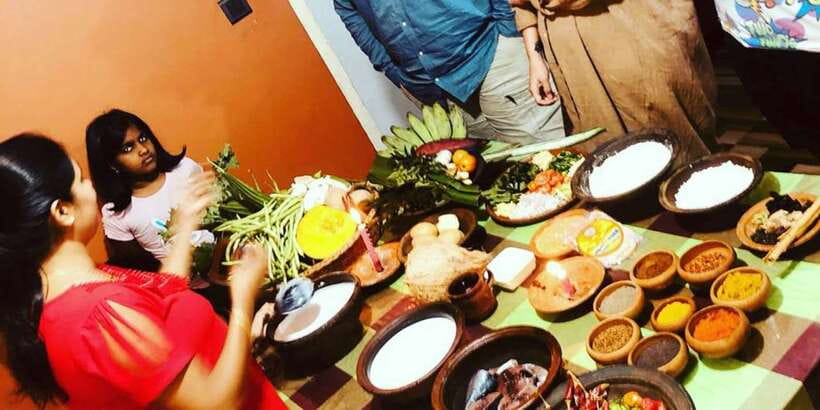
The cooking focuses on seasoning and method. You can ask questions as the family explains the mix of spices, and you season the dishes yourself. This is an important distinction. You are not simply watching a cook produce dinner while standing at a distance. At the same time, you will not personally prepare every part of all ten vegetable dishes from start to finish.
The volume of food explains why. The menu includes:
- Ten types of vegetable dishes
- Fish or chicken, depending on your choice
- Coconut sambol
- Coconut roti
- Bottled water
The menu is generous for a three-hour session. One group learned to make 13 dishes, which suggests the exact selection can vary. You should think of the class as a guided family meal with hands-on seasoning, mixing, shaping, and preparation, rather than a one-dish technical workshop.
That approach has a benefit. You get to see how several dishes come together as one Sri Lankan meal. You can compare the different vegetables and curries, notice how coconut changes a dish, and learn how side dishes help balance the main curry. If your aim is to master one recipe in precise detail, another type of class may suit you better.
The old stone gives sambol its character
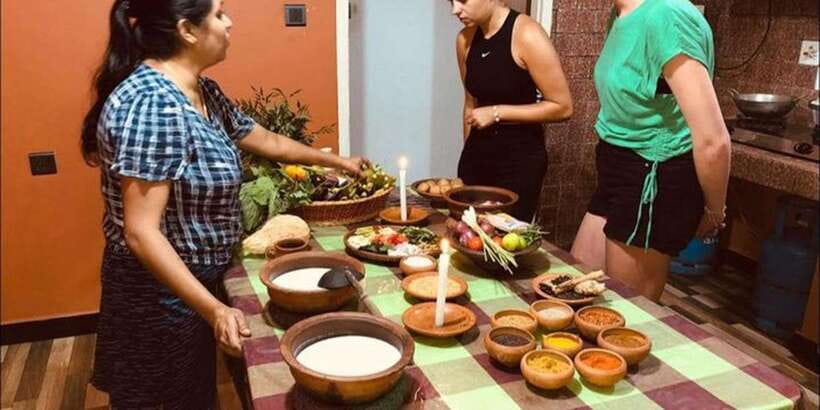
The most memorable object in the kitchen is the sambol-making stone, described as 100 years old. Coconut sambol is a simple dish in its ingredient list, but the preparation matters. A traditional stone board gives you a direct link to the older way of crushing and combining coconut, spices, and other ingredients.
This is the kind of detail I value in a cooking class. A modern blender might be quicker, but it would tell you less about how a family kitchen has worked over time. The stone also gives the lesson a physical task that is easy to remember after you leave.
You should not expect every part of the class to use old tools. The supplied details only identify the sambol stone, so it is best to treat that as one notable feature rather than assume the whole kitchen follows an old-fashioned method.
The family also makes coconut roti. Along with the sambol, it adds a hands-on element to the session and gives you something familiar to try at home. Recipes are provided at the end, which makes the class more useful than a meal you can only remember by taste.
More Sri Lankan cooking classes:
- Cooking With Village Family
★ 5.0 · 104 reviews - Kandy Cooking Class with Granny
★ 4.9 · 95 reviews - Private Kandy Authentic Cooking Class
★ 5.0 · 65 reviews - Srilankan Cooking class by FFL kandy
★ 5.0 · 50 reviews
Fish or chicken, plus a table full of vegetables
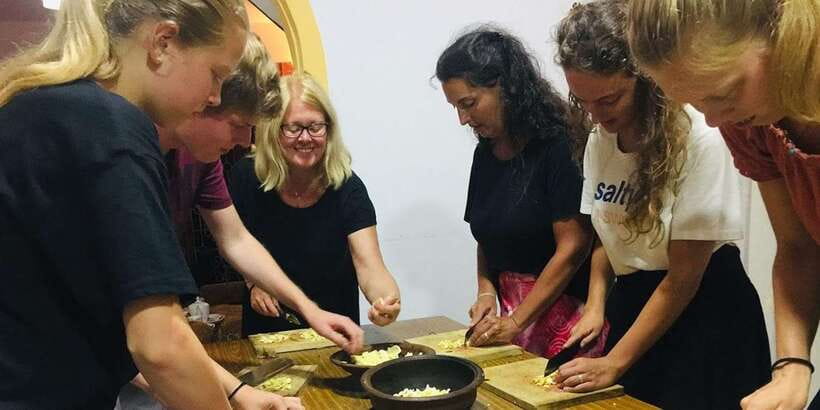
You can choose fish or chicken for the main non-vegetarian dish. This is worth deciding when you book, especially if you have dietary preferences. The ten vegetable dishes mean the meal is not built around a single large portion of meat. Instead, the main ingredient is part of a broad spread.
The vegetable selection may change with what is available at the market. That is a strength, not a problem, if you want to learn how Sri Lankan families cook with local produce. It also means you should not expect a fixed restaurant-style menu.
The meal at the end is a major part of the value. Several people found the food delicious, with eggplant and mushroom curry receiving particular praise. Another visitor advised skipping lunch because there was so much dinner to eat. That is practical advice: plan to arrive hungry.
The meal is also a chance to slow down. After the preparation, you can taste the differences between the dishes and ask about the recipes while everything is fresh. The food is not an extra tacked onto the end of a lesson. It is the reward for the work and the clearest way to see how the separate dishes fit together.
What the three-hour format does well
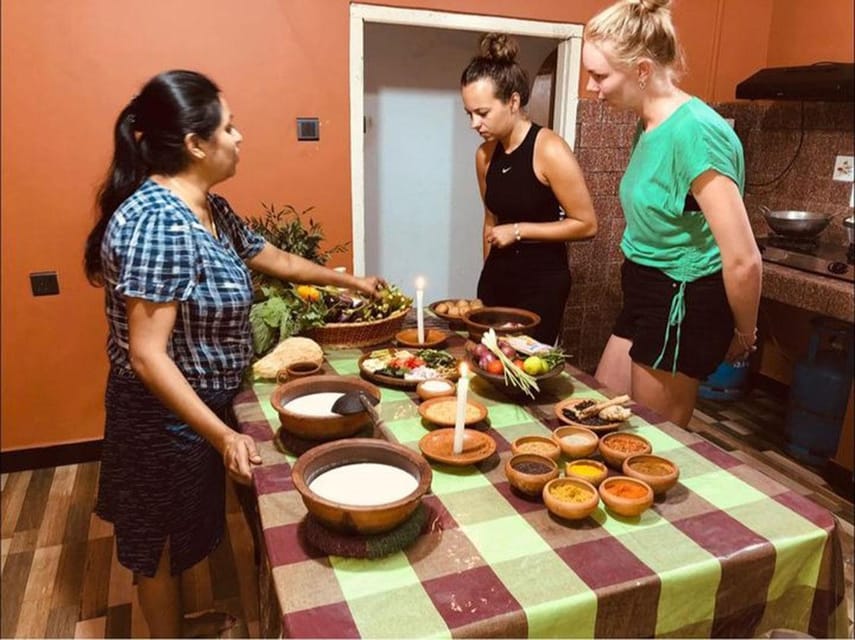
Three hours is enough time to cover a broad introduction without taking up an entire day. You can combine a market visit, family welcome, cooking, and a full meal while still keeping space in your Kandy schedule.
The limit is also clear. Ten vegetable dishes, a meat or fish curry, sambol, and roti are a lot to cover. The family will prepare some elements in advance or handle much of the cooking so that dinner is ready on time. You will season the food and take part, but you should not expect each dish to receive a long technical lesson.
That trade-off suits people who want range. You will leave with a sense of how a Sri Lankan table is built, not just how to make one curry. It is less suited to an experienced home cook seeking exact instruction on knife work, heat control, or a single regional recipe.
The family’s own style is part of the class. Their goal is to share food made in their home, and that can include conversation, children joining in, and a little unpredictability. If you prefer a tightly timed lesson with printed workstations and professional equipment, the informality may feel untidy. If you want contact with a Sri Lankan household, it is the reason to go.
Price, pickup, and practical value
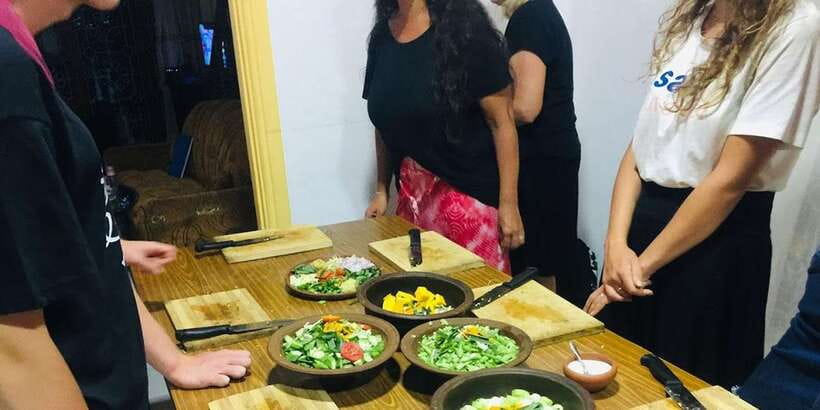
The price is $99 per group of up to two people. For a solo visitor or couple, that works out differently from a per-person cooking class. Two people share the cost, receive a private-feeling small group setting, and get a substantial meal plus recipes, bottled water, and the option of market guidance.
Pickup and drop-off are included around Kandy town. That removes the need to find the home yourself, which is helpful when you are unfamiliar with local roads. The listing does not promise pickup outside the Kandy area, so confirm your hotel location before booking.
The value is strongest when you count the whole experience rather than only the lesson. You are paying for transport around town, family instruction, market context if selected, a large dinner, and recipes to use later. It is not the cheapest way to eat in Kandy, but it offers much more than a restaurant meal.
Bring a charged smartphone or camera if you want to record ingredients and cooking steps. Bring cash as well, and consider a change of clothes. Cooking with coconut, spices, and several dishes can be messy. Pets are not allowed, although assistance dogs are permitted. The experience is not suitable for wheelchair users.
Free cancellation is available up to 24 hours before the activity, and you can reserve now and pay later. Check the available starting times before you commit, since the class lasts three hours and timing may vary.
Who will enjoy this Kandy cooking class
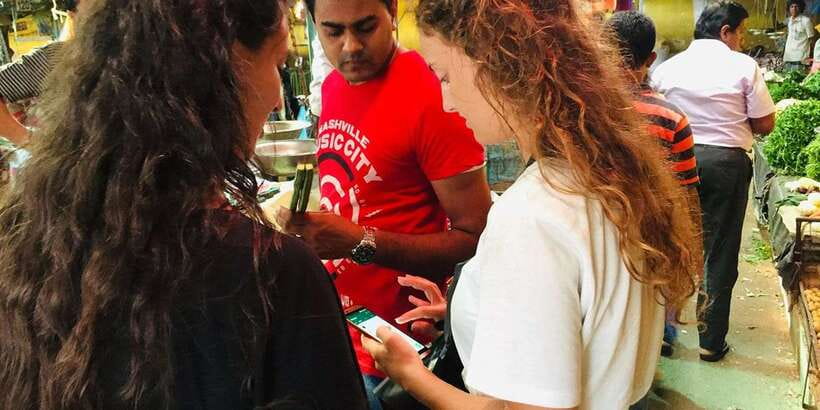
I would suggest this class to couples, friends, and solo food lovers who want a close look at Sri Lankan home cooking. The maximum group size of two keeps the session personal, and the family setting gives you a better chance to ask questions than a large class would.
It is a good choice if you want to:
- Learn how several curries work together in one meal
- Visit a local market with guidance
- Eat a generous home-cooked dinner
- Meet a Sri Lankan family
- Take recipes home
- Learn about traditional tools such as the sambol stone
Families with children may enjoy the friendly household setting, but the supplied information does not describe a special children’s program. People with limited mobility should note the wheelchair restriction. Anyone with food allergies or strict dietary needs should ask about the menu before booking, since the advertised meal includes fish or chicken and many separate dishes.
Should you book The Best Kandy Kitchen?
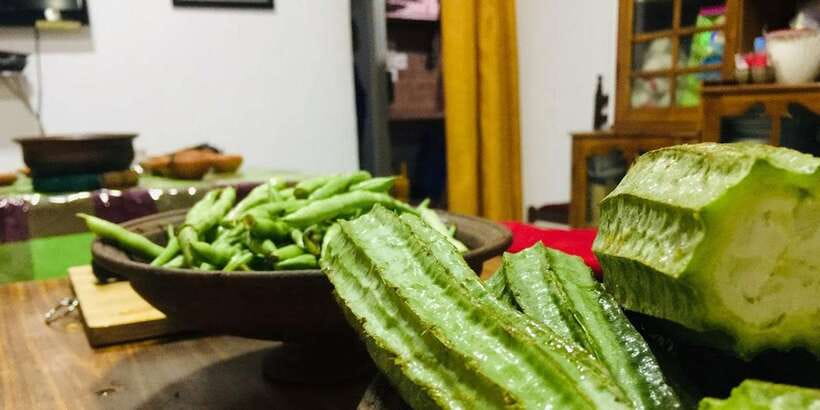
Book it if you want authentic family contact, a broad introduction to Sri Lankan food, and a meal large enough to replace lunch and dinner. The market option, old sambol stone, homemade pancakes, and recipes make this more personal than a basic cooking demonstration.
Skip it if you want a formal chef-led course, a fixed menu, or to prepare every dish entirely by yourself. The family does much of the work because the menu is so large, and the home kitchen may feel informal.
For most food-focused visitors spending time in Kandy, I think the $99 group price is fair, especially for two people sharing it. Go hungry, wear clothes you can cook in, and ask for the market visit if learning about ingredients matters to you. The best part is not just eating curry. It is seeing how a family turns many simple dishes into one generous Sri Lankan meal.
FAQ
How long does the cooking class last?
The activity lasts three hours. Check the available starting times when booking.
What food is included?
The meal includes ten types of vegetable dishes, fish or chicken, coconut sambol, and coconut roti. You can choose fish or chicken.
Is hotel pickup included?
Pickup and drop-off are included for hotels around Kandy town. You should wait in the hotel lobby 10 minutes before the scheduled pickup time and provide your pickup details to confirm the booking.
Is the class held in a professional cooking school?
No. The class takes place inside the family home kitchen. The teachers are the host’s wife, sister, and mother, and the host’s three daughters may sometimes join.
Can I visit a local market?
Yes. If you want market experience, the family can guide you to a local market and explain the spices and vegetables. One market visit was led by Dinesha.
What language is used, and how many people can join?
The class is conducted in English and is limited to two participants.
More Workshops
- Kandy: Interactive Batik Workshop
★ 5.0 · 51 reviews - Sri Lankan cooking class with Nilu Kandy( FREE PICKUP & Drop)
★ 5.0 · 45 reviews - Authentic Sri Lankan Cooking Class in Kandy with Local Family
★ 5.0 · 44 reviews - First Class Scenic Train Ticket From Kandy To Ella
★ 4.0 · 13 reviews
Just added around Kandy
- Evening Tour at the Last Kingdom of Sri Lanka, Kandy★ 5.0 · 3 reviews
- Tour to Dambulla Cave, Sigiriya and Pidurangala Rock from Kandy★ 5.0 · 3 reviews
- Private Day tour from Kandy to Sigiriya, Dambulla & Pidurangala★ 5.0 · 3 reviews
- Day Tour Kandy to Sigiriya with Dambulla Cave Temple Excursion★ 5.0 · 3 reviews
- Kandy To Dambulla and Sigiria City Full Day by Laka Tours★ 5.0 · 3 reviews
- Full Day Tuk Tuk Tour – Explore Kandy with Local Expert★ 4.1 · 3 reviews
- From Kandy: Wilpattu National Park Safari with Hotel Pickup★ 5.0 · 3 reviews
- Kandy to Ella★ 5.0 · 3 reviews
Cooking Classes, compared.


Organic cooking class sigiriya (kumara & family)
Read our review →


Sri Lankan Cooking Class with Neranji at Homestay
Read our review →

Browse the lists this tour appears in