
Reviewed · COOKING CLASSES
Galle: Sri Lankan Cuisine Cooking Experience
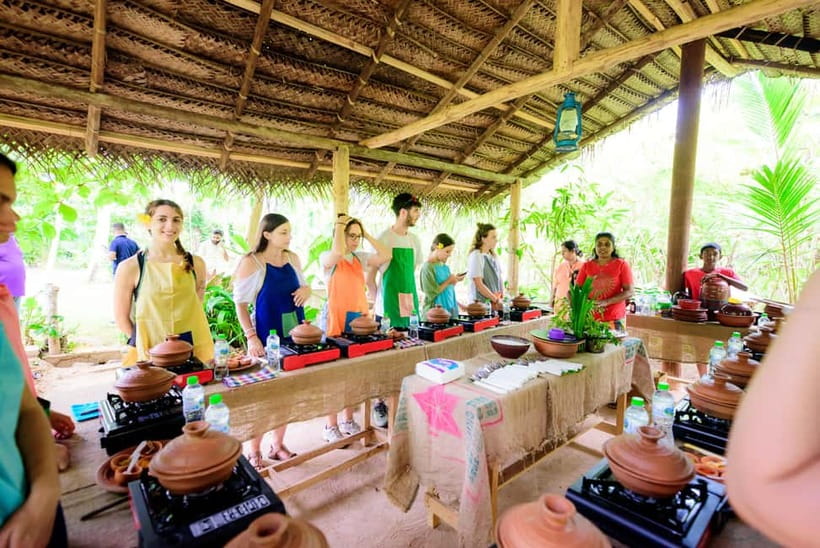
Sri Lanka tastes better when you help make lunch. This three-hour cooking experience in Kotapola brings you into a family kitchen, where you prepare traditional dishes with a local host rather than simply watching a demonstration. I especially like the hands-on work with fresh coconut and roti, plus the chance to share the finished meal with the family. The main point to consider is transport, which is not included, so you must arrange your own way to Galle House.
The welcome is personal from the start, with an oil-lamp lighting ceremony and a flower bouquet. Malika and Sanuth have been praised for making families feel at home, including one group traveling with a four-year-old child. You should also know that eating with your hands is part of the meal, though utensils are available if you prefer them.
In This Review
- Key details before you book
- Arriving at Galle House in Kotapola
- The oil lamp and flower welcome
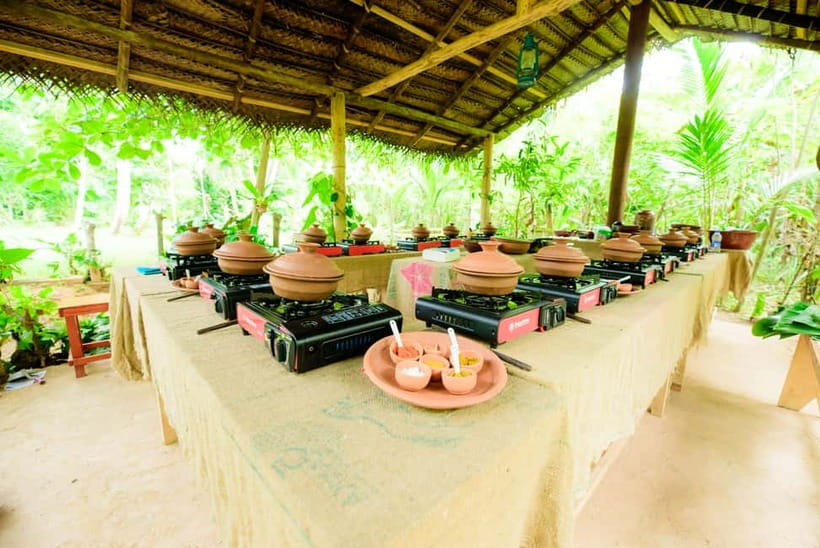
- Working beside your host in the family kitchen
- Grinding coconut for sambol
- Rolling roti by hand
- Eating from a banana leaf
- What the $40 price includes
- Who will enjoy this experience most
- Practical tips for a smoother visit
- Is the Galle cooking class worth booking?
- FAQ
- Where does the cooking experience take place?
- How long does the activity last?
- How much does it cost?
- What is included in the price?
- Is transportation included?
- What language is the class taught in?
- Is the group private?
- Can I use utensils during the meal?
Key details before you book
- Three hours in a family kitchen: You learn by preparing food with a local host, not by sitting through a formal cooking show.
- Fresh coconut and handmade roti: Grinding coconut for sambol and rolling roti give you two clear, practical tasks.
- A traditional welcome: The oil-lamp ceremony and flower bouquet make the arrival feel ceremonial and warm.
- A shared banana-leaf meal: You eat the food you helped prepare in a traditional Sri Lankan style.
- Private English-language experience: Your group receives the host’s attention without being combined with strangers.
- $40 per person: The price includes ingredients, instruction, the meal, and the welcome ceremony, but not transport or personal spending.
Arriving at Galle House in Kotapola
This experience takes place at Galle House in Kotapola, in the Galle area. You need to arrange your own transportation because pickup and drop-off are not included. That matters here: allow enough time to reach the house, and confirm the meeting details before your booked date.
The organizers ask you to contact them at least one day ahead. Do not treat this as a minor formality. Send a message and confirm the date before you go, especially if your plans around Galle are still shifting.
The activity lasts three hours, but the start time depends on availability. A private group format makes the visit more personal and is useful for families, couples, or a small group of friends who want to cook at their own pace.
Your instructor speaks English. The available information does not give a fixed menu, so you should not book expecting a particular curry or dessert. What is clear is that traditional Sri Lankan dishes are prepared, with roti and coconut sambol specifically included in the hands-on work.
More Cooking Classes in Galle
- Sea waves sri lankan cooking class
★ 5.0 · 467 reviews - Galle Unawatuna Cooking Class
★ 5.0 · 142 reviews - Galle Fort cooking class
★ 5.0 · 60 reviews
The oil lamp and flower welcome
Your visit begins with a traditional oil-lamp lighting ceremony. You also receive a flower bouquet, which gives the arrival a more meaningful shape than a quick introduction followed by an apron and a chopping board.
The ceremony may be especially appealing if you want some cultural context alongside the food. It is brief enough that it should not take over the cooking lesson, but it signals that you are entering a family home and taking part in a local welcome.
I like this opening because it sets the tone for the rest of the visit. You are not being rushed into a recipe. You are first welcomed, then brought into the kitchen.
The activity provides an apron when the lesson begins, but you should wear comfortable clothes suitable for cooking. Choose something you can move in and do not mind wearing around spices, coconut, and food preparation.
Working beside your host in the family kitchen
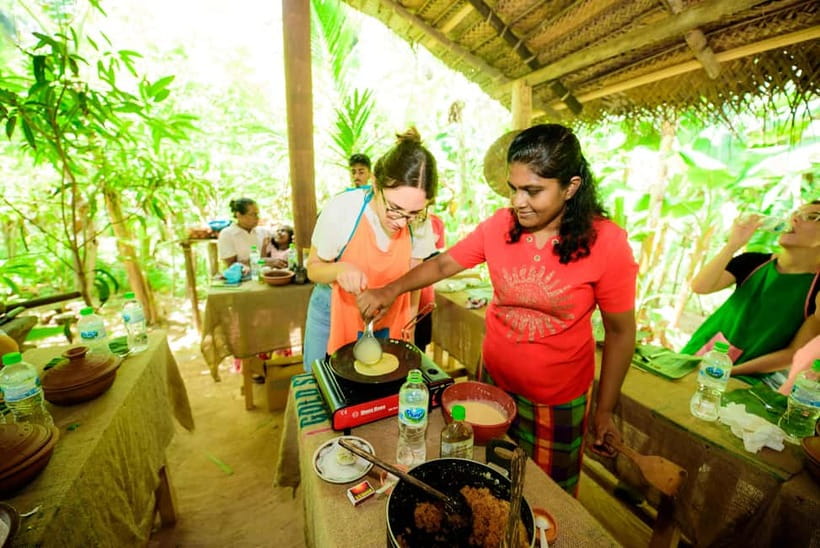
The heart of the experience is the family kitchen. You prepare the food with your host, using the supplied ingredients and receiving explanations about the ingredients and the preparation steps.
That hands-on approach gives you something useful to take home. You are not only tasting a finished Sri Lankan meal. You are learning how ingredients are handled and how the separate parts of the meal come together.
The cooking is also social. Stories and laughter are part of the visit, and the private format should make it easier to ask questions without feeling self-conscious. If you are curious about a spice, a cooking method, or the order of preparation, this is the time to ask.
The lesson appears friendly rather than rigid. That is good for beginners, but it also means you should expect a home-style activity rather than a professional culinary school with a printed curriculum and exact restaurant-style techniques.
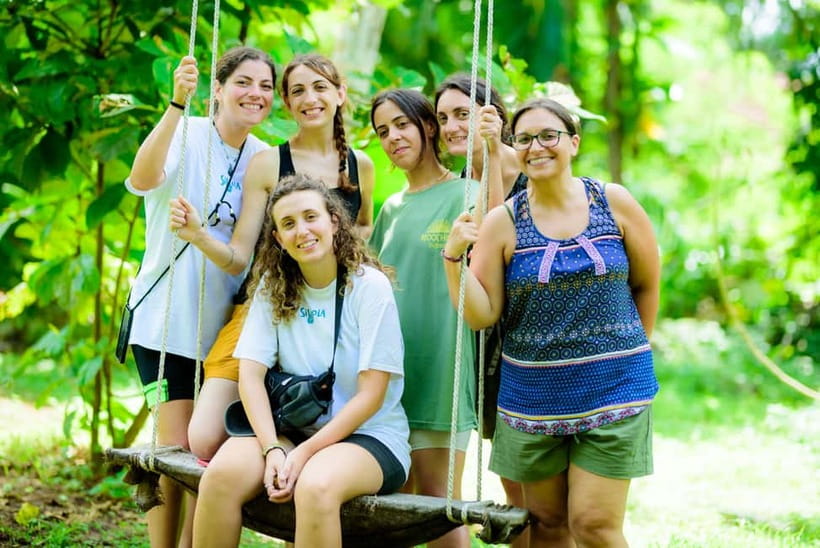
The strongest praise for the hosts focuses on their warm welcome and clear explanations. Malika and Sanuth are specifically noted for including a young child and making the whole family feel comfortable. If you are cooking with children, that is an encouraging sign, though the activity remains a real kitchen lesson and children will need supervision.
Grinding coconut for sambol
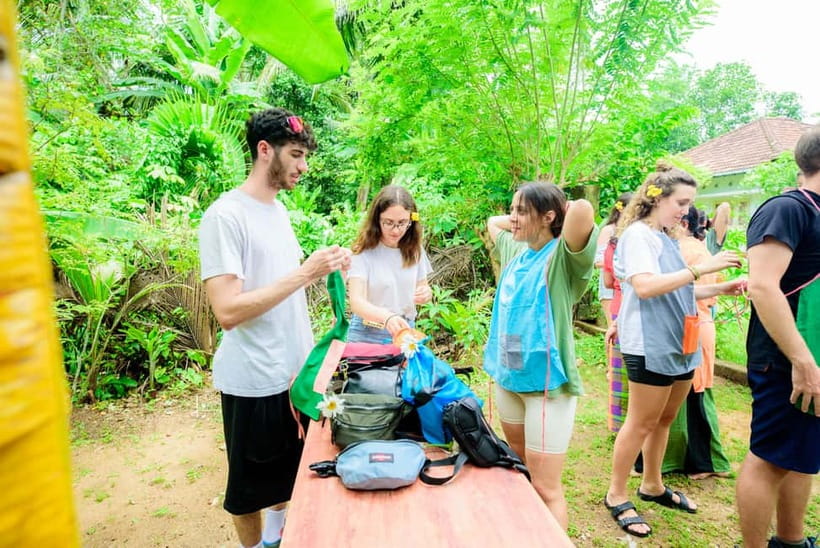
One of the most distinctive tasks is grinding fresh coconut to make sambol. This is the sort of small detail that turns a standard cooking class into a more memorable cultural activity.
Sambol is a familiar part of Sri Lankan food, and preparing it from fresh coconut lets you see the work behind the finished side dish. You handle the ingredient yourself instead of receiving a bowl that is already mixed and ready to serve.
I would pay close attention during this part. The practical value is not only in learning one recipe. You get a clearer sense of how fresh ingredients shape the meal and why coconut is so important to the texture and flavor of the dish.
The description does not specify the other sambol ingredients or the exact equipment used, so do not expect a detailed recipe list in advance. If you want to recreate it at home, ask your host to explain the proportions and preparation method while you work.
More Sri Lankan cooking classes:
- Galle: Cooking Class at a Local Home and Market Tour
★ 5.0 · 47 reviews - Authentic Sri Lankan Cooking Class in Mirissa
★ 5.0 · 22 reviews - Galle: Traditional Sri Lankan Cooking Class
★ 5.0 · 21 reviews - Traditional Cooking Small-Group Class in Unawatuna
★ 5.0 · 14 reviews
Rolling roti by hand
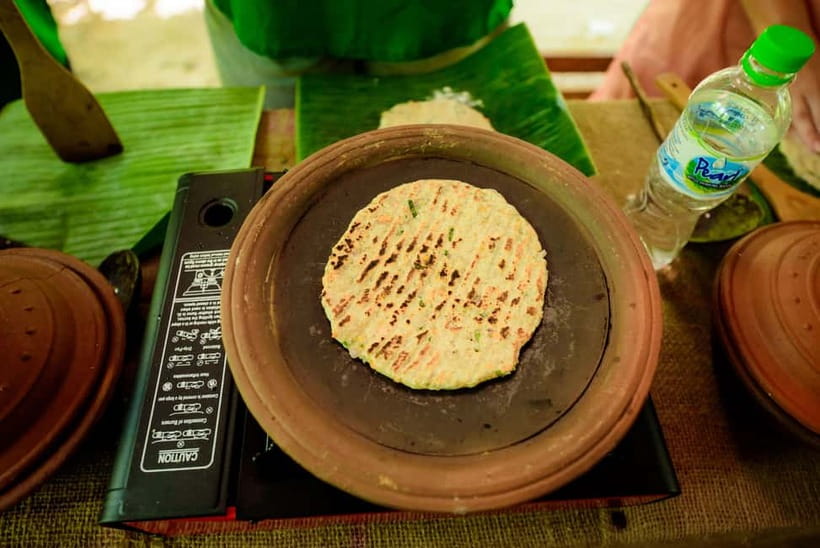
You also roll roti by hand. This is another simple but useful task because it gives you a direct role in shaping the food before it is cooked.
Roti can look easy when someone else is making it. Your own first attempt may be less even, which is part of the fun. The host can show you how to handle the dough and correct your technique as you go.
This is a good activity for families and groups because it is easy to share. One person can work on the roti while another helps with sambol or asks questions about the meal. You are doing enough to feel involved, but you are not expected to run an entire kitchen alone.
The supplied information does not state the full menu, the number of dishes, or the exact recipe sequence. That is worth keeping in mind if you are comparing this with a class that advertises a long, fixed menu. Here, the strongest feature is the family setting and the chance to learn key preparations directly from the host.
Eating from a banana leaf
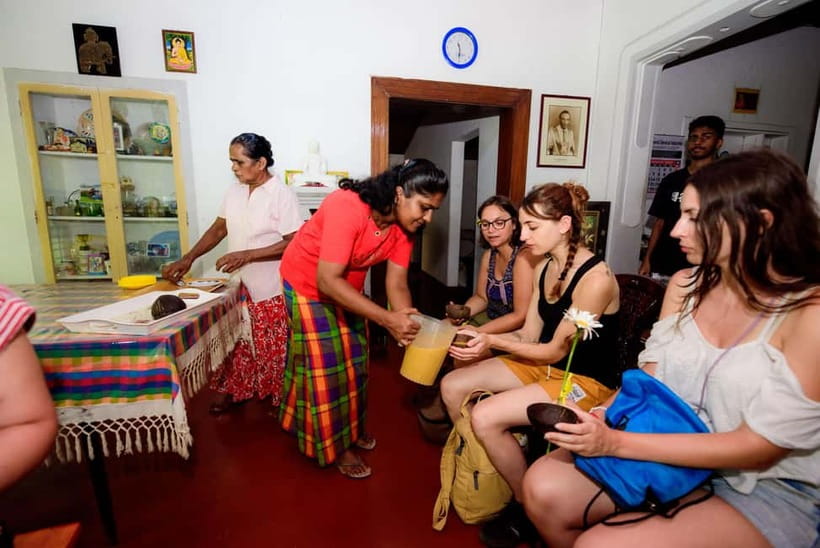
Once the dishes are ready, you sit down to eat the meal you helped make. The food is served on a banana leaf, and eating with your hands is part of the traditional experience.
If you have never eaten this way, your host can help you get comfortable. Use your right hand, keep the food together, and take your time. It can feel unfamiliar at first, but it is also one of the clearest cultural parts of the visit.
Utensils are available upon request. I appreciate that option because the goal should be enjoyment, not forcing yourself through a style of eating that makes you uncomfortable. You can try the traditional method for part of the meal and ask for cutlery if needed.
The shared meal also gives the cooking a proper finish. You sit with the family, eat what you prepared, and talk over the food. That connection is a major reason to choose this class instead of a quick market visit or a restaurant meal.
What the $40 price includes
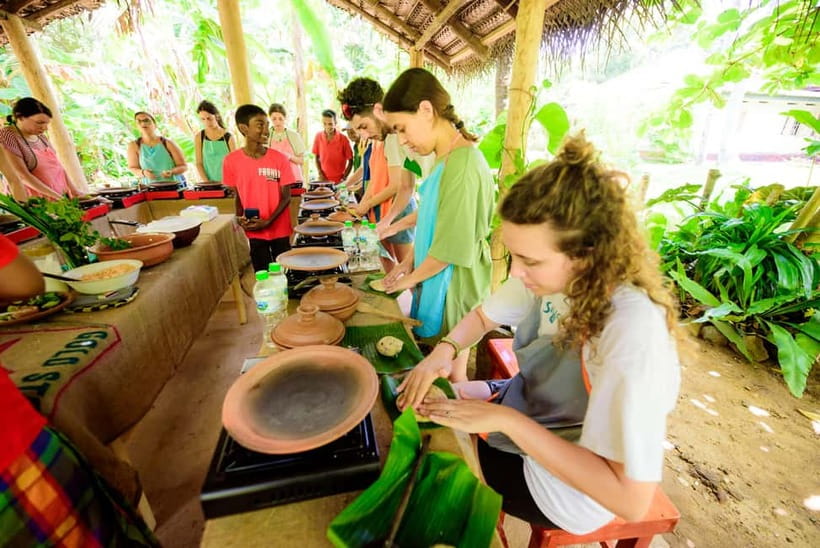
At $40 per person, the cost covers the traditional cooking class, your host’s instruction, all cooking ingredients, the shared meal, and the oil-lamp and flower welcome.
I consider that fair value for a private three-hour activity. You are paying for food, but also for time in a family home, personal instruction in English, and a meal that would otherwise be difficult to access in this form.
The value is strongest if you enjoy participation. If you only want to eat Sri Lankan food, a local restaurant will likely require less time and planning. If you want to understand how part of the meal is made and spend time with a local family, the cooking class offers more substance.
Transport is the main extra cost to plan for. It is not included, and personal expenses are also your responsibility. You should calculate the full price based on how you will reach Kotapola and return afterward.
The private group setup also affects the value. You are not paying for a large class where the instructor must divide attention among many people. For a couple or small family, the personal setting can make the $40 feel well spent.
Who will enjoy this experience most
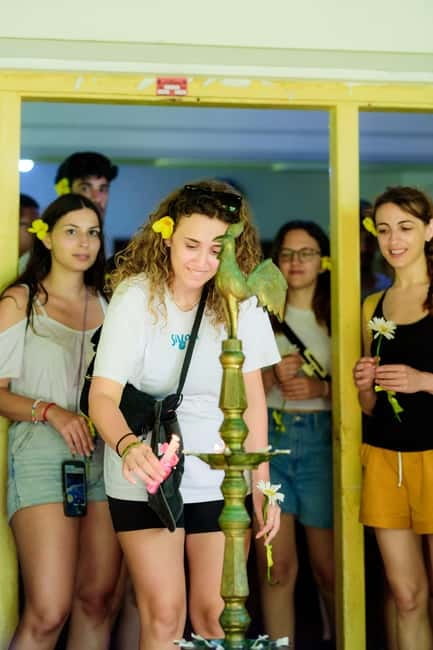
I would recommend this class to people who like food with a human story attached to it. You will get the most from it if you enjoy asking questions, trying unfamiliar tasks, and sitting down for an unhurried meal.
It suits:
- Couples wanting a relaxed cultural activity
- Families looking for a practical, child-friendly experience
- Small groups who prefer a private setting
- First-time visitors who want an introduction to Sri Lankan home cooking
- Anyone interested in learning how sambol and roti are prepared
It may not suit you if you want a fast activity near a major sightseeing stop, a fixed list of many dishes, or a polished restaurant kitchen. The experience is based in a family home, so its appeal comes from warmth and participation rather than professional presentation.
The English-language instruction is useful, particularly when you want explanations about ingredients and preparation. You can ask questions as the cooking happens instead of trying to follow a demonstration from a distance.
Practical tips for a smoother visit
Contact the provider at least one day before your booked date and confirm the appointment. This is the most important practical step because the organizers specifically request it.
Wear comfortable clothing and expect to use an apron supplied at the beginning. Since you will cook and eat by hand, avoid clothing that makes movement difficult or that you want to keep spotless.
Tell the host if you need utensils. Eating from a banana leaf with your hands is part of the experience, but cutlery can be provided upon request.
Plan your transportation carefully. Galle House does not include transport to or from the activity, and no pickup service is listed. Check the available starting times before booking so the three-hour session fits your wider schedule.
The exact dishes are not listed beyond roti and coconut sambol. If a particular food is important to you, ask about the menu when you confirm the date. That simple question can prevent disappointment.
The activity offers free cancellation up to 24 hours before the booked time for a full refund. You can also reserve now and pay later, which helps if your route around Sri Lanka is not fully fixed.
Is the Galle cooking class worth booking?
I would book this experience if you want a personal introduction to Sri Lankan food and do not mind arranging your own transport to Kotapola. The oil-lamp welcome, fresh coconut sambol, handmade roti, and banana-leaf meal give the three hours a clear cultural shape.
The best reason to choose it is the family connection. Malika and Sanuth have been praised for their warmth, clear teaching, and kindness toward a family with a young child. That suggests a relaxed atmosphere where you can learn without feeling tested.
Skip it if you want a formal cooking school, a guaranteed long menu, or a short activity that fits neatly between major sights. For everyone else, $40 buys more than lunch. You get time in a local kitchen, practical food preparation, and a shared meal that you helped create.
FAQ
Where does the cooking experience take place?
It takes place at Galle House in Kotapola, Sri Lanka, in the Galle area.
How long does the activity last?
The cooking experience lasts three hours.
How much does it cost?
The price is $40 per person.
What is included in the price?
The price includes the traditional Sri Lankan cooking class, hands-on instruction with a local host, all cooking ingredients, the shared meal, and the welcome ceremony with oil-lamp lighting and a flower bouquet.
Is transportation included?
No. Transportation to and from Galle House is not included.
What language is the class taught in?
The instructor speaks English.
Is the group private?
Yes. The activity is offered as a private group experience.
Can I use utensils during the meal?
Yes. Eating with your hands is part of the traditional experience, but utensils can be provided upon request.
Just added around Galle
- From Colombo: Day Trip to Galle City, Koggala and Unawatuna★ 4.2 · 3 reviews
- Stilt-Fishing Experience in Ahangama★ 4.0 · 3 reviews
- Galle Sightseein Rickshaw Tour★ 4.5 · 3 reviews
- Sinharaja Rainforest & Udawalawe Safari – 2 Days, All Inclusive★ 5.0 · 3 reviews
- Fully Private Udawalawe National Park Safari Tour★ 5.0 · 3 reviews
- Galle: All Inclusive City & Fort Guided Cycling tour★ 3.6 · 3 reviews
- Private Half Day Safari Tour to Yala NP From Tangalle and Drop Back★ 4.5 · 3 reviews
- Galle Instagram Tour: Most Famous Spots (Private & All-Inclusive)★ 5.0 · 3 reviews
Cooking Classes, compared.


Organic cooking class sigiriya (kumara & family)
Read our review →


Sri Lankan Cooking Class with Neranji at Homestay
Read our review →

Browse the lists this tour appears in