
Reviewed · COOKING CLASSES
Galle: Traditional Sri Lankan Cooking Class
Come hungry, leave full of spice. This three-hour cooking class in Kotapola, near Galle, offers a warm look at Sri Lankan food inside a local family kitchen. I especially like the family setting and the chance to work with fresh local ingredients rather than cook in a polished studio. I also like that the hosts explain the purpose of the spices, not just the steps in a recipe.
The main thing to understand is that this may be more of a guided cooking session than a full cook-from-scratch lesson. The chef handles much of the fast work, while you help with cutting, shopping, seasoning, and preparation. That suits anyone seeking food, conversation, and culture, but it may disappoint you if you want to prepare every dish alone.
In This Review
- Key points at a glance
- A local kitchen instead of a cooking school
- What happens when you arrive in Kotapola
- Learning the building blocks of Sri Lankan food
- The hands-on work, and the important catch
- A generous meal with room for dietary requests
- What the $40 price really covers
- Why the family atmosphere matters
- Timing, access, and practical planning
- Who will enjoy this class most
- Small details that improve the visit
- Should you book the Kotapola cooking class?
- FAQ
- Where does the cooking class take place?
- How long does the cooking class last?
- How much does the class cost?
- Is hotel pickup included?
- How can I find the meeting point?
- What language is used during the class?
- Is this a private activity?
- What food and drinks are included?
- Can I request vegan food or report an allergy?
- What should I wear?
- Is the activity wheelchair accessible?
- Can I cancel for a refund?
- Do I have to pay when I book?
Key points at a glance
- A real family kitchen: You cook in the hosts’ own home, creating a personal setting that feels less staged than a commercial cooking studio.
- Eight vegan dishes are possible: Dietary requests can shape the menu, as one couple prepared eight vegan dishes using fresh local produce.
- The food is the main event: Lunch or dinner, desserts, and a welcome drink are included, so you should arrive with a healthy appetite.
- Local hosts make the difference: Malik, his mother, and chef Manogi have been praised for their warmth, teaching, and hospitality.
- Three hours is enough for a taste: You learn useful techniques without giving up an entire day of sightseeing.
- Plan your route carefully: The meeting point is in Kotapola, and map directions are recommended. Phone help is available in English if you have trouble finding it.
A local kitchen instead of a cooking school
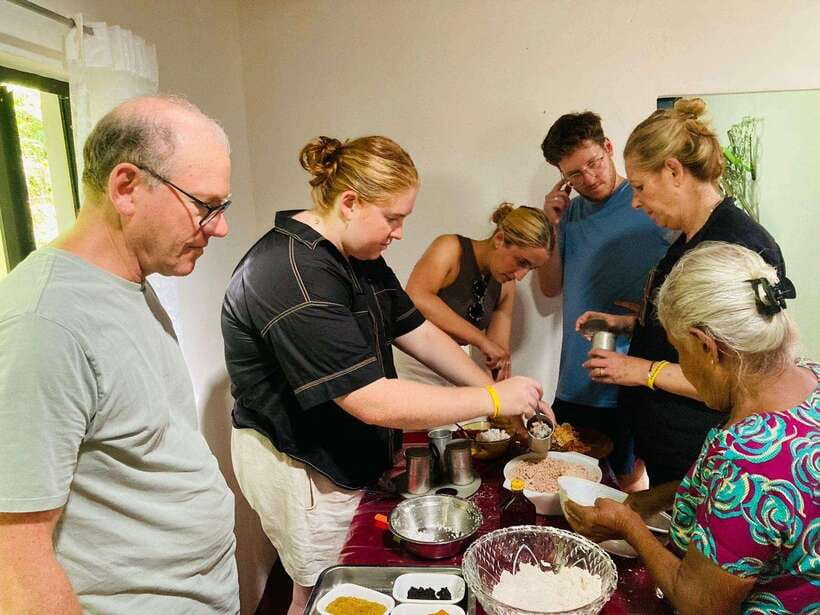
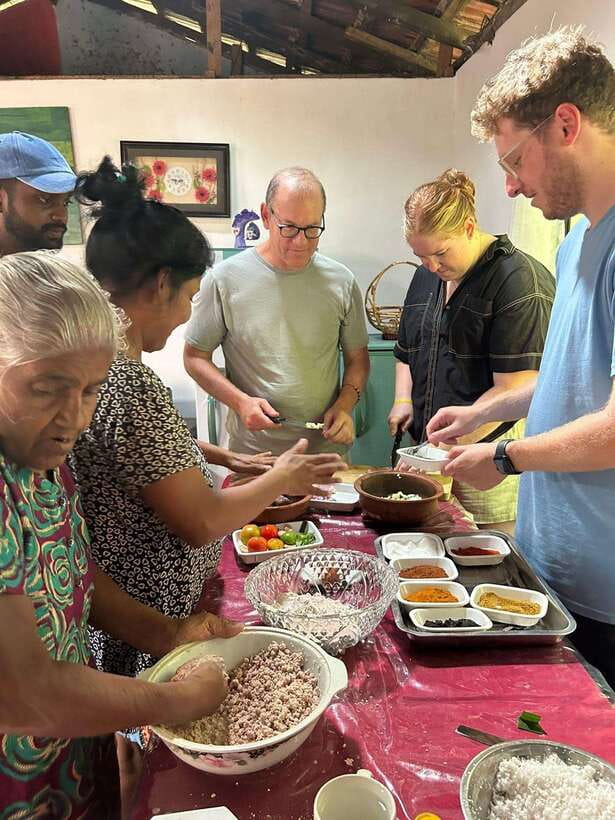
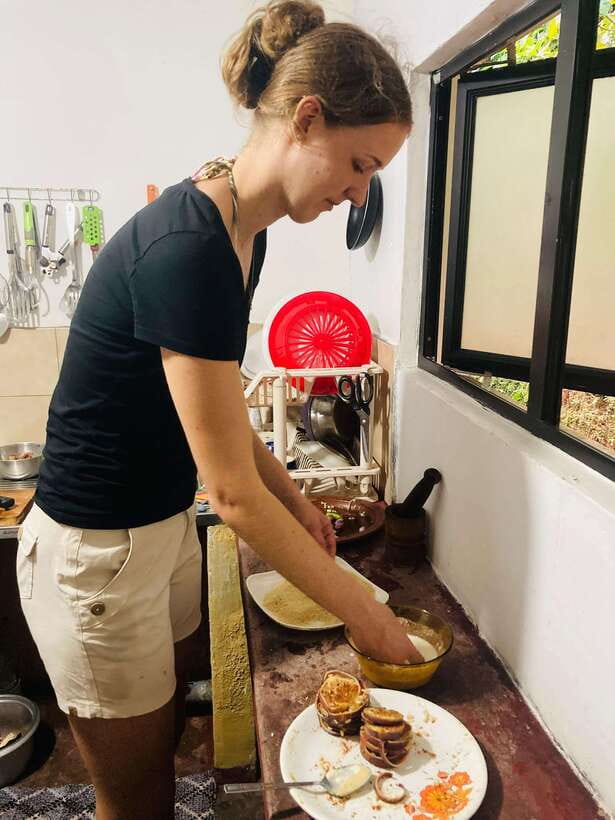
The strongest feature here is the setting. You are not placed at a long counter in a tourist classroom. You enter a local kitchen and cook with a Sri Lankan family, an arrangement that gives the meal a human face.
That matters because Sri Lankan food is not only about ingredients. It is also about how a household prepares food, balances heat and fragrance, and shares a meal. Sitting in a family home gives you a better sense of that daily rhythm than a short demonstration in a hotel kitchen.
The exact host may vary. Malik and his mother have welcomed couples, while chef Manogi has been praised for her cooking and kind manner. Another participant referred warmly to the host as Mama. These details suggest a personal, family-run activity rather than a large operation with a fixed restaurant-style format.
You should keep expectations realistic. The kitchen may feel informal, and the session may move quickly. That is part of its charm, but it also means you should be ready to listen, assist, and adapt rather than expect a carefully staged lesson with every minute planned.
More Cooking Classes in Galle
- Sea waves sri lankan cooking class
★ 5.0 · 467 reviews - Galle Unawatuna Cooking Class
★ 5.0 · 142 reviews - Galle Fort cooking class
★ 5.0 · 60 reviews
What happens when you arrive in Kotapola
The class takes place in Kotapola, Sri Lanka, in the wider Galle area. Hotel pickup and return are not included, so you need to arrange your own way there.
The meeting point may be easier to find through a map. If you have trouble, an English-speaking local can give directions by phone. I would arrive at least 15 minutes early, especially if you are unfamiliar with Kotapola or are relying on a driver who needs time to locate the house.
On arrival, you receive a welcome drink. One participant was served refreshing watermelon juice, a small touch that sets the tone for the visit. It is a friendly beginning rather than a rushed start at a worktop.
You may want to wear clothes that can handle a splash of sauce or a dusting of spice. Comfortable shoes are sensible too. You are working in a kitchen, not attending a formal dinner, so practical clothing is more useful than anything smart.
Learning the building blocks of Sri Lankan food
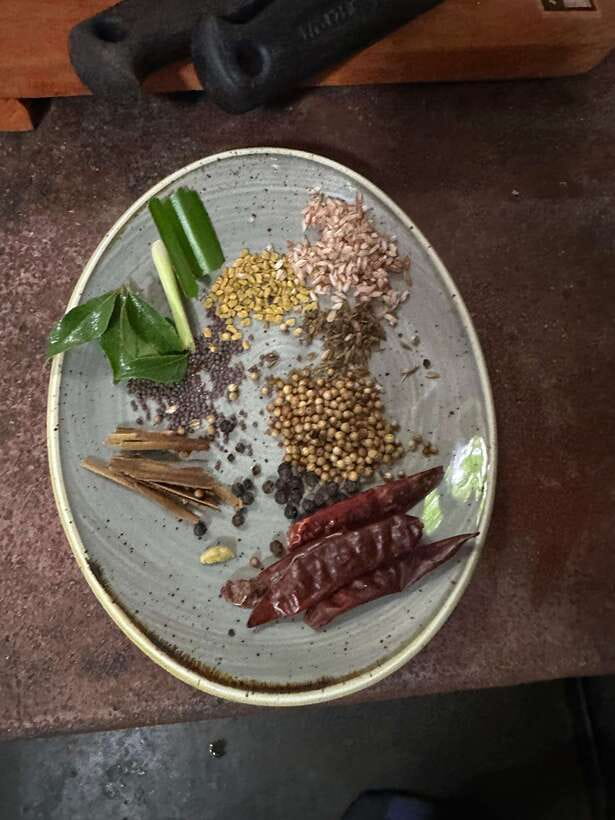
The class introduces the ingredients that give Sri Lankan cooking its character. You can expect aromatic spices and tropical vegetables to play a central role, with the hosts explaining how each item fits into the dish.
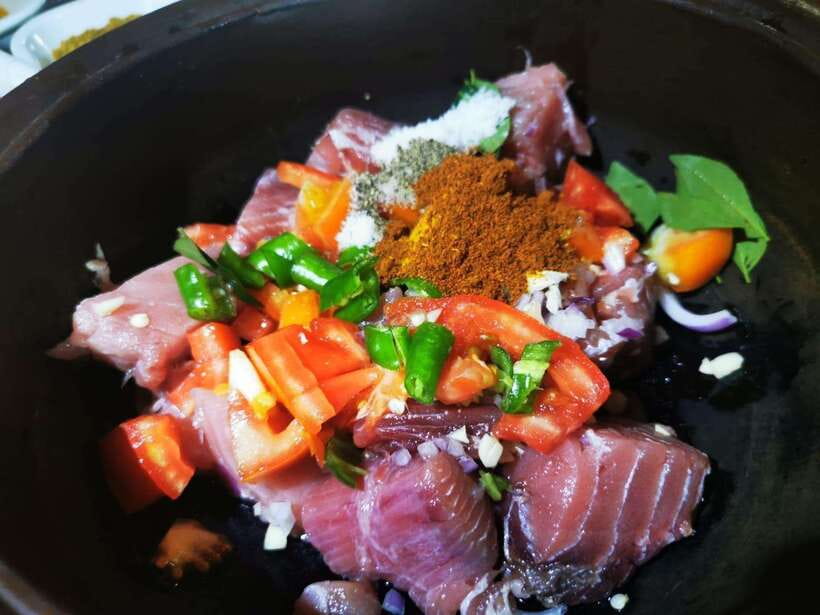
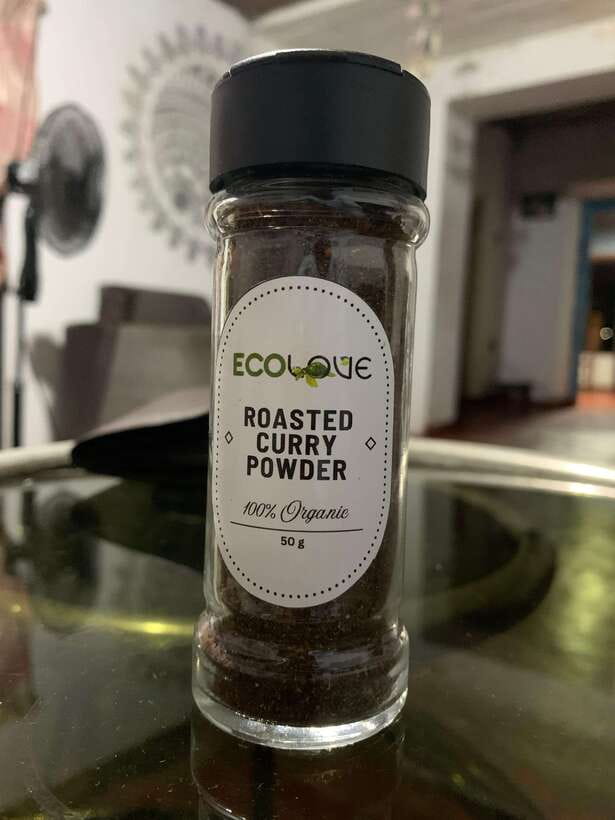
One of the best learning points is the preparation of spice mixes. This is more useful than simply being told which powder to add from a jar. You begin to understand how seasoning is assembled and how several simple ingredients create a more complex flavor.
The hosts also explain the cultural importance and background of the ingredients. The information is presented alongside the cooking, so you are learning through action rather than sitting through a long talk.
I like this format because it gives you something to take home. You may not recreate every dish perfectly, but you can remember the role of the spices, pay closer attention to texture, and feel more confident ordering Sri Lankan food later in your trip.
The language of instruction is English. That makes it possible to ask questions and follow explanations, although the pace of a family kitchen can still be quick.
The hands-on work, and the important catch
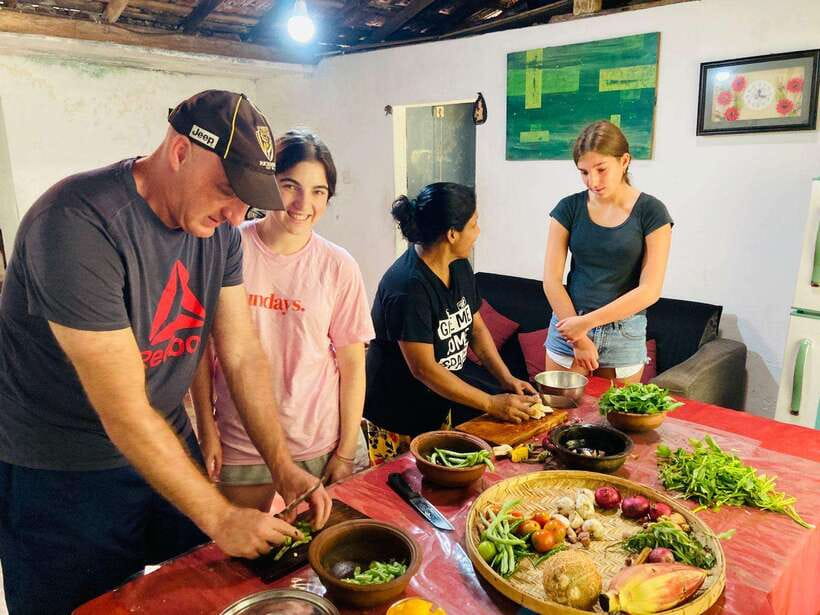
This is a hands-on session, but not necessarily a complete solo cooking course. You may chop, help with shopping, add spices, and assist with preparation. The chef or host handles the main cooking, particularly when several dishes need attention at once.
That arrangement has two clear advantages. First, you get to taste a broad range of food in three hours. Second, the meal is likely to come together smoothly, even if you have little kitchen experience.
The trade-off is that you may not prepare every dish step by step from beginning to end. If your goal is to master a set of recipes independently, ask about the structure when you book or at the start of the session.
I see this as a shared family meal with meaningful kitchen participation, not a technical cooking examination. You are there to help, taste, ask questions, and enjoy the people around you. That distinction is important when deciding if the class suits you.
More Sri Lankan cooking classes:
- Galle: Cooking Class at a Local Home and Market Tour
★ 5.0 · 47 reviews - Authentic Sri Lankan Cooking Class in Mirissa
★ 5.0 · 22 reviews - Traditional Cooking Small-Group Class in Unawatuna
★ 5.0 · 14 reviews - Galle: Sri Lankan Cuisine Cooking Experience
★ 5.0 · 5 reviews
A generous meal with room for dietary requests
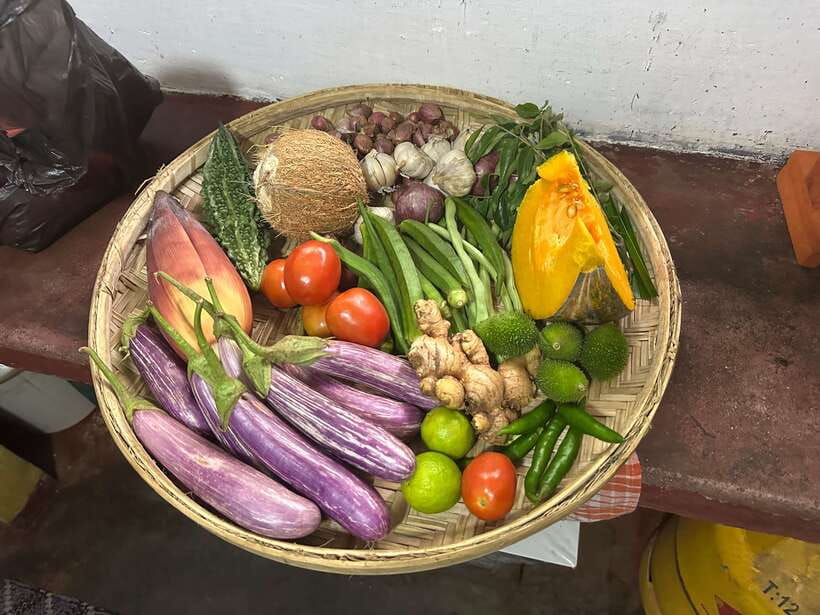
The prepared food becomes your lunch or dinner, and desserts are included. Since the meal is the payoff for all that chopping and seasoning, I would not eat a large meal beforehand.
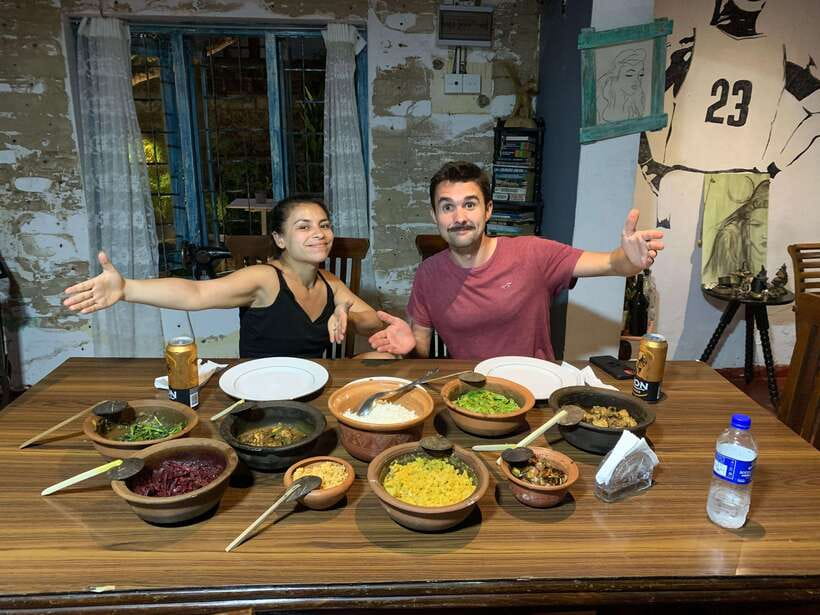
The food has received the highest praise. One couple described preparing eight vegan dishes after requesting a plant-based menu. The dishes used fresh local ingredients, and the hosts even covered the spice mixes. This is encouraging if you avoid animal products, but you should still notify the provider in advance about allergies or dietary restrictions.
Do not assume every menu is vegan or fixed. The supplied details confirm that dietary needs can be discussed ahead of time, not that every session follows the same menu. Tell the host what you need before arriving so there is time to plan.
Dessert may include buffalo curd with treacle, a traditional Sri Lankan combination that gives the meal a different finish from the spiced savory dishes. It is a small but memorable cultural detail, and a good reason to save space.
The welcome drink, main meal, and desserts are part of the $40 price. That makes the cost easier to justify, especially when you also count the instruction, ingredients, equipment, and private setting.
What the $40 price really covers
At $40 per person, this is not the cheapest way to eat in Sri Lanka. A local restaurant meal will usually cost less, and you can buy spices or vegetables without paying for a lesson.
The value comes from the complete package. Your fee covers a local culinary expert, ingredients, kitchen equipment, a welcome drink, the meal you prepare, and dessert. You also receive personal contact with a family and some understanding of why the food tastes the way it does.
For me, the price works best if you value the cultural side as much as the meal. If you only want dinner, choose a restaurant. If you want to spend time in a home kitchen and take part in preparing several dishes, $40 is a fair price for a three-hour private activity.
A private group is another advantage. You are not competing with a busload of people for access to the cutting board. Still, private does not mean every person gets equal cooking time. The quick pace may mean the most skilled person takes over certain tasks.
Why the family atmosphere matters
The class has been praised for its warmth more than for any single recipe. That is telling. The food may draw you in, but the welcome from the family is what can make the afternoon memorable.
Malik and his mother have been described as kind and welcoming, with a strong family feel in their own kitchen. Chef Manogi has also received praise for both her cooking and hospitality. One participant even arranged a jewelry workshop through the same hosts, suggesting that the family offers other cultural activities as well.
You should not expect a formal performance. The appeal lies in simple contact: sharing space, helping with food, asking questions, and sitting down to eat what you have prepared.
This makes the class particularly good for couples, solo visitors, and small private groups who want a quieter cultural activity. It also suits people who prefer conversation and food over a packed sightseeing schedule.
Timing, access, and practical planning
The session lasts three hours, with starting times depending on availability. That is long enough to feel substantial while leaving part of your day free for other plans.
You arrange your own transport because pickup and drop-off are not included. The location information is a little informal, so do not leave navigation until the last minute. Use the map, save the meeting details, and keep the English-language phone help available if you need directions.
The activity is listed as wheelchair accessible. Since the class takes place in a local kitchen and home, you may still want to confirm any specific access needs before booking. The supplied information confirms accessibility, but it does not describe door widths, kitchen layout, or bathroom access.
Cancellation is flexible up to 24 hours before the start time for a full refund. You can also reserve and pay later, which is useful when your Sri Lankan itinerary is still shifting.
Who will enjoy this class most
I would recommend it to you if you:
- Enjoy eating local food and want context behind the dishes
- Prefer a family home to a formal cooking studio
- Like participating without needing to control every step
- Want a private three-hour activity
- Are happy to try several dishes in one sitting
- Have dietary needs you can explain in advance
- Value personal contact with local hosts
You may want another class if you are an advanced cook seeking detailed technique practice. The host may do much of the main preparation, and the session can move quickly.
It may also be less suitable if you dislike informal directions or need hotel transport included. The meeting point requires some planning, and personal expenses beyond the included food and equipment are your responsibility.
Small details that improve the visit
Arrive early. Fifteen minutes gives you time to find the home, settle in, and meet the hosts without cutting into the cooking time.
Eat lightly beforehand. The final meal can be generous, especially if the menu includes several dishes and dessert.
Tell the provider about allergies and dietary restrictions in advance. A vegan menu has been arranged successfully, but advance notice is the key.
Wear comfortable clothing and shoes. You will be helping in a working kitchen, and practical clothes make the experience easier.
Keep your expectations flexible. You may chop one moment, watch a skilled technique the next, then sit down to a meal that comes together faster than you expected. That rhythm is part of a home cooking session.
Should you book the Kotapola cooking class?
Book it if you want a warm, food-centered cultural visit rather than a formal lesson. The private setting, local hosts, fresh ingredients, welcome drink, full meal, and dessert make the $40 fee reasonable for the right kind of visitor.
Go in knowing that the chef may handle the main cooking. You will assist with preparation and learn useful ideas, but you may not cook every dish alone from start to finish.
For most food lovers, couples, and curious first-time visitors to Sri Lanka, I think the combination of family hospitality and a generous meal is the main reason to book. Arrive hungry, arrive on time, and let the kitchen run at its own pace.
FAQ
Where does the cooking class take place?
The class takes place in Kotapola, Sri Lanka, in the Galle area.
How long does the cooking class last?
The activity lasts three hours.
How much does the class cost?
The price is $40 per person.
Is hotel pickup included?
No. Hotel pickup and drop-off are not included, so you need to arrange your own transport.
How can I find the meeting point?
Using a map is recommended. If you have difficulty finding the location, an English-speaking local can give directions by phone.
What language is used during the class?
The instructor language is English.
Is this a private activity?
Yes. The group type is listed as a private group.
What food and drinks are included?
The price includes a welcome drink, the lunch or dinner you prepare, and desserts.
Can I request vegan food or report an allergy?
Yes. You should notify the provider in advance about dietary restrictions or allergies. A vegan menu has been arranged for previous participants.
What should I wear?
Wear comfortable clothing and shoes suitable for cooking.
Is the activity wheelchair accessible?
Yes. The activity is listed as wheelchair accessible. For specific access requirements, confirm details with the provider before booking.
Can I cancel for a refund?
Yes. You can cancel up to 24 hours in advance for a full refund.
Do I have to pay when I book?
No. The reserve-now, pay-later option lets you hold a place without paying immediately.
More Workshops
- Galle: Traditional Gems & Jewellery Workshop with Transfers
★ 4.9 · 539 reviews - Surf lesson in weligama by surf and stay Srilanka .
★ 5.0 · 95 reviews - PRIVATE Surf Lesson for Beginners
★ 5.0 · 80 reviews - Galle : Traditional Jewellery making workshop
★ 4.9 · 34 reviews
Just added around Galle
- From Colombo: Day Trip to Galle City, Koggala and Unawatuna★ 4.2 · 3 reviews
- Stilt-Fishing Experience in Ahangama★ 4.0 · 3 reviews
- Galle Sightseein Rickshaw Tour★ 4.5 · 3 reviews
- Sinharaja Rainforest & Udawalawe Safari – 2 Days, All Inclusive★ 5.0 · 3 reviews
- Fully Private Udawalawe National Park Safari Tour★ 5.0 · 3 reviews
- Galle: All Inclusive City & Fort Guided Cycling tour★ 3.6 · 3 reviews
- Private Half Day Safari Tour to Yala NP From Tangalle and Drop Back★ 4.5 · 3 reviews
- Galle Instagram Tour: Most Famous Spots (Private & All-Inclusive)★ 5.0 · 3 reviews
Cooking Classes, compared.


Organic cooking class sigiriya (kumara & family)
Read our review →


Sri Lankan Cooking Class with Neranji at Homestay
Read our review →

Browse the lists this tour appears in