
Reviewed · COOKING CLASSES
Market Tour and Cooking Class from Colombo
Sri Lankan cooking starts at the market. This Colombo experience pairs a Pettah Market visit with a private cooking workshop, giving you a useful look at both the ingredients and the methods behind a home-style rice and curry meal. I like the market-to-table format, and I like that you eat what you prepare instead of watching a demonstration and leaving hungry.
The class includes a breadfruit curry plus a fish or meat main, with fresh produce and spices selected alongside your chef. The main consideration is the $120 price, which is high compared with a simple meal or ordinary market visit. Still, the private format, transport to the market, instruction, and included lunch or dinner make it easier to judge as a full culinary activity rather than a meal alone.
In This Review
- Key points to know before booking
- Why this Colombo food tour works
- Meeting your chef at the cooking studio
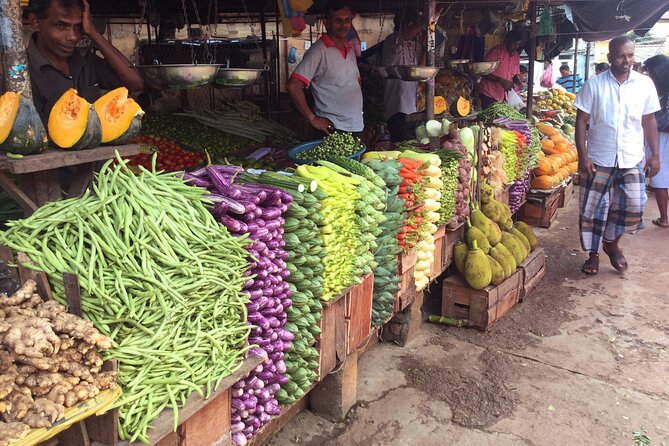
- Pettah Market: the ingredient lesson before the kitchen
- From purchased produce to breadfruit curry
- Eating the meal you prepared
- Is the $120 price fair?
- Who should book this experience?
- Practical details that affect your day
- Should you book the Pettah Market cooking class?
- FAQ
- How long does the Colombo market and cooking class take?
- Where does the experience begin and end?
- What do you visit during the market portion?
- What food do you learn to prepare?
- Is the class private?
- What happens if the weather is poor?
Key points to know before booking
- Pettah Market comes first: You visit fresh produce stalls and spice sellers before cooking, so the ingredients have a clear connection to the final meal.
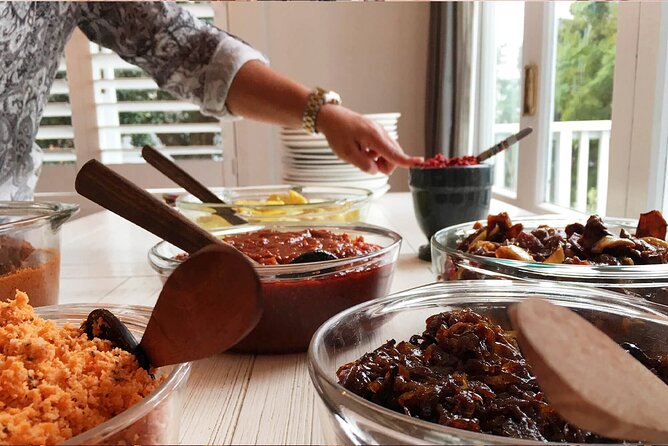
- You cook a full Sri Lankan meal: The workshop covers rice and curry, a breadfruit curry, and a fish or meat dish.
- Private groups only: Your group participates on its own, which allows the chef to focus on your questions and cooking pace.
- Two useful time choices: Start at 9:45 am for lunch around 2:00 pm, or at 3:45 pm for dinner around 8:00 pm.
- A tuk tuk or car handles the market transfer: The vehicle depends on the weather, and the meeting point is the cooking studio in Colombo.
- Chef Piumi receives especially warm praise: One detailed account describes a private class in her home and calls her informative, engaging, and fun.
Why this Colombo food tour works
Sri Lankan food can look simple on a plate: rice, curry, vegetables, and perhaps fish or meat. The skill is in the balance. Coconut, spices, heat, sour notes, and texture all need to work together, and a fixed recipe does not always explain why.
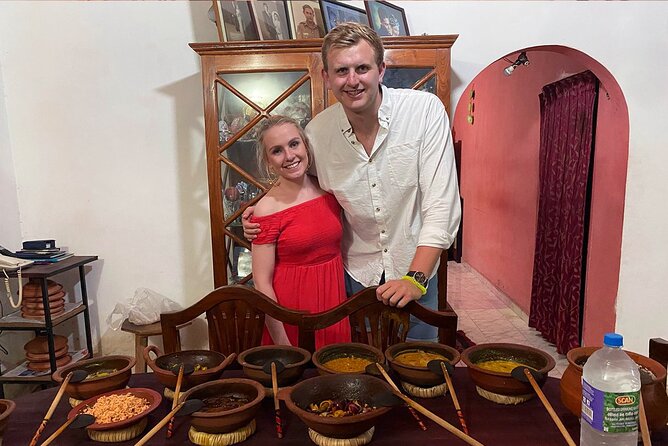
That is where this experience earns its keep. You do not begin with a prepared basket of ingredients. You go to Pettah Market with the chef, see the produce, and take part in choosing what will become lunch or dinner. I like this approach because it gives you a better chance of repeating the dishes at home. You learn what the ingredients look like before they are chopped, cooked, or hidden under sauce.
The class is private, so you are not folded into a large group with several unrelated cooking speeds. That matters when you want to ask why a spice is used, how a curry should look before serving, or what can be changed in your own kitchen. The exact amount of hands-on time may depend on your chef and group, but the experience is designed as a workshop rather than a simple food tasting.
You also finish with a proper meal. The morning session ends at about 2:00 pm, while the late-afternoon class ends around 8:00 pm. Plan your day around that timing, especially if you have a separate Colombo sightseeing schedule.
More Cooking Classes in Colombo
- Colombo Cooking Class
★ 5.0 · 151 reviews - Market Tour and Hands-On Cooking Class Colombo
★ 5.0 · 140 reviews - Cooking Class Sri Lanka with Locals
★ 5.0 · 101 reviews
Meeting your chef at the cooking studio
You begin at the cooking studio at either 9:45 am or 3:45 pm. The exact address and directions are provided after booking, and the activity ends back at the same meeting point.
Starting at the studio gives you a clear place to meet before entering Pettah. That is useful in Colombo, where a market address can cover a wide area and the streets can be confusing if you are arriving for the first time. You should allow enough time to reach the studio without rushing, since the market visit and cooking schedule are linked.
The activity runs about four hours. That is long enough for a market visit, a cooking lesson, and a meal, but not so long that food takes over your whole day. I would choose the morning session if you want your main meal earlier and prefer to have the evening free. The late-afternoon option fits well after morning sightseeing and turns dinner into the final event of your day.
Classes are available on any day except Sunday. That restriction is easy to miss when planning a short Colombo stay, so check the day before building your schedule around it.
Pettah Market: the ingredient lesson before the kitchen
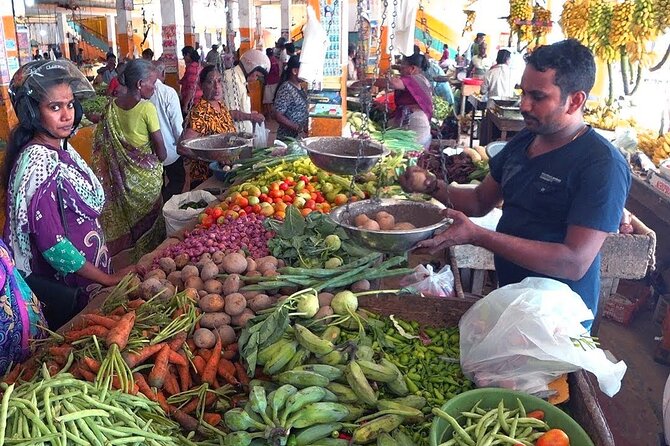
The trip to Pettah is the part that makes this more than a standard cooking class. Pettah has several centuries of history, and its market area includes old warehouses, worn cobbled lanes, and sections devoted to different types of goods. Some parts shift quickly from one kind of stall to another, while other areas feel more clearly separated.
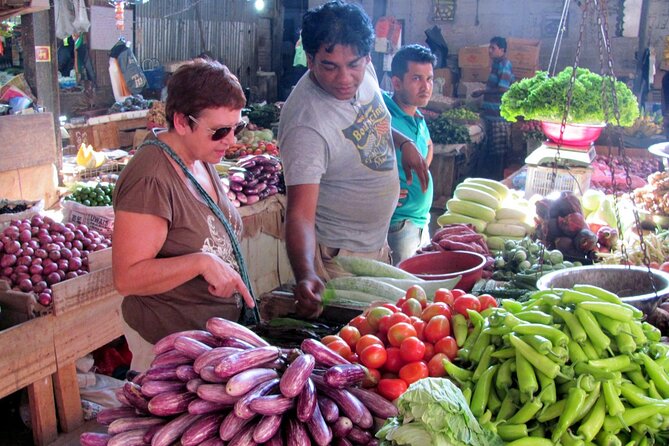
Your visit focuses on the fresh produce stalls and spice sellers. Expect rows of fruits and vegetables, with the chef helping connect what you see to what you will cook. The supplied details do not promise a set shopping list, so the exact ingredients can vary. That is a plus for people who want to see how a local cook thinks about a meal, though it also means you should not expect a rigid menu preview before arriving.
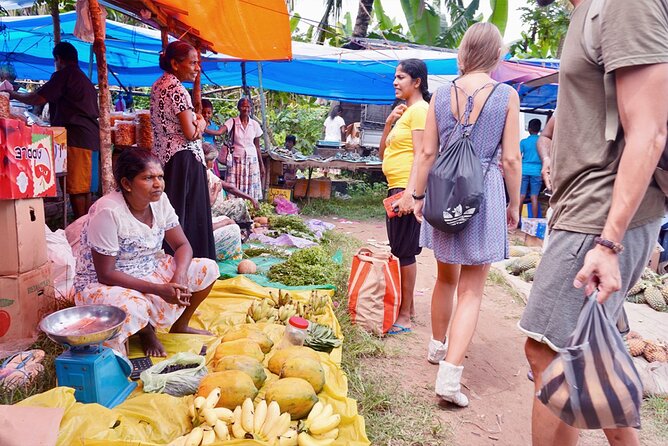
Pettah is a working market, not a staged food attraction. The old buildings and narrow lanes provide useful context, but the market may also feel crowded or rough around the edges. You are there to shop, not simply take photographs. Keep your attention on the chef, the produce, and the route through the market.
Transport between the studio and Pettah is by tuk tuk or car, depending on the weather. The vehicle is a practical detail, especially in hot or rainy conditions. A tuk tuk makes the transfer part of the Colombo experience, while a car may be more comfortable if the weather turns unpleasant.
The market visit also gives you a chance to ask questions at the moment they matter. Instead of hearing a spice name in a classroom and trying to remember it later, you see it in the setting where it is sold. That small link can make home cooking less intimidating.
From purchased produce to breadfruit curry
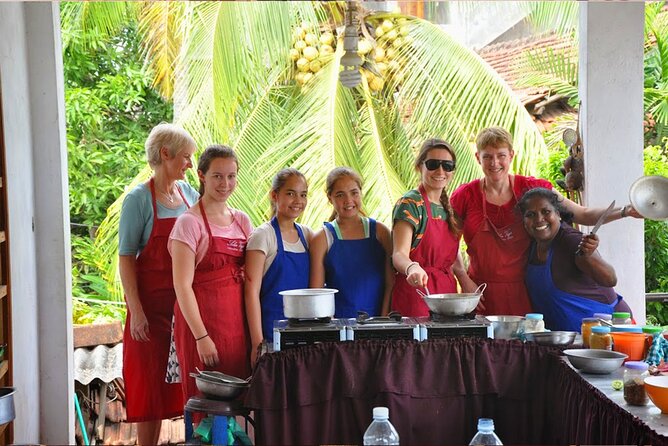
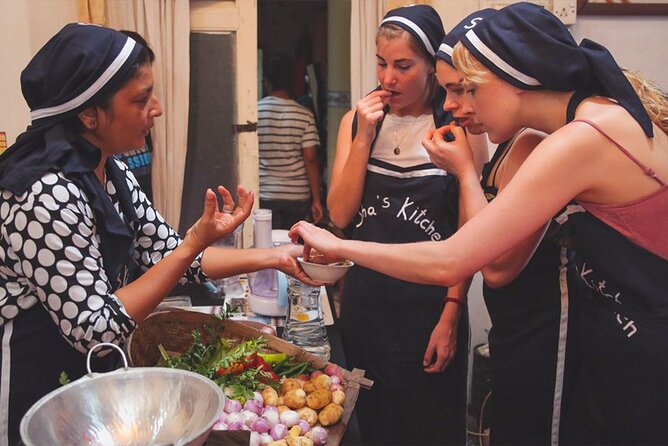
Back at the studio, the cooking workshop begins. The central lesson is a Sri Lankan home-cooked rice and curry meal, including a vegetable curry made with breadfruit and a fish or meat main.
Breadfruit is a useful choice for a class because it is not an everyday ingredient for many visitors. Its appearance at the market, followed by its preparation in the kitchen, gives you a better sense of how Sri Lankan cooks use produce that may be unfamiliar at home. If you cannot find breadfruit after your trip, the broader lesson still has value: pay attention to the way the chef handles vegetables, spices, and curry preparation.
The fish or meat dish adds a second style of cooking to the lesson. You are not only preparing a vegetable curry and stopping there. You learn how a complete meal comes together, with different flavors and textures sharing the same table.
The description does not provide a detailed recipe or list every technique. That means you should treat the workshop as guided instruction rather than a printed cooking course. Watch closely, take notes if allowed, and ask questions as the chef works. The benefit comes from seeing the process and learning the reasons behind it, not simply copying a list of measurements.
One detailed account gives chef Piumi special praise, describing a private class in her home as informative, engaging, and fun, with excellent food. The general activity is described around a cooking studio, so the exact setting and chef may vary. Still, Piumi is a useful example of the personal approach this private format can provide.
More Sri Lankan cooking classes:
- Colombo Cooking Experiance with Explore Market
★ 4.7 · 33 reviews - Authentic Sinhalese Cooking Class in Colombo with a Local Family
★ 5.0 · 9 reviews - Vegan Cooking Class Colombo with Market Tour
★ 5.0 · 9 reviews - Cooking class in Srilanka
★ 5.0 · 8 reviews
Eating the meal you prepared
The meal is included, and it arrives at the end of the workshop. In the morning, that means lunch. In the afternoon, it means dinner.
I appreciate this finish because the meal gives the cooking lesson a clear purpose. You can taste the result while the instructions are still fresh in your mind. If a curry seems hotter, sweeter, or more strongly spiced than you expected, you can ask about it immediately instead of trying to remember the question days later.
The food is described as a Sri Lankan home-cooked rice and curry meal, with the breadfruit curry and fish or meat dish at its center. The exact menu may depend on the ingredients selected at Pettah and the chef’s plan for the session. If you need a specific dietary arrangement, the supplied information does not confirm what can be substituted, so ask before booking rather than assuming.
The meal also makes the price easier to assess. You are paying for the market trip, private guidance, transport between locations, cooking instruction, and food. If you only want to eat Sri Lankan cuisine, $120 may feel expensive. If you want to learn enough to recreate part of the meal, the cost has more weight.
Gratuities are not included, and personal expenses are separate. Keep that in mind when setting your budget.
Is the $120 price fair?
At $120 per person, this is not a bargain class aimed at filling an hour between sightseeing stops. It is a private, four-hour experience with market shopping, transport, instruction, and a meal. Group discounts are available, which may make the cost more attractive if you are booking with family or friends.
The private setup is the biggest factor in the value. You are not paying only for a seat at a communal demonstration. You get your own group, a chef-led visit to Pettah, and a cooking session built around your party. That is especially useful for people who want to ask plenty of questions or who prefer not to cook in a crowded class.
The value is weaker if you dislike markets, have little interest in cooking, or would rather spend $120 on several restaurant meals. The tour also takes roughly four hours, so the opportunity cost matters during a short visit to Colombo.
I would call it a fair price for a private food lesson, provided you care about the process as much as the meal. Group discounts could make the decision easier, but the exact discount is not specified, so check the final booking cost.
Who should book this experience?
I would recommend it most strongly to home cooks, food-focused visitors, and anyone who wants a practical introduction to Sri Lankan cuisine. You do not need to arrive with advanced cooking skills. The format is designed around learning from a chef, shopping for ingredients, and preparing a meal under guidance.
It also suits couples, families, and small groups who want a private activity. The private arrangement lets you share the experience without being matched with strangers, and the market visit gives the day a stronger local connection than a class held entirely indoors.
The activity may be less suitable if you have only a short time in Colombo, since the four-hour schedule is fixed around the market and meal. It may also disappoint you if your main goal is a guided city tour. Pettah is the one listed stop, and the focus stays on food rather than Colombo’s wider sights.
Choose the morning class if you want lunch and an open evening. Choose the late-afternoon class if you prefer sightseeing earlier in the day and a cooking-based dinner. Neither option is available on Sunday.
Practical details that affect your day
Confirmation is provided at booking, along with the cooking studio address and directions. The meeting point is in Pettah, Colombo, and the activity returns there at the end.
The tour operates near public transportation, but the supplied details do not specify a particular bus stop, rail station, or walking time. Use the provided directions rather than relying on a general Pettah map.
The market transfer can be by tuk tuk or car according to the weather. The experience requires good weather, and poor conditions can lead to a different date or a full refund. Free cancellation is available if you cancel at least 24 hours before the start time. Changes or cancellations inside that window are not accepted for a refund.
Because the cooking class and market visit are connected, arrive ready for both parts. You will want comfortable clothing and enough time to reach the studio, though no special dress requirement is provided.
Should you book the Pettah Market cooking class?
Book it if you want a private, food-centered Colombo experience that teaches you how a Sri Lankan meal comes together. The strongest reasons are the market visit, the personal chef instruction, the unusual breadfruit curry, and the chance to eat the finished meal.
Skip it if $120 feels too high for a four-hour activity or if cooking is not part of your holiday plans. You can find cheaper meals in Colombo, but they will not give you the same connection between market ingredients, preparation, and the final plate.
For most food-minded visitors, I think the private format justifies the cost, especially with a group discount. Confirm the Sunday restriction, choose your preferred meal time, and ask ahead about any dietary needs before paying.
FAQ
How long does the Colombo market and cooking class take?
The experience lasts approximately four hours. The morning session starts at 9:45 am and ends around 2:00 pm. The late-afternoon session starts at 3:45 pm and ends around 8:00 pm.
Where does the experience begin and end?
You begin and finish at the cooking studio in Pettah, Colombo. The address and directions are provided after booking.
What do you visit during the market portion?
You visit Pettah’s fresh produce stalls and spice stalls with your chef. The market area includes old warehouses, worn cobbled lanes, and sections selling different types of goods.
What food do you learn to prepare?
The workshop teaches a Sri Lankan home-cooked rice and curry meal. It includes a breadfruit curry and a fish or meat main dish.
Is the class private?
Yes. Only your group participates in the activity.
What happens if the weather is poor?
The experience requires good weather. If it is canceled because of poor weather, you are offered another date or a full refund. Free cancellation is also available when you cancel at least 24 hours before the start time.
More Shopping Tours
- Colombo Sightseeing & Shopping
★ 4.5 · 15 reviews - Colombo Sightseeing and Shopping Private Tour Including Lunch
★ 5.0 · 12 reviews - Galle City Tour And Shopping
★ 4.5 · 12 reviews - Cooking Class and Market Visit in Negombo
★ 5.0 · 4 reviews
More Market Tours
- Colombo: Local Market Tour & Cooking Demo with Lunch
★ 4.6 · 3 reviews - Galle: Cooking Class at a Local Home and Market Tour
★ 5.0 · 47 reviews - Negombo Private Tour: Market, Temples & Canal
★ 4.9 · 15 reviews - Kandy: Village Cooking Class 12 Dishes with Market Tour
★ 5.0 · 6 reviews
Just added around Colombo
- 7 Days Sri Lanka Safari Tour★ 5.0 · 3 reviews
- Kandy & Nuwara Eliya | 2 Days Tour★ 4.5 · 3 reviews
- Private Tour of Colombo with Ajeet De Soyza★ 5.0 · 3 reviews
- Tuk Tuk city tour is very cheap in colombo( All inclusive tour)★ 5.0 · 3 reviews
- All Inclusive 5-Days Highlights of Sri Lanka★ 5.0 · 3 reviews
- Personal Guided Colombo City Tour by Tuk Tuk – All Inclusive★ 4.0 · 3 reviews
- Shore Excursion Colombo Port to Mount Lavinia Beach & Colombo city For 4 – 6 Pax★ 4.5 · 3 reviews
- Colombo Port Shore Excursions Colombo City & Kalaniya Temple★ 4.3 · 3 reviews
Cooking Classes, compared.


Organic cooking class sigiriya (kumara & family)
Read our review →


Sri Lankan Cooking Class with Neranji at Homestay
Read our review →

Browse the lists this tour appears in